

![Abbas Souzian [Journalist]'s avatar](https://substackcdn.com/image/fetch/$s_!jkIz!,w_108,h_108,c_fill,f_webp,q_auto:good,fl_progressive:steep/https%3A%2F%2Fsubstack-post-media.s3.amazonaws.com%2Fpublic%2Fimages%2Ffa826ba8-cee6-41c0-830f-dfeaee93b2ca_1330x1330.jpeg)
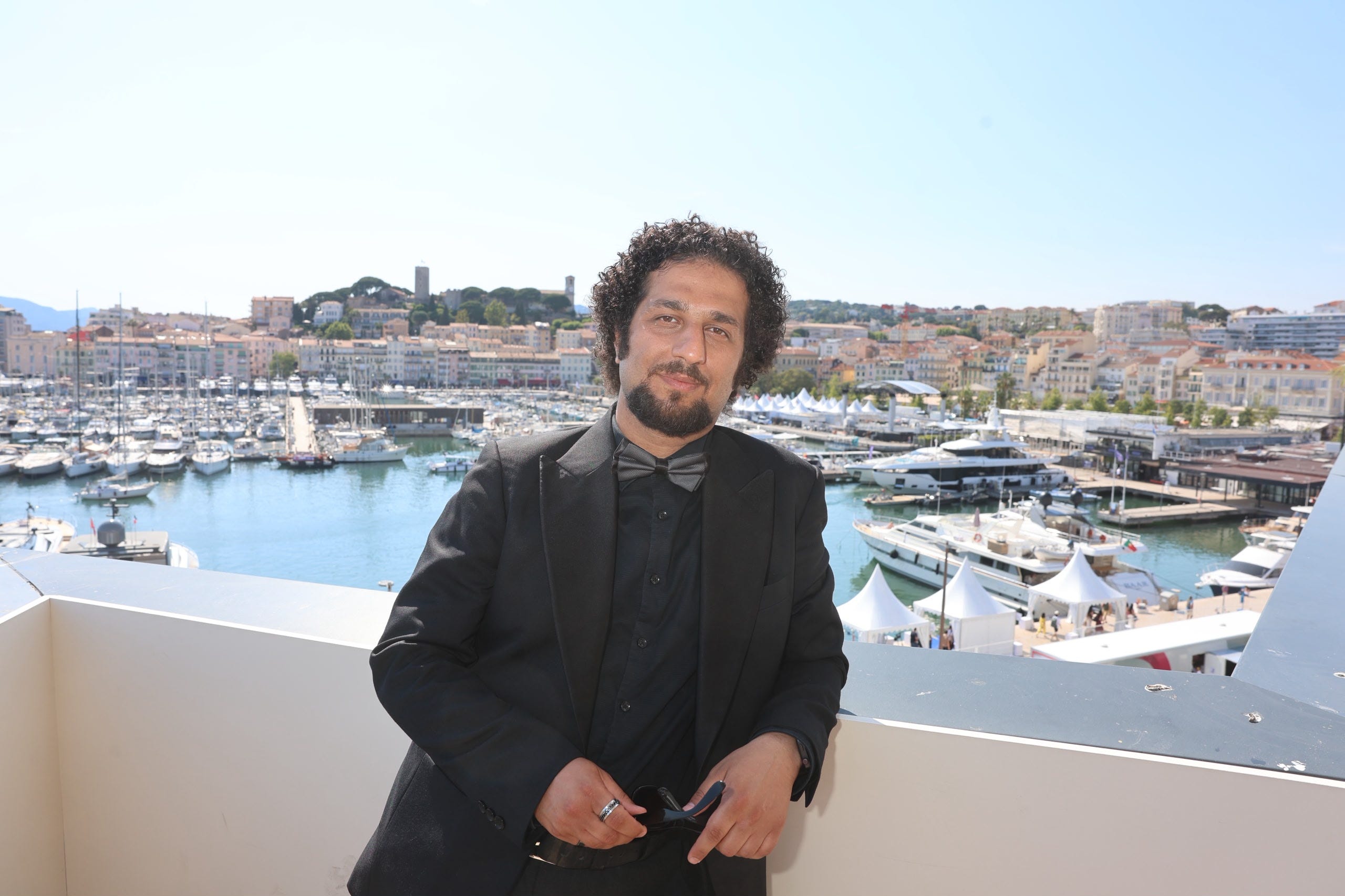
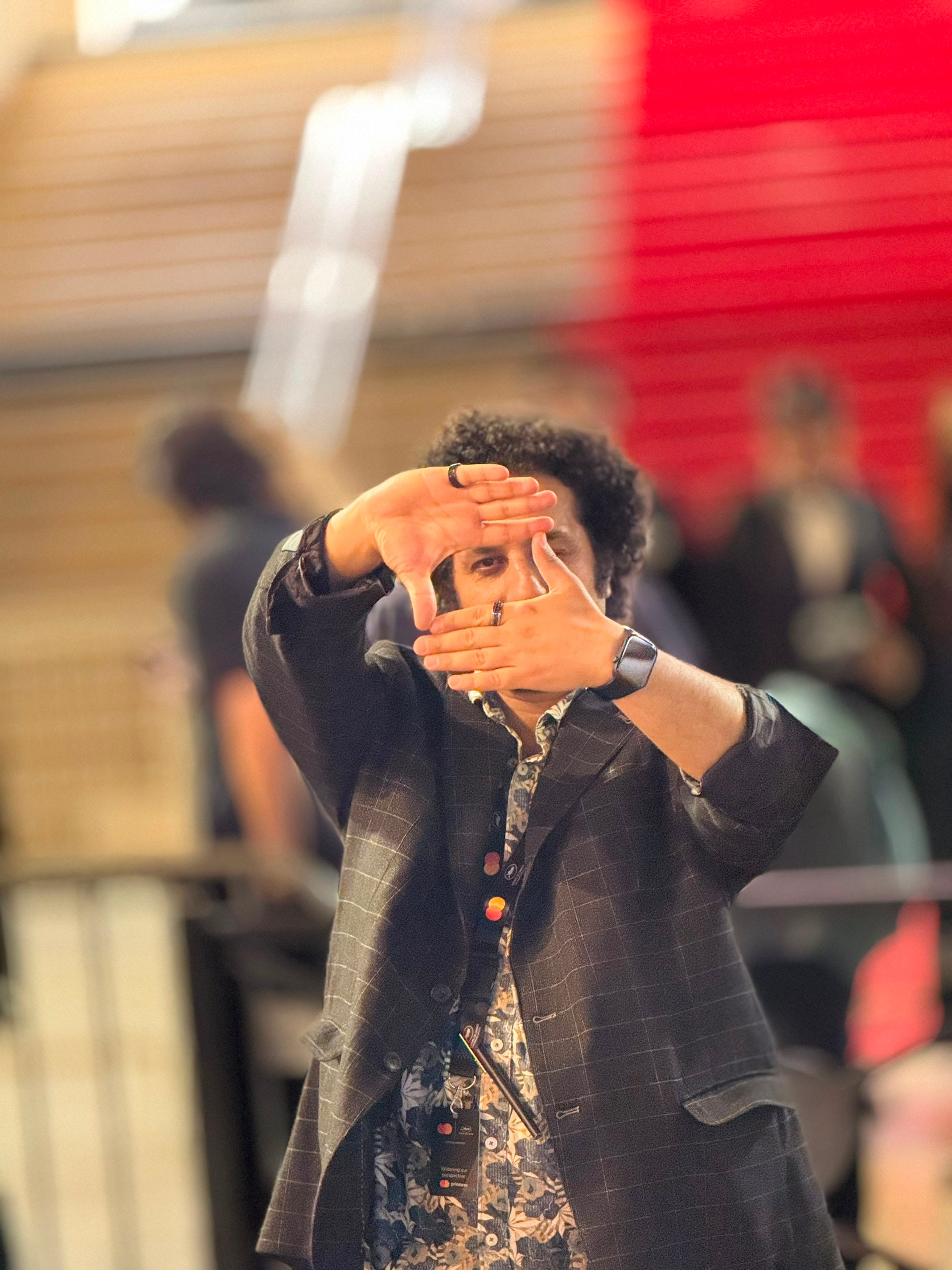
Iranian critic and filmmaker Pouya Aghelizadeh served this year as a member of the FIPRESCI jury at the Cannes Film Festival. He watched the films in the Un Certain Regard section with other FIPRESCI jurors and took part in selecting the international critics’ prize.
In this conversation, we spoke about how FIPRESCI works, the challenges of reaching Cannes, the atmosphere of the festival from a juror’s point of view, and his personal path from independent film discussion sessions to filmmaking.
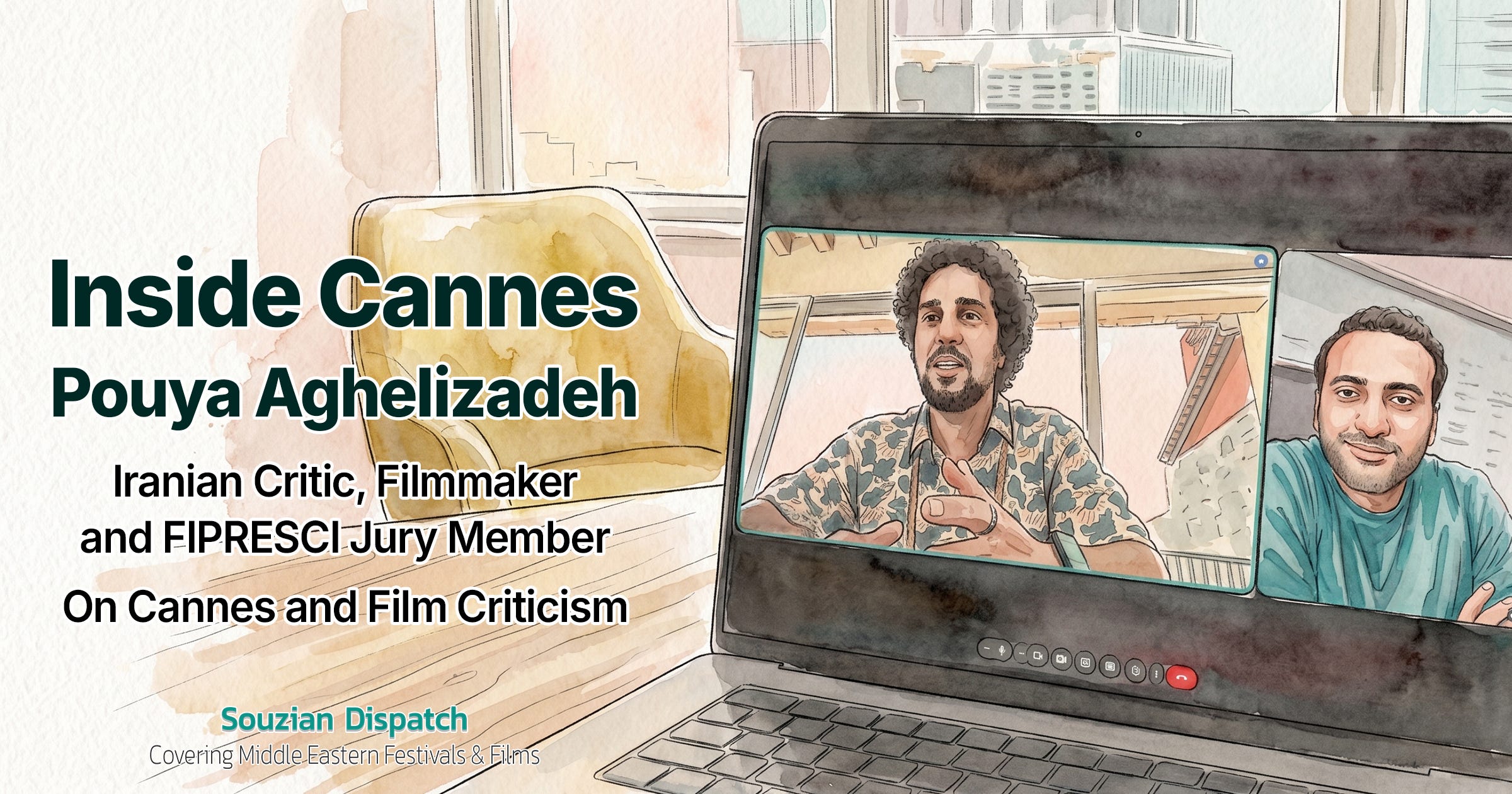
The conversation took place online, with me in Istanbul and Pouya in Vicenza, Italy.
What FIPRESCI Means Beyond The Prize
Abbas: To begin, maybe it is better to start with FIPRESCI itself. For many of our readers, it may not be fully clear what FIPRESCI is, how it works, and what kind of position it has in the film world. How would you define it?
Pouya: The simplest definition is the International Federation of Film Critics. Last year, it celebrated its 100th anniversary.
But if I want to talk about what it does, I think the most important thing is that it creates a real community of critics. It brings together critics from different countries, and the most important place where you can bring these people together is film festivals.
From the early years, FIPRESCI had a strong presence in Cannes. Critics would come, watch films, discuss them, and finally announce which film they believed deserved the prize.
Abbas: And of course, this prize is more about prestige than money, right?
Pouya: Yes. It is usually given as a plaque or a diploma, but it is very important for the film itself.
Later, during distribution and promotion, the filmmaker can proudly use the title of “winner of the international critics’ prize.” Now that there are more festivals, FIPRESCI is also present in many important festivals around the world.
Recently, I also feel that it has become a little more active. For example, it is paying more attention to new generations of critics, or to the question of how criticism can stay alive in today’s world.
Abbas: How did the membership path work for you, especially because we do not have an office or representation in Iran?
Pouya: That is exactly where the main challenge is. FIPRESCI has offices in many countries, and critics’ applications are reviewed through those offices.
But because Iran does not have an office, we have to apply individually. At the moment, there are five Iranian members: Hamed Soleimanzadeh, Azadeh Jafari, Amir Ata Julayi, Bijan Tehrani, and me. Each of us lives in a different part of the world. I am the only member living in Iran.
Abbas: At some point, your international path as a critic and writer also became more serious. Where did that first spark come from?
Pouya: For me, the turning point was writing about Bardo, the film by Iñárritu. I saw it at the Busan Film Festival, and I felt that many people, even some of Iñárritu’s own fans, had not taken it very seriously.
But for me, when a filmmaker goes toward memory, lies, and his own personal world with that level of honesty, it is very valuable. It reminded me of what Fellini did in 8½.
The text I wrote about that film was published in Busan Beat and a few other platforms, and it opened a new path for me.
Now in Iran, I mostly work with Film Emrooz. Outside Iran, I have written for the FIPRESCI website and outlets such as High on Films.
The Long Road From Iran To Cannes
Abbas: And after that, you reached jury work at festivals like DMZ and Bangalore, although in the case of Bangalore, the visa challenge came up.
Pouya: Yes. After my jury experience at DMZ, which went very well, I was selected for Bangalore in India.
For many people, traveling to India may not be very complicated. But when you have an Iranian passport, everything can suddenly become difficult.
Even though I had been selected, I could not go in the end because of the visa problem. After that, the Cannes story happened.
Abbas: How did you receive the news that you were selected for Cannes? I imagine, after what happened with India, you were both happy and worried.
Pouya: The process was really strange. In March 2026, I received an email saying that I had been selected for the FIPRESCI jury in Cannes.
At first, I was very happy. But immediately after that, the visa worry came. It was not only about having an invitation letter. I had to get a visa at a time when the situation in Iran was not stable at all. The internet had problems, and administrative processes had become very complicated.
Abbas: This part of the story is usually hidden behind official news.
Pouya: Exactly. From the outside, people only see a headline saying, “This person became a Cannes juror.” But they do not know what story is behind it.
The embassy wanted strong financial documents from me, and foreign support was not enough for them. I had to prove that I had financial backing in Iran.
My family, and especially my grandmother, helped me a lot there. Without her support, maybe the whole trip would have been cancelled.
Until the last moment, it was not clear whether I would be able to go or not. FIPRESCI itself also followed up a lot to help the process reach a result.
Abbas: And finally you made it. How was the atmosphere of the festival from the point of view of a juror, beyond the usual glamour of the red carpet?
Pouya: Cannes is really another world. The glamour you see from outside truly exists. The city, the parties, the red carpet, everything has a special energy.
But when you are there as a juror, everything changes for you. The red carpet becomes only a small part of the story.
The main thing is the responsibility you have. You have to watch the films, analyze them, discuss them with the other jurors, and reach a conclusion.
In fact, you enter a big cinematic system.
Inside Un Certain Regard
Abbas: You were in the jury group for Un Certain Regard. Are first-time jurors usually placed directly in this section?
Pouya: Not necessarily. In fact, jurors who are there for the first time are often placed in parallel sections like Directors’ Fortnight or Critics’ Week.
That is why it was very exciting for me to be placed directly in Un Certain Regard. I think this happened because of the good feedback they had received from my jury work at DMZ.
The two other jurors in my group were also very experienced. One of them was French and wrote for Cahiers du Cinéma. I think it was his 25th year attending Cannes.
Abbas: For readers who may not know the structure of Cannes very well, what is the difference between Un Certain Regard and the main competition?
Pouya: The main competition is usually the place for fully established and well-known filmmakers.
Un Certain Regard, as its name suggests, is more dedicated to first and second films, fresh worlds, and directors who may not yet have a wide reputation, but have bold ideas.
Being selected for this section can completely change the future path of a filmmaker.
Looking For New Voices, Not Perfect Films
Abbas: Among the films in this year’s section, did you notice any repeating motif or pattern? Something that could be seen as a current or a shared direction?
Pouya: Yes. One thing that was very strong for me was the presence of young women who were moving toward a kind of inner independence.
I do not want to simplify it too much, but in several films this theme was visible: a young woman, in a stage of moving away from the past, family, or society, and trying to reach herself.
I do not mean economic or social independence only. I mean more of an emotional and intellectual maturity, a way of leaving a dependent state.
Abbas: And cinematically, how was it? Were the films’ executions as strong as their ideas?
Pouya: To be honest, in many of the films, the synopsis and the first idea were ahead of what we actually saw on the screen.
The idea was excellent, but there were weaknesses in the execution. Sometimes the découpage or the camera placement was not precise. But at the same time, you could feel that there was a serious and deep perspective behind the film.
In judging a section like this, you are not only looking for a perfect film. You also have to see whether this filmmaker has a future and deserves support.
Abbas: In the end, the FIPRESCI Prize in your section went to Ben’Imana. What convinced you about this film?
Pouya: Ben’Imana did not keep heavy ideas like judgment, forgiveness, and the wounds of the past only on a large social level.
The film begins with a courtroom situation and the question of forgiveness. But later, very intelligently, it brings this crisis into the personal life of the same woman who says in court, “I forgive.”
The film shows that these ideas do not only belong to history or the courtroom. They also exist at home, and in our relationship with our children.
From Independent Screenings To Filmmaking
Abbas: With this analytical experience in Cannes, if we go back to your own career, where did criticism begin for you? I remember you were very active in independent spaces.
Pouya: Yes. I started fully independently around 2016. I would screen films in small theaters and cultural spaces, and afterward we would talk and analyze them with the audience.
My connection with the audience was very direct. I even held programs in other cities, like Shiraz.
Then Covid changed many things. I had made the short film Lightroom, which was shown in Poland, at On Art, and in a few other places. But because of Covid, I could not travel with the film to festivals the way I wanted.
Still, something important happened for me. In the first year of the pandemic, I went to Gorgan and spent about a year editing a series.
Editing in a situation where you do not have a complete script and there is no script supervisor teaches you a lot. You have to understand from the rushes themselves what the film wants to say.
That experience deeply affected the way I look at filmmaking.
Abbas: Are you currently working on a feature screenplay as well? Projects like Blind Watcher, which reached the Sundance shortlist, or the screenplay you mentioned that is ready to be made?
Pouya: Yes. I have been planning to make my first feature film for a long time.
A few times, I came very close to production. But in Iran, conditions can suddenly change in a way that changes all your plans.
At the moment, I have a completed screenplay called The Season of Flying Bubbles. The story takes place in a school. I have also made a short demo for it, and I am very interested in starting this project.
Abbas: If you want to sum up the whole experience of serving as a jury member in Cannes, what would you say?
Pouya: For me, it means that people from different cultures and different worlds, with all their disagreements, can sit together and reach a shared choice about cinema.
This experience proved to me that criticism is still alive. It can still take a perspective seriously. It can still affect the way a film is seen.
Abbas: You have followed a very interesting path, from independent sessions in small theaters to sitting with international critics and discussing the future of cinema.
Thank you for your time, Pouya. It was a very good conversation, and I hope we will soon hear that your first feature film has gone into production.
Follow Pouya Aghelizadeh on Instagram @pouya_aghel
License
This piece, published by Souzian Dispatch and written by Abbas Souzian, is licensed under the Creative Commons Attribution-ShareAlike 4.0 International License (CC BY-SA 4.0), unless otherwise noted.
Images & Videos Credits and Rights
Certain images and videos included in this piece are not owned by Abbas Souzian or Souzian Dispatch and are not covered by this license. Rights to those materials remain with their respective copyright holders.