


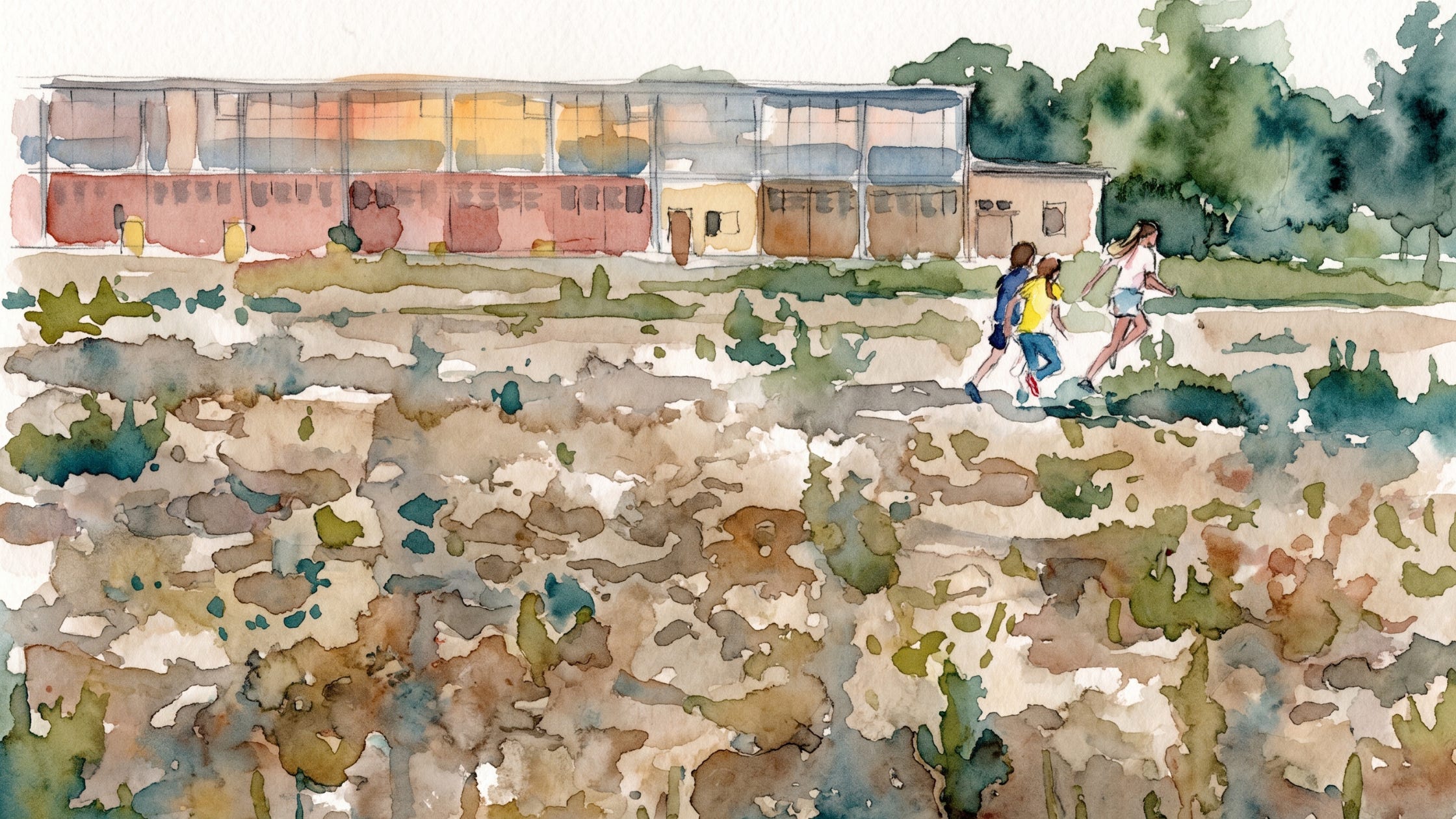
Vadym was curious about the camera, but he often preferred to stay behind it. During the making of Waking Up in Silence, he tended to keep to himself, watching the crew rather than joining the other children. Directors Mila Zhluktenko and Daniel Asadi Faezi eventually found a way to include him in the film through something he enjoyed: repairing a bicycle.
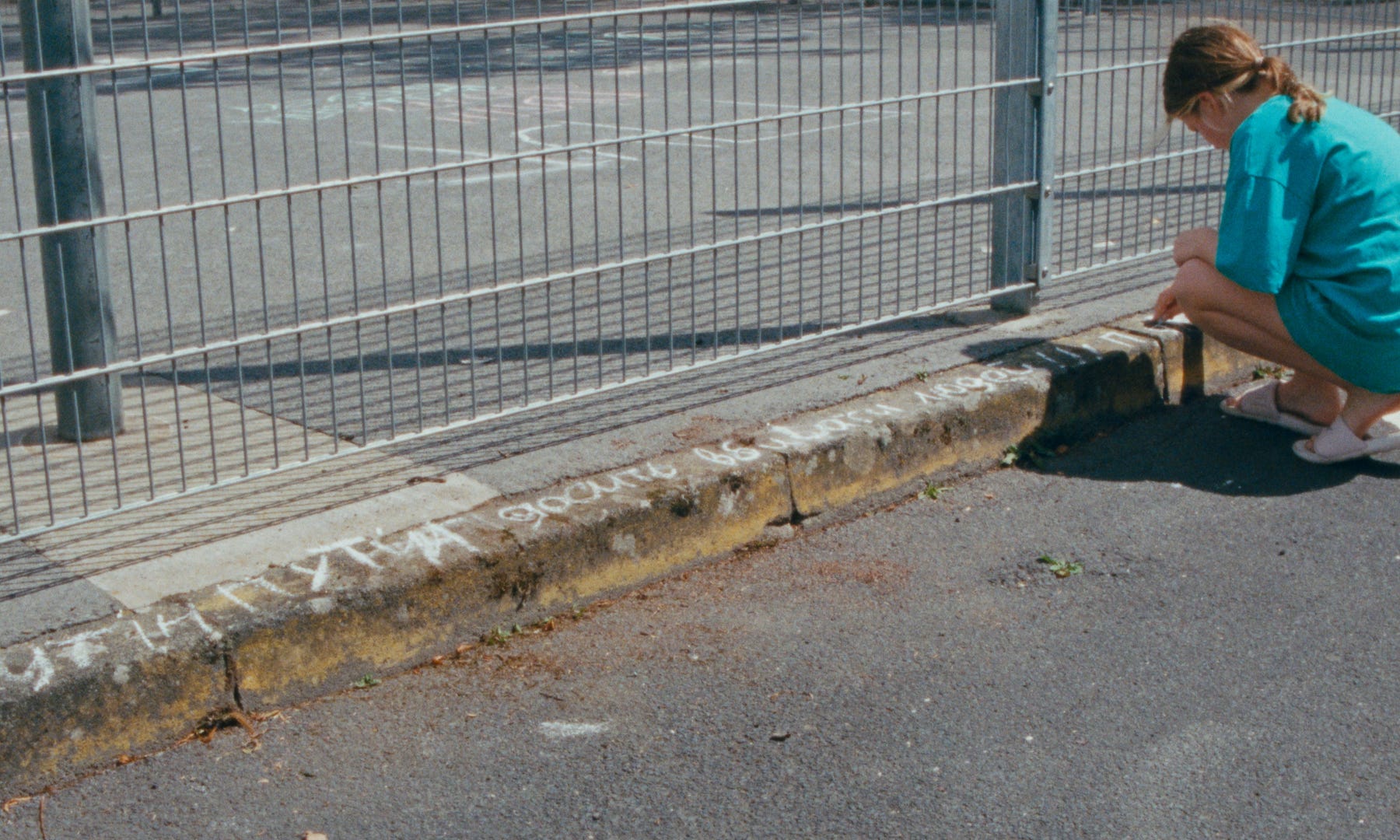
Filmed in Schweinfurt, Germany, Waking Up in Silence (2023) follows Ukrainian children who found refuge in a former Wehrmacht military barracks after fleeing Russia’s full-scale invasion of Ukraine. They play, learn German and explore buildings that still carry traces of the country’s military past. Their ordinary activities unfold in a place with a history of war and displacement.
Three years later, the families featured in the film have moved out of the barracks. Many have found homes and jobs, and the children have settled into school life, although they still miss Ukraine.
As Waking Up in Silence joins the 5x5 Shorts from the East programme at DOK Leipzig 2026, the two filmmakers speak with Souzian Dispatch about the children, the changing lives of their families and a feature documentary about the same location, now in post-production after nearly seven years of work. The conversation also touches on their family backgrounds and In Retrospect (2025), in which they revisit Germany’s history of migration and racism through archival material and the cinema of Iranian filmmaker Sohrab Shahid Saless.
1. A Child Waiting to Return
Abbas Souzian: In Waking Up in Silence, there is a young boy who seems more withdrawn than the other children. He often appears to be in his own world, and watching him, I had the feeling that he might still be waiting to return home, to the life he knew before the war. How did you see this boy while filming? Did you have a similar feeling, or is this perhaps something I am reading into his behaviour as a viewer?
Mila Zhluktenko and Daniel Asadi Faezi: For us, working with children on this film was a particularly rewarding experience. Through their perspective on the location, we wanted to uncover the history and the political dimensions of the architecture of the former Wehrmacht barracks.
Vadym, the boy you’re describing, caught our interest right from the start of our research process. Vadym often stayed aside and he liked to observe. He was always very curious about our equipment and actually preferred to be behind the camera. After a while, however, we had an idea how to integrate him as a protagonist in our film. We developed a scene where he felt secure, because he really loves to repair things. We particularly loved how seriously and intently he tackled tasks such as patching a bicycle tube.
The decision to film with children was the result of a long process of reflection, and we approached the work in a collaborative manner. Our project was like a workshop where the children could come and go as they pleased. This gave rise to a polyphonic structure that does not focus solely on one protagonist, but aims to show childhoods shaped by war and the early experiences of migration.
2. Looking Back at the Film Three Years Later
Abbas: A few years have passed since you made the film, and the children we see are now older. Are you still in touch with any of them or their families? When you watch the film today, knowing what has happened since then, do you see any of those moments differently?
Mila & Daniel: When we were making the film, the war was still in every newspaper. Since then, we have unfortunately observed that less people take interest or express empathy for the people of Ukraine. The war in Ukraine is being less talked about in media and it is difficult to mobilise people in European cities to f.e. join a demonstration in support of Ukraine. We are watching with the greatest concern as Donald Trump issues new threats to cut aid to Ukraine even further, whilst at the same time resuming trade with Russia.
We are still in contact with the families from the barracks. None of them now live in the barracks any longer; instead, most of them now live in their own flats. Many of them have learnt the language and found jobs. The children attend schools and have new friends and interests. But they of course still miss their home country. Our film remains a record of a time that was marked by great uncertainty. Back then many hoped to return home soon. It was a transitional moment.
The barracks are still inhabited today by, amongst others, Ukrainian refugees who have fled in recent months.
3. Different Audiences, Different Experiences
Abbas: The film has been shown in several countries, including Germany and Ukraine. Did you notice any differences in how audiences responded to it? I wonder whether people who have experienced war or migration themselves noticed things in the film that other viewers might have missed.
Mila & Daniel: Of course, people’s experiences and reactions vary greatly. Fortunately, the film has been screened widely in Ukraine - as well as in Ukrainian communities abroad - thanks to organisations such as Docudays. The reactions have always been very emotional, and we’ve noticed that the film resonates universally, addressing issues that many people with a background of migration can relate to on a deep level.
In Germany, on the other hand, we have noticed that, even today, many people have very little contact with refugees from Ukraine living in Germany. Film can help to foster empathy and give people an insight into or a sense of other realities of life that would otherwise remain hidden from us.
4. From Ukrainian Children to Other Refugee Communities
Abbas: In earlier interviews, you mentioned working on a feature documentary connected to the same former military barracks, including its history of housing Syrian and Afghan refugees. How has that project developed? Has spending more time with the history of this place changed the way you think about migration and the different experiences of refugees in Germany?
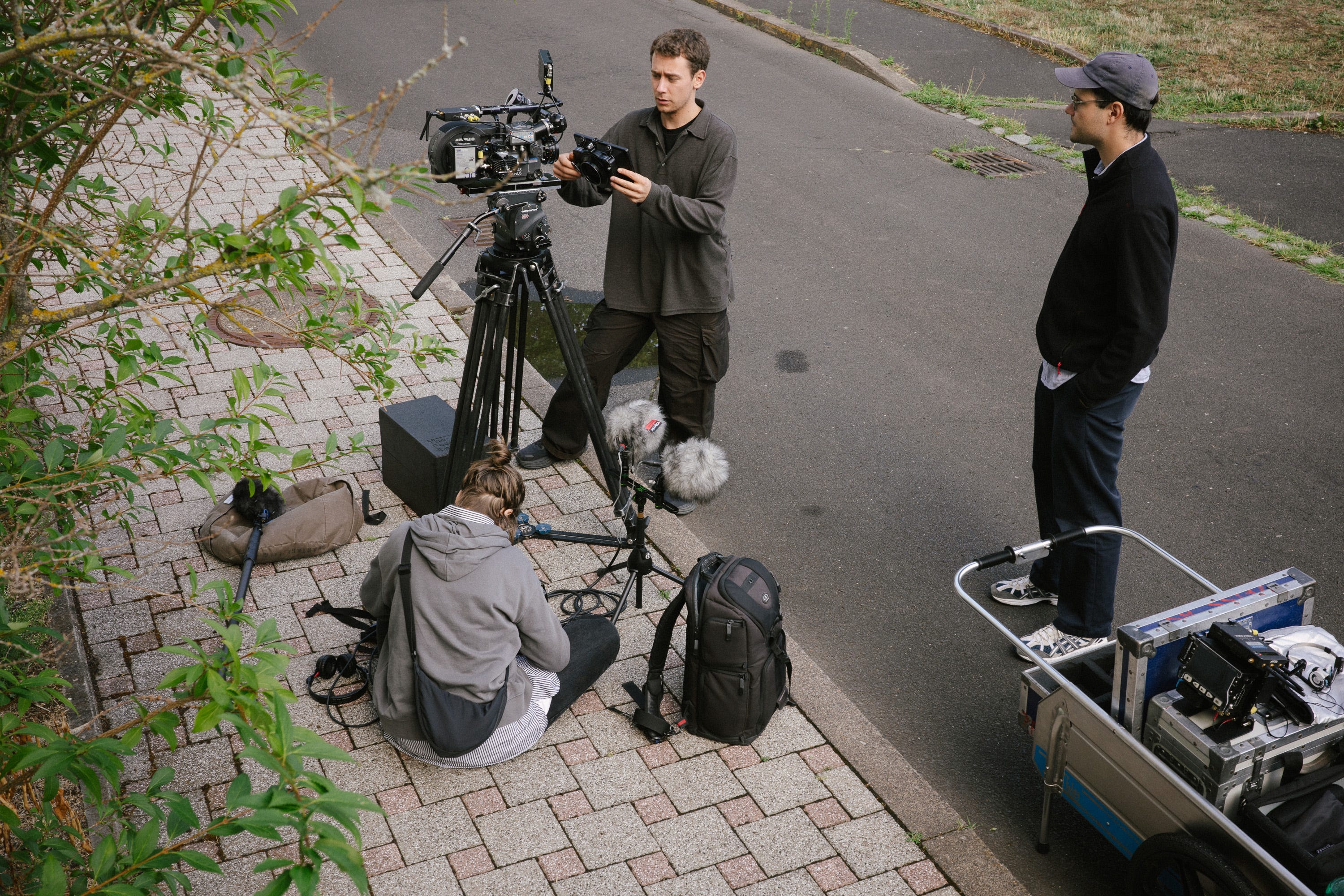
Mila & Daniel: When we were filming “waking up in silence”, we’d already made plans to shoot a feature-length film at that location. Ever since we began exploring the history of the building and its ever-changing uses, the site has undergone many transformations. For us, the barracks are a place where we can discover 90 years of German history, which is entangled globally on different levels. Some of the signs are obvious, but others are invisible.
We are delighted that, after almost seven years of work, we are now in the post-production phase of this film.
Unlike “waking up in silence”, the feature-length film delves even deeper into the historical layers, weaving together history, place and human destinies through an essayistic approach.
Here, we are also working more extensively with a wide variety of archive material to offer a multi-perspective view of space and time.
5. Family Roots and Personal Experiences of Migration
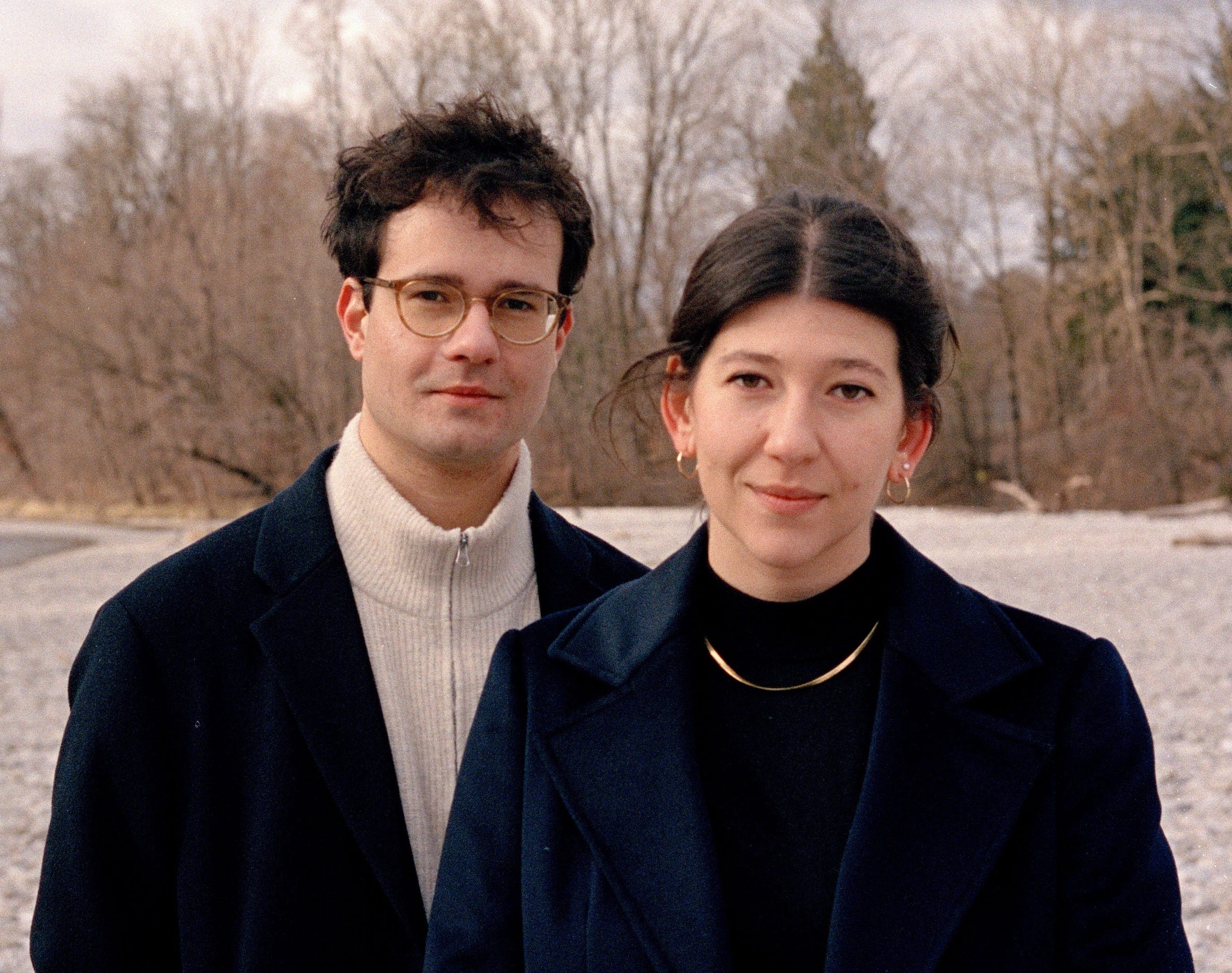
Abbas: Daniel, your father is Iranian Azerbaijani, and Mila, your mother was born in Azerbaijan. Both of you have family connections to different cultures and histories. I’m curious how these backgrounds have shaped your understanding of home, migration and belonging. Do you feel they have also influenced the way you work together and the stories you choose to tell?
Mila & Daniel: Absolutely!
We discuss topics such as migration and integration a great deal. Daniel hasn’t experienced migration first-hand, but Mila has, having come to Germany from Kyiv as a teenager. As a result, our personal experiences and perspectives often feed into one another, leading to productive discussions.
In our current projects, we’ve focused particularly on stories set in Germany. We’re interested in how the places we encounter in our everyday lives are imbued with (often migrant) history. Film as a medium offers us the perfect opportunity to break down the space-time continuum and understand history not just chronologically, but in the very place where it took place. Our sensitivity to, and interest in, the way migration shapes society is one of our main motivations for telling stories that often remain hidden behind the façades of these places.
6. Sohrab Shahid Saless and His Cinematic Language
Abbas: In In Retrospect, you bring footage from Addressee Unknown by Iranian filmmaker Sohrab Shahid Saless into your own film. You’ve spoken before about why you chose his work, but I’m especially interested in his cinematic language: his use of silence, time, urban spaces and the loneliness of migrant characters. Did his way of looking at people and places also influence how you approached the images or rhythm of In Retrospect?
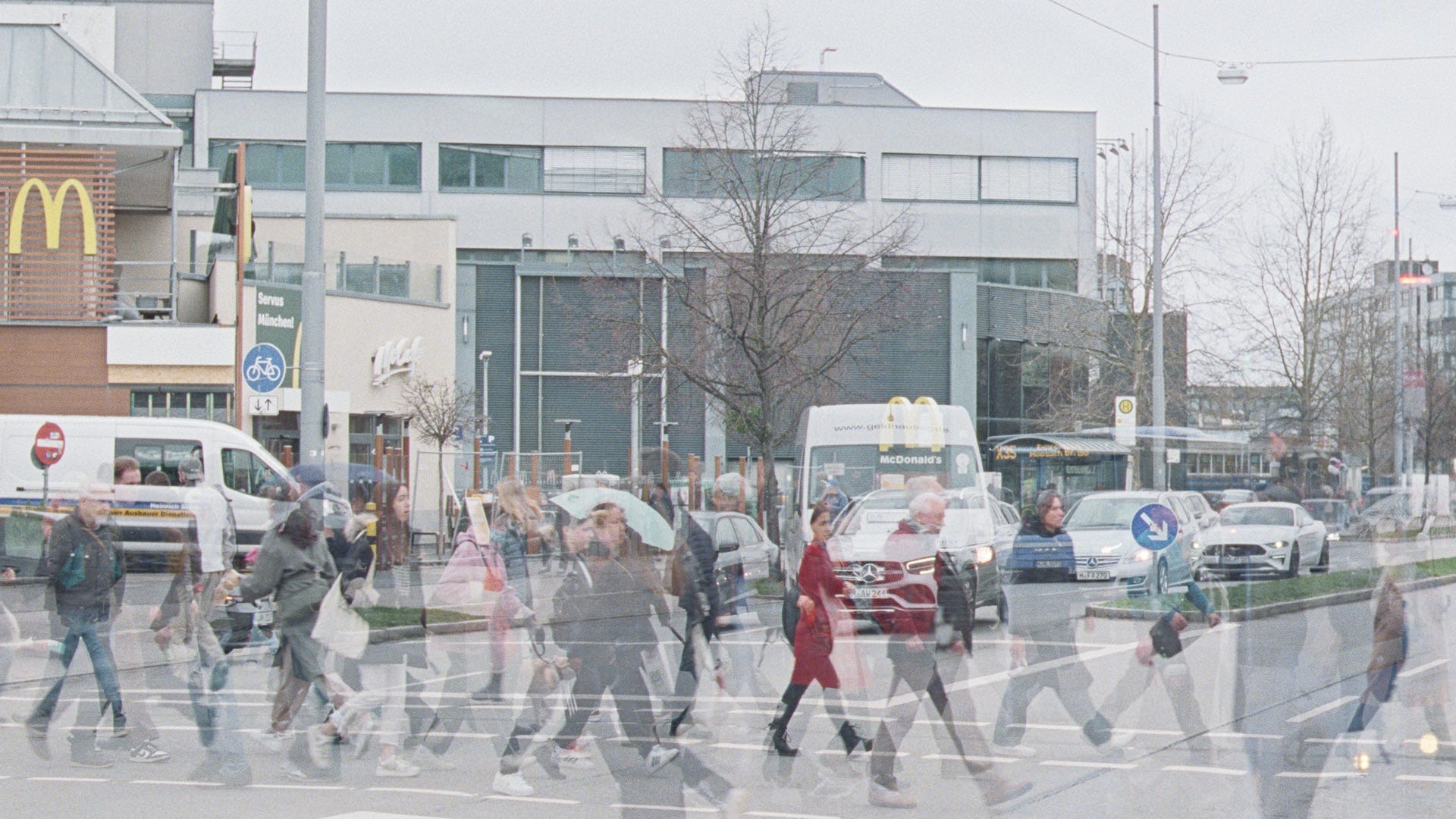
Mila & Daniel: What particularly interested us about Sohrab Shahid Saless was his perspective, as a migrant director, on German history. In our film, we therefore reference “Addressee Unknown”, a film that tells the story of a relationship between a German woman and a Turkish architect looking for work in West Berlin. We drew primarily on the excerpts from the film that now serve as a historical record of the rising racism in German society during the 1980s. He films slogans such as ‘Foreigners out’ scrawled on the walls in an almost documentary style. These are paired with of our own footage of buildings, which became witness of a recent racist, far-right attack, that happened in Munich in 2016 at the Olympia shopping mall and where nine people were killed.
In “Addressee Unknown” the city’s concrete reminds the film’s protagonists of the bunkers of the Second World War. This opens broader continuities of violence against migrants in Germany before and after the war. We wanted to link these observations to experiences of racism and exclusion today. The continuities of far-right racist, anti-Romani and antisemitic violence is a topic the film circulates around. For us, as directors in Germany with a migrant background, Saless’ ideas are an important testament to German film history, one that remains largely unknown to the majority of society.
7. Two Films, Two Ways of Looking at History
Abbas: In Waking Up in Silence, we discover the history of a former military barracks through the everyday lives of refugee children. In In Retrospect, you turn to archival images to explore migration and racist violence in Germany. Both films seem interested in how places carry memories of the past. What led you to approach these histories in such different ways? And what did working with archival material allow you to explore that filming in the present could not?
Mila & Daniel: Archives interest us on many levels. In “in retrospect”, we work with various archival materials. These include, for example: construction plans, excerpts from a feature film by Saless, quotations, TV and radio reports. By editing these materials together with our own footage, we try to explore broader historical dimensions, and to highlight continuities.
Regarding “waking up in silence” it was a different process: in 2020, so even before the full-scale invasion we had already have been researching on the history of the barracks in a city archive. So for us the barracks already held different meanings and histories when we met the Ukrainian families who had just arrived there.
That is why, amongst other things, we wanted the film to examine the ways in which the space and the people inhabiting it influence one another. Therefore, in this film we also regard the place and its walls as an archive, which we explore through the eyes of the young protagonists.
I would like to thank Mila Zhluktenko and Daniel Asadi Faezi for taking the time to answer my questions and share their thoughts with Souzian Dispatch.
Waking Up in Silence is part of the 5x5 Shorts from the East programme at DOK Leipzig 2026, taking place on Saturday, October 31, at the Polish Institute in Leipzig.
More About the Film
Waking Up in Silence (2023) is a 17-minute documentary co-produced by Germany and Ukraine. Filmed on 16mm by cinematographer Tobias Blickle, it follows Ukrainian children living in a former Wehrmacht military barracks in Schweinfurt, Germany, after fleeing the war. Through their everyday activities and encounters with the building, the film connects their experiences of displacement with the history of the place.
Festival Journey and Awards
Waking Up in Silence had its world premiere in the Generation Kplus section of the 73rd Berlin International Film Festival in February 2023, where it received the International Jury’s Special Prize for Best Short Film.
The documentary later screened at festivals including Visions du Réel, DOK.fest München, Docudays UA, Sarajevo Film Festival, BFI London Film Festival, IDFA and Palm Springs International ShortFest.
Selected Awards
Special Prize of the Generation Kplus International Jury for Best Short Film, Berlinale, 2023
Main Prize, DOCU/SHORT Competition, Docudays UA, 2023
Best Student Documentary, Tirana International Film Festival, 2023
Grand Prix, National Competition, Kyiv International Short Film Festival, 2023
Grand Prix, Poitiers Film Festival, 2023
Best Short Film, International Competition, Vilnius Short Film Festival, 2024
License
This piece, published by Souzian Dispatch and written by Abbas Souzian, is licensed under the Creative Commons Attribution-ShareAlike 4.0 International License (CC BY-SA 4.0), unless otherwise noted.
Images & Videos Credits and Rights
Certain images and videos included in this piece are not owned by Abbas Souzian or Souzian Dispatch and are not covered by this license. Rights to those materials remain with their respective copyright holders.