

![Abbas Souzian [Journalist]'s avatar](https://substackcdn.com/image/fetch/$s_!jkIz!,w_108,h_108,c_fill,f_webp,q_auto:good,fl_progressive:steep/https%3A%2F%2Fsubstack-post-media.s3.amazonaws.com%2Fpublic%2Fimages%2Ffa826ba8-cee6-41c0-830f-dfeaee93b2ca_1330x1330.jpeg)
For many of us, retirement sounds peaceful from a distance. Less work. Fewer obligations. A slower day. Maybe a room of one’s own, and enough time to rest.
But when that time really arrives, the questions become less simple. What remains of our sense of purpose? Do we still feel useful? How much of life is still open? And how close does the thought of death become?
At first, Outliving Shakespeare seems to follow a theatre project inside an Armenian care home. Elderly residents rehearse Shakespeare’s Sins under the guidance of theatre director Garnik Seyranyan. But as the film stays with them, the rehearsal room opens into something quieter and more difficult: memories of love, regret, family, displacement, ageing and death.
Directed by Inna Sahakyan and Ruben Ghazaryan, the documentary was screened in the LifeTogether section of DOK.fest München 2026.
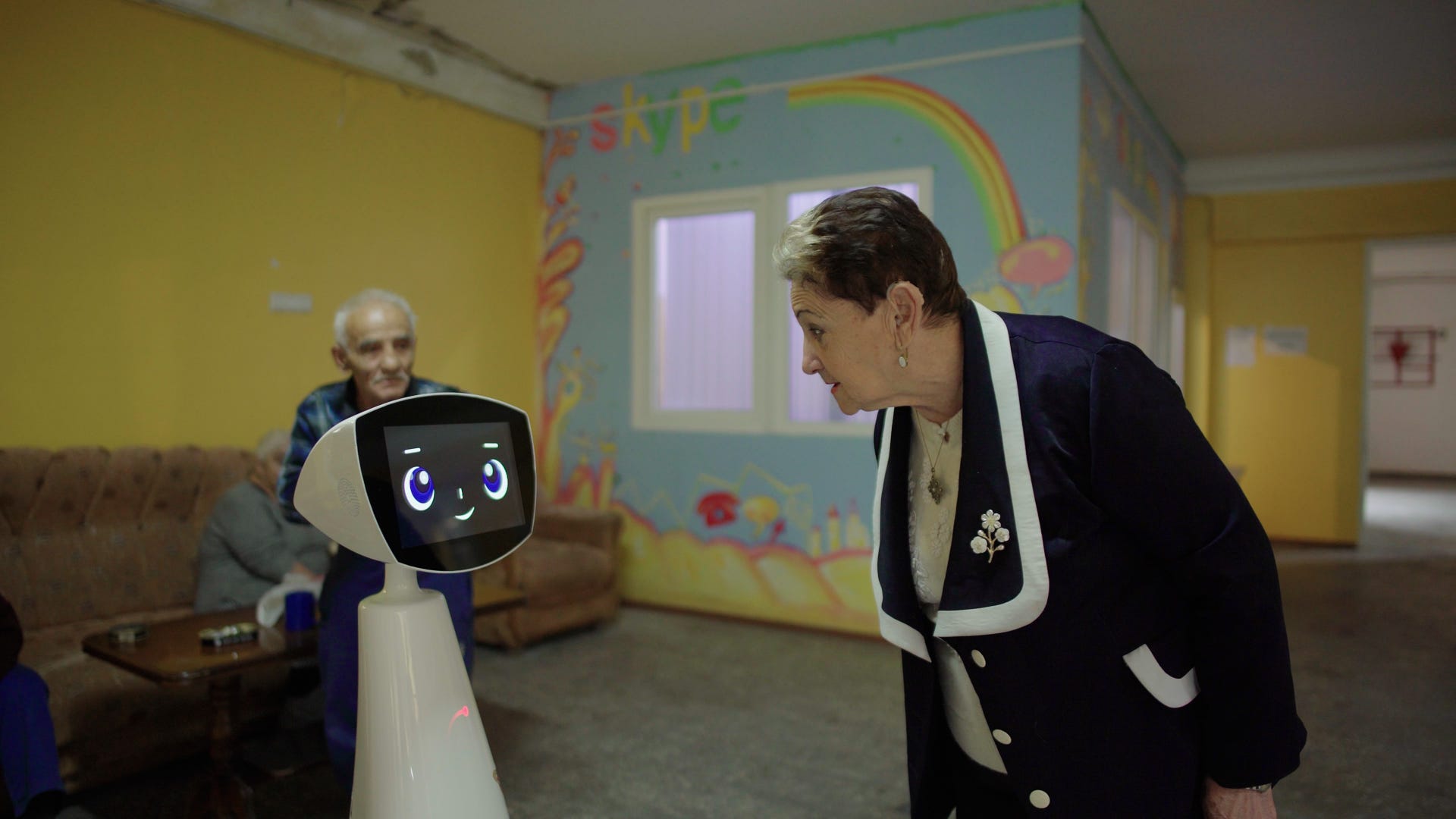
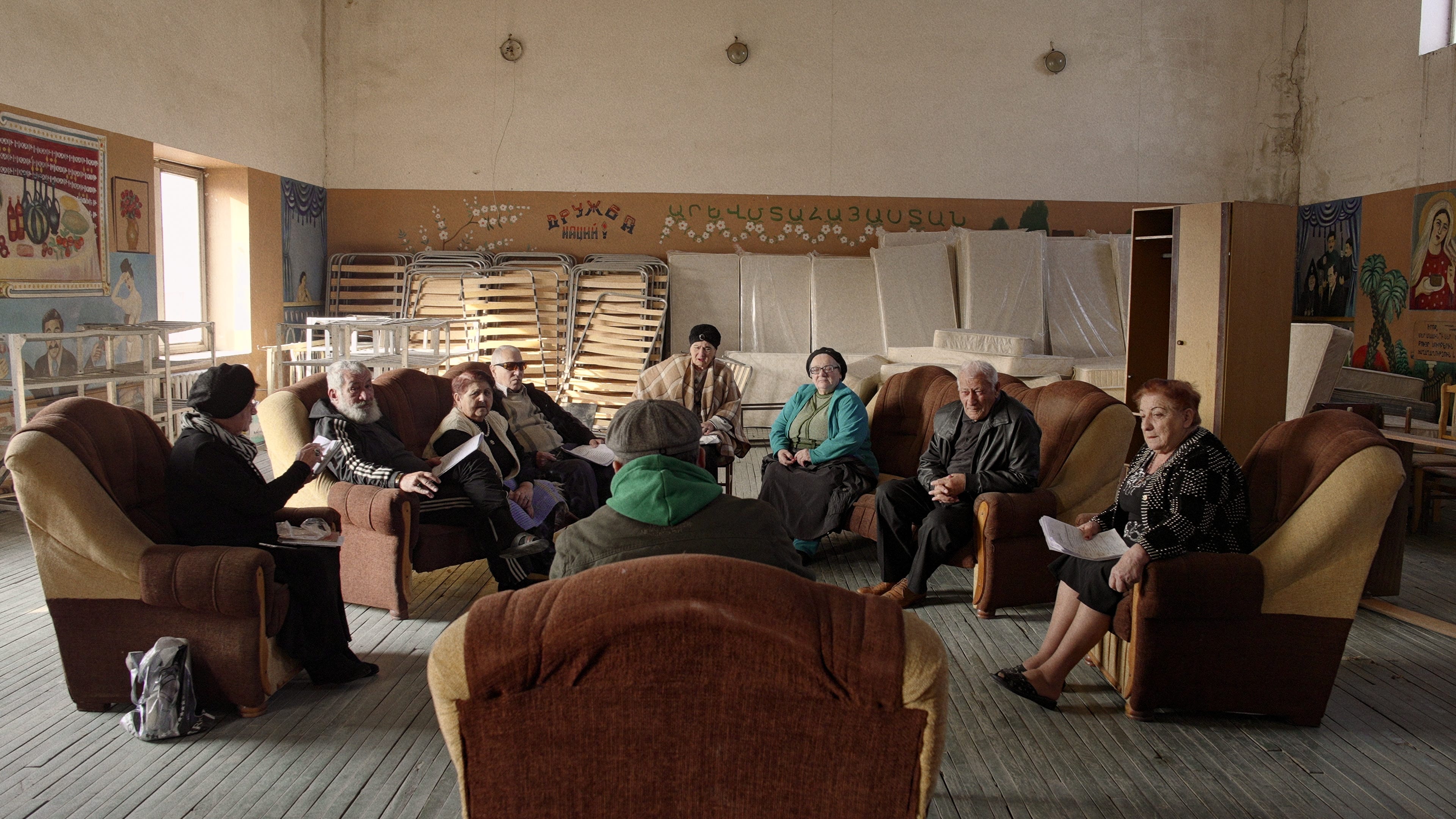
The film remains close to one building. Its corridors, old elevator, Soviet traces, stray cats and white care robot are part of the same world as the residents. Theatre gives them a reason to gather, but the film slowly finds its shape in their daily lives.
This interview was conducted online. Inna Sahakyan joined the conversation, Ruben Ghazaryan from Yerevan, and I from Istanbul. The text combines their written answers with a later online conversation about the film, its characters, and the choices that shaped the final cut.
Inside The Care Home
Abbas: I came to the film with the idea that working with elderly people requires a deep level of trust. Was that true in your experience? And was there a moment when you felt the camera was no longer a guest, but part of their daily life?
Inna: I would actually disagree a little. While trust is essential in any documentary, I have worked with elderly people a lot in the past and they are often the most open part of society.
They have already lived their lives. They are at peace with their past and usually with their own mistakes. They have nothing left to be ashamed of. It is a very interesting group of people to work with because they simply want to be heard, and that was exactly the case with our film.
The core of our filming really began once we became part of their daily routine, which happened quite quickly. They stopped noticing the camera and were completely open. They would forget the equipment was even there.
Because of this, it is one of the rare films where you can truly experience pure observational storytelling. They looked forward to us coming, we became a real part of their lives, and we still keep in touch with them today.
Abbas: Garnik Seyranyan feels like someone who brings theatre into the care home so people can speak again. How did you see his place in this small community?
Inna: Garnik is a wonderful person and a great team player. His role was much more than just a theatre director. To the people living there, he became a father figure, a brother, a friend, and even a psychologist. They respected and trusted him a lot, which was so interesting to watch.
There is a funny story about this. Garnik told us that after his first play with them, one of the older actors said, “Garnik, do not worry. When you get older, you have earned your place here with us. We will make sure you get the best room and the best care.”
They truly accepted him as part of their family, but still had deep respect for him.
Ruben: Garnik was also very important for the filmmaking process. We worked closely with him, talking about our ideas and what topics he could bring up to help people share their memories. He came up with his own ideas to try during rehearsals. Even though not everything made it into the film, he helped us so much to connect with the residents.
We are very thankful for his creativity and open heart.
Abbas: You also mentioned Garnik Seyranyan’s wife, Marine Asatryan. What did you know about her work, and did it connect to this idea of theatre as therapy?
Inna: I really don’t know much about all the details. I just know that she works with a group of disabled children, and they also do children’s plays. That is also part of therapy for the children.
She was doing it earlier than Garnik started working with the elderly centre. So I think he was inspired by her. They are really an amazing couple, with their relationship and with the way they combine their skills and interests. Marine also visits the troupe before every premiere of the Tarmani theatre with the elders. She asks them to stand in a circle and conducts a therapy session for success, followed by a prayer.
The prayer scene at the end of the film was her initiative. Everyone in the troupe really respects her.
Abbas: Did the rehearsal process give the residents something to wait for?
Inna: Yes, definitely. Garnik started this theatre project long before we began filming. The Shakespeare play was actually their sixth or seventh performance. He started it as a therapy project, and I really think it works.
The theatre became a place where people could escape from their hard daily lives. For some, it was a chance to finally live out the artistic dreams they had when they were young.
It became a very important part of the community. Even the residents who just came to watch really enjoyed it. It gave everyone something special to look forward to.
Abbas: Do you think art can still change something at this stage of life?
Inna: Yes, definitely. Art always opens up different layers in any human being, and it does not matter what age they are. Even at an old age, art can change something.
Actually, it is even more beautiful because when they commit to something like this, they understand that this may be their last chance to express themselves. Even while they are not physically in the same condition as in their young days, they truly want to achieve the best result.
This act of creating and performing itself is very beautiful and deeply human.
When The Play Became Life
Abbas: At some point, the rehearsal seems to become less important than the lives around it. Did that happen during filming, or later in the edit?
Inna: In observational documentary, you never really know where the story will lead you. But during filming, we witnessed their personal dramas coming to the surface. Their real life stories were as deep as Shakespeare, but so much more real to us. Because of this, we naturally started to focus less on the play and more on their actual lives.
In fact, the final decision to leave out the actual performance on stage was made during the editing process. We realized that the human stories became much more important than the theatricals.
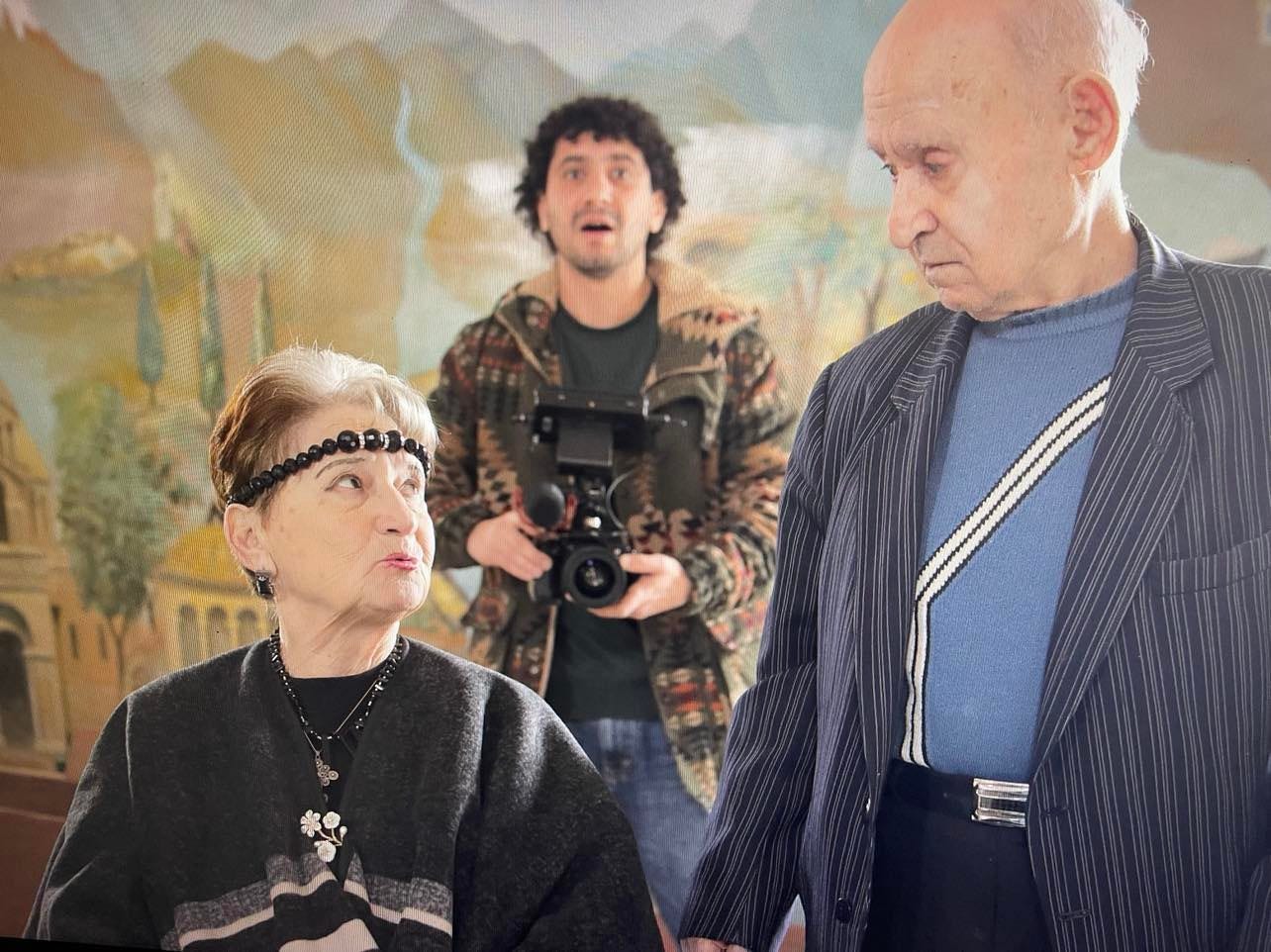
One of the most touching stories for us was Anahit, a woman in a wheelchair, and her transformation. During our time there, she changed from a woman who was always everywhere and had a very sharp tongue, almost like a Shakespearean jester, into a woman locked in her own loneliness.
It was very heavy to watch, but also so real. She seemed to understand that her life had passed by, she saw her own mistakes, and she felt a deep need to be forgiven.
Abbas: Ruben, you described Anahit as the spirit of the film. What made her presence so important to you?
Ruben: For me, she is the spirit of our film. There are no words to describe it. Cinema speaks a language that you cannot say verbally.
She is part of the chain that makes this film happen in that way. I don’t know how to explain it. She is my favorite.
What The Film Leaves Out
Abbas: You filmed for more than three years and had over 300 hours of material. How did you decide what the film should follow?
Inna: We had over 300 hours of footage, filmed over more than three years, with more than ten main protagonists. The care home building itself and the other residents were also a vital part of the story. Naturally, the editing process was long and challenging.
Film is a collective art form, and we had many creative debates within our core team: Ruben, Lilit Movsisyan, our scriptwriter and on-set director, myself, and our great editor Artur Sahakyan. We each brought our own strengths to the room. I focused on building constructive storytelling, while the emotional core was carefully shaped together. I hope we found a beautiful balance.
There were so many different ways this film could have been shaped, and completely different stories could have emerged. We had to face a lot of “kill your darlings” moments. It is simply impossible to fit every interesting event and deeply personal storyline of these people into just one movie.
We made some very difficult choices along the way. Initially, the plan was to focus much more on the theatre play itself. However, the film naturally shifted to focus more on the real lives and personal dramas of protagonists. Because of this, we made the tough decision to leave out much of the actual central play.
Another emotional cut for me was Ligia’s baptism scene. I truly loved that moment, but it ultimately did not fit the final narrative. Leaving out these stories was absolutely an emotional challenge, but it was necessary to find the true heart of the film.
Abbas: What was Ligia’s baptism scene like?
Inna: It was not just that moment. There were so many moments we had to leave out because the film was always going to be around 90 minutes.
Ligia was a classic Soviet communist. Lenin was on her wall, in her albums, everywhere. On my very first research trip, they were premiering a previous play, because Garnik had already been working there for a while. At the end, the Communist Party gave her a certificate, and she was so proud. That was also one of the moments I really wanted to keep in the film.
Then, while we were filming, she started to feel that death was close. She wanted to try the other side too, let’s say. The baptism was very funny. She was flirting with the priest, as usual. It was not only her. Several people, maybe five or six, decided to be baptized.
We tried to place that scene in the edit many times. But it was also about timing and balance.
Ruben: It was about timing and balance between the time dedicated to every person, every character. If we put that scene and other scenes of her, it was too much for her. So we decided to take it out.
Abbas: You also told me about a lower floor in the care home, a place closer to illness and death. Why did you decide not to include it?
Ruben: There are four floors in that building. There is the first floor, second floor and third floor. But the floor on the ground level is closer to death, in any interpretation of this word.
When someone has no hope to survive, maybe because of illness or psychological conditions, they are moved from the first, second or third floor to the ground floor. It is actually a very well-equipped place. It is not like a bunker. But when you get to the zero floor, you never get back.
We had footage from there. We had footage of hopelessly sick, very old people. We also had the priest visiting the zero floor and giving people a chance to talk to God. But it was too depressive, and we decided not to use that material.
Inna: It was one of those “kill your darlings” parts again. We tried to put it in very delicately, but the place and the environment were very harsh.
It is really a very heavy place. We wanted to concentrate more on hope in the film. Toward the end, you can feel the hope fading more. We start with much more hope and life, and we come closer to the end of life and to the understanding of values for each one, especially for Anahit in the movie.
But that place was closest to death rather than life. That is why we decided to exclude it. It was really very, very depressing.
The Building And Its Time
Abbas: The robot, the cats and the old corridors create a strange contrast in the film. How did these details enter the film?
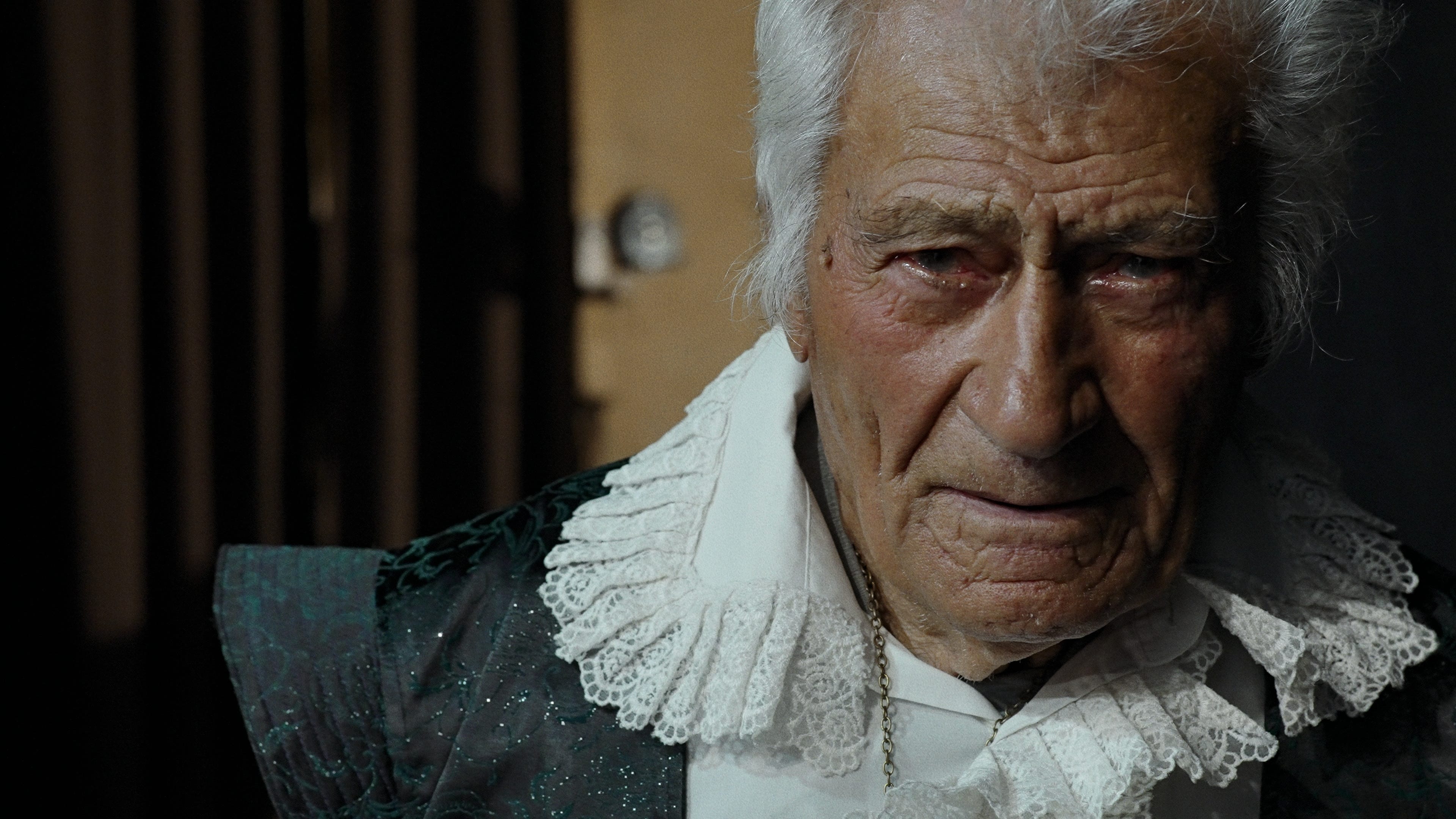
Ruben: The modern robot, the stray cats, and the kitsch panels on the walls are all simply part of the reality there. It is a place where time mixes the past and the future. The camera just could not ignore this beautiful eclecticism.
We are so grateful to our fantastic Director of Photography, Bagrat Saroyan. He has a very sharp and strong eye, and he beautifully caught all of these amazing images.
These visual elements did not change our personal connection with the residents at all. Instead, they helped us to capture the complex feeling of time and how the residents live within their own complex reality.
Abbas: The building feels almost like another resident: the elevator, corridors, Stalin portraits and cats. How did you decide to film the place this way?
Inna: For us, the building was never just a background. The old elevator, the long corridors, and the Soviet relics hold the heavy weight of a whole history. In many ways, the care home is a physical reflection of the residents’ own lives. Just like the people living there, the building has a past that is slowly fading, representing the decline of a specific era.
Then, the careful work of our editing team sharpened those real elements to create a strong metaphoric contrast. We wanted to show the difference between the dream world of the theatre and the surreal feeling of the building itself.
Abbas: You said the people and the building felt as if they were made from the same material. What did you mean?
Ruben: The place itself is a character. It is built with those people. The old walls are the same as the older people there. They are organically integrated into that place. They are not different things.
Abbas: The film reminded me at times of Soviet cinema. Was that mainly because of the editing, or the music?
Inna: I actually do not think our film is close to those classic Soviet documentary masters. I mean, I wish I could have the depth of a masterpiece like Ten Minutes Older. Our editing is much more based on the senses, impulses, moods, and the contrasts of cinema verite.
But I really think what gives the film that specific Soviet cinema feeling is actually the music. We used the music of the amazing Oleg Karavaychuk. He was a brilliant Russian composer, and his music was often used in classic Soviet films.
It is his music that brings that unique melancholic mood and atmosphere to the film, which naturally reminds people of that era and that style of cinema.
Shakespeare And Memory
Abbas: Shakespeare can be heavy, especially for elderly non-professional actors. How did it become close to their own memories and wounds?
Ruben: The Shakespearean text became a beautiful metaphor for our film. These plays are about the big dramas of life like loneliness, love and forgiveness. We used them to show the clear parallels with the real lives of the residents.
It highlights that these human struggles are universal across all languages, times and societies. This small theatre group in the retirement home became a kind of capsule of time and place, where the whole circle of life and all these huge dramas are concentrated.
For the elders themselves, Garnik understood that it would be too hard for them to memorize and deliver the exact Shakespearean lines. So, he built the performance around the stories and feelings of Shakespeare.
When exact classic lines were needed on stage, Garnik used professionally recorded voices, and the elders acted and reacted to those voices instead of saying the heavy text directly.
This was a very smart approach. The text itself was not the main focus, but it gave Garnik the perfect opportunity to start deep discussions with the group about these themes. In turn, it gave us the chance to film their genuine, personal reflections.
Shakespeare simply became the key to open up their own memories, lost loves and family wounds.
Gayane And Artsakh
Abbas: Gayane brings Artsakh into the film in a very personal way. How did you decide to include this part without allowing the political context to overpower her individual life? Were you worried that international audiences might see her story mainly through a political lens and miss the private, human part of her life?
Inna: From the very beginning, our goal was never to make a political film. We wanted to stay inside the microcosm of the care home. But as it often happens, the documentary reality took over our initial plans. We just could not leave her story out.
The blockade and ethnic cleansing were the painful reality happening while we were filming. We simply could not make a film and ignore this topic, especially when it directly affects Gayane’s life.
We filmed Gayane only briefly at the beginning. She was staying in the retirement home because she had to flee during the 2020 war. When the ‘peace agreement’ was signed and a so-called ‘peace’ was seemingly established, she returned to Artsakh almost right after we started filming.
But then the blockade started, and she was basically stuck there. She had to flee her homeland again after the shelling of the peaceful population in September 2023, when the entire Armenian population of the region was forcibly displaced.
Her story reflects the reality of all our people at that time. It was not only the residents of the retirement home who were helplessly watching the blockade, starvation, shelling, and escape. All of us were forced to sit and watch silently, unable to do anything, witnessing the absolute silence of the international community.
When Gayane returned to the retirement home, her big, sad eyes were telling much more about the tragedy that happened than any political statement could.
During the editing process, we realized this topic had to run through the whole film, but it had to be shown exactly how we experienced it in our daily lives. That is why we chose to use the television. We combined the TV news reports covering the outside reality with the deeply personal reality of Gayane’s forced displacement.
No, we do not think the film leaves room for audiences to see Gayane’s story only through a political lens and miss the private, human part of her life. Our main worry was actually that the situation itself might not be clear to non-Armenian audiences.
The reality was very complex, and we chose not to give a direct, linear explanation of exactly what was happening outside. However, it seems our worries were unnecessary. In all the international reviews, Gayane’s deeply personal storyline and her human tragedy have been clearly understood and reflected.
Abbas: Is there another film you would suggest for understanding Artsakh through a family story?
Inna: There are several, of course. I can mention one of my favorite and very important films about Artsakh, 1489. It is not political at all. It stays within one family.
The director, Shoghakat Vardanyan, filmed her parents while they had lost contact with her brother during the first days of the war. It shows the inside of the family, the pain of regular people who have lost connection with their son. Later, they find parts of his body.
It is a very intense, very strong documentary. It is not classically made. It was made with a phone, by a very brave director, and it is her debut film.
Distance, Observation And Ageing
Abbas: Did you ever step in as filmmakers, or did you mostly stay with observation?
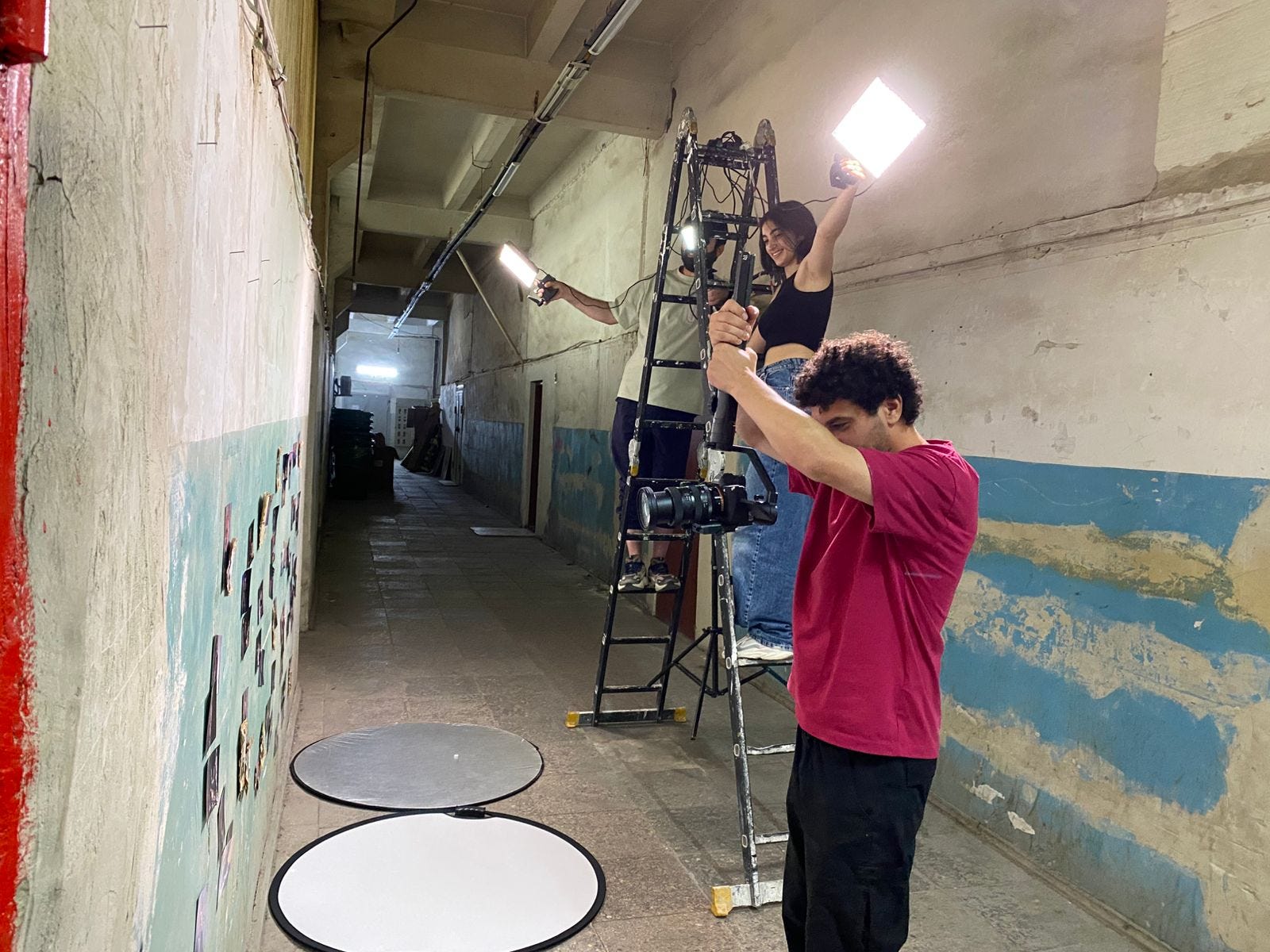
Inna: We never intervened or changed the story. We stayed true to our role as observers. However, we did help create certain situations that allowed the characters to open up and show different sides of their personalities.
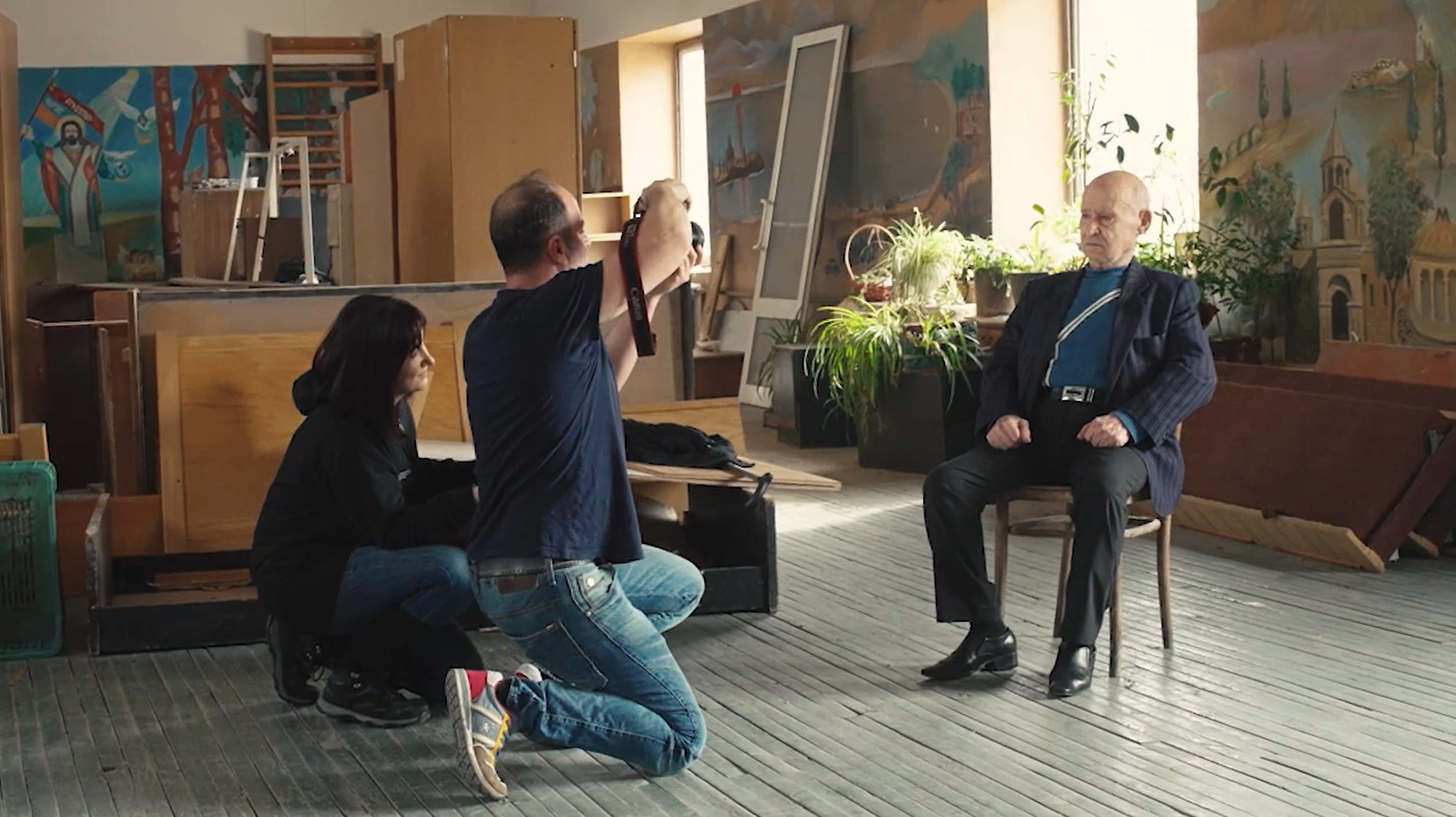
For example, together with Garnik, we arranged a special photo shoot for the residents. We wanted to see them all dressed up, wearing makeup, shining, and in a happy mood while being photographed for a theatre poster.
Basically, we just helped to set up the situation, leaving space for our protagonists to reflect.
Abbas: After more than three years with these residents, what stayed with you most?
Ruben: What stayed with me is that we are ageing as well. We are now closer to them than to young people.
That is the main thing I took from there for myself.
But there were many beautiful moments and also many sad moments. It is a very dense place, dense with every color and every mood and every rhythm. It is hard to separate one thing.
So we tried to put that character of the place in the film. The place itself is a character, I think.
I would like to thank Inna Sahakyan and Ruben Ghazaryan for taking the time to speak with Souzian Dispatch. Our conversation took place online, with Inna Sahakyan, Ruben Ghazaryan from Yerevan, and me from Istanbul. Outliving Shakespeare screened at DOK.fest München 2026 in the LifeTogether section.
The film screened in Munich on Thursday, May 7 at 3:30 PM, Sunday, May 10 at 11:00 AM, Tuesday, May 12 at 6:00 PM, and Saturday, May 16 at 8:30 PM. Screening venues included Neues Rottmann, Pinakothek der Moderne, Filmmuseum, and HFF - Kino 2.
Read more on the official DOK.fest München film page:
https://www.dokfest-muenchen.de/films/outliving-shakespeare?lang=enFollow Inna Sahakyan on Instagram:
https://instagram.com/i_sahakyan_iFollow Ruben Ghazaryan on Instagram:
https://instagram.com/ghazaryan.83
About Outliving Shakespeare
Outliving Shakespeare is a documentary by Ruben Ghazaryan and Inna Sahakyan about residents of an Armenian retirement home who take part in a Shakespeare project that opens space for love, loss, displacement and memory.
Set inside a decaying post-Soviet care home, the film follows a group of elderly residents as theatre enters their daily lives. Through rehearsal, conversation and performance, the film reflects on ageing, loneliness, retirement, memory, acting, life and death, and the fragile place where stage drama and lived experience begin to touch each other.
License
This piece, published by Souzian Dispatch and written by Abbas Souzian, is licensed under the Creative Commons Attribution-ShareAlike 4.0 International License (CC BY-SA 4.0), unless otherwise noted.
Images & Videos Credits and Rights
Certain images and videos included in this piece are not owned by Abbas Souzian or Souzian Dispatch and are not covered by this license. Rights to those materials remain with their respective copyright holders.