

![Abbas Souzian [Journalist]'s avatar](https://substackcdn.com/image/fetch/$s_!jkIz!,w_108,h_108,c_fill,f_webp,q_auto:good,fl_progressive:steep/https%3A%2F%2Fsubstack-post-media.s3.amazonaws.com%2Fpublic%2Fimages%2Ffa826ba8-cee6-41c0-830f-dfeaee93b2ca_1330x1330.jpeg)
Sometimes watching a documentary feels like sitting with a friend who speaks with an open heart about the pure experiences of life. Singing Wings, the acclaimed documentary by Hemen Khaledi, is such a film. It is a poetic, clear, and deeply realistic portrait of the coexistence between Kurdish people, nature, and migratory storks in the villages around Zarivar.
The film brings together an environmental concern with a deeper human question: whether to stay or to migrate in the Middle East.
Our original plan was to conduct this interview in person in Germany, as part of Souzian Dispatch’s special coverage of DOK.fest München. But the bitter and unavoidable reality of the Middle East once again imposed itself on the path of art. Due to the tense and critical situation in Iran following the recent US and Israeli attacks, neither Mr. Khaledi nor I were able to travel and attend the festival. Still, distance and closed borders could not stop this conversation from taking place.
We conducted the interview remotely from Istanbul, in Persian, under the heavy shadow of repeated internet disruptions in Iran. Between these frustrating disconnections and unavoidable pauses, the conversation slowly took shape. It became a dialogue about migratory birds, loyalty to reality, and the pain and beauty of independent documentary cinema.
Spoiler Warning: If you have not yet seen Singing Wings, please note that parts of this conversation refer to important details from the story, the filmmaking process, and the ending of the film.
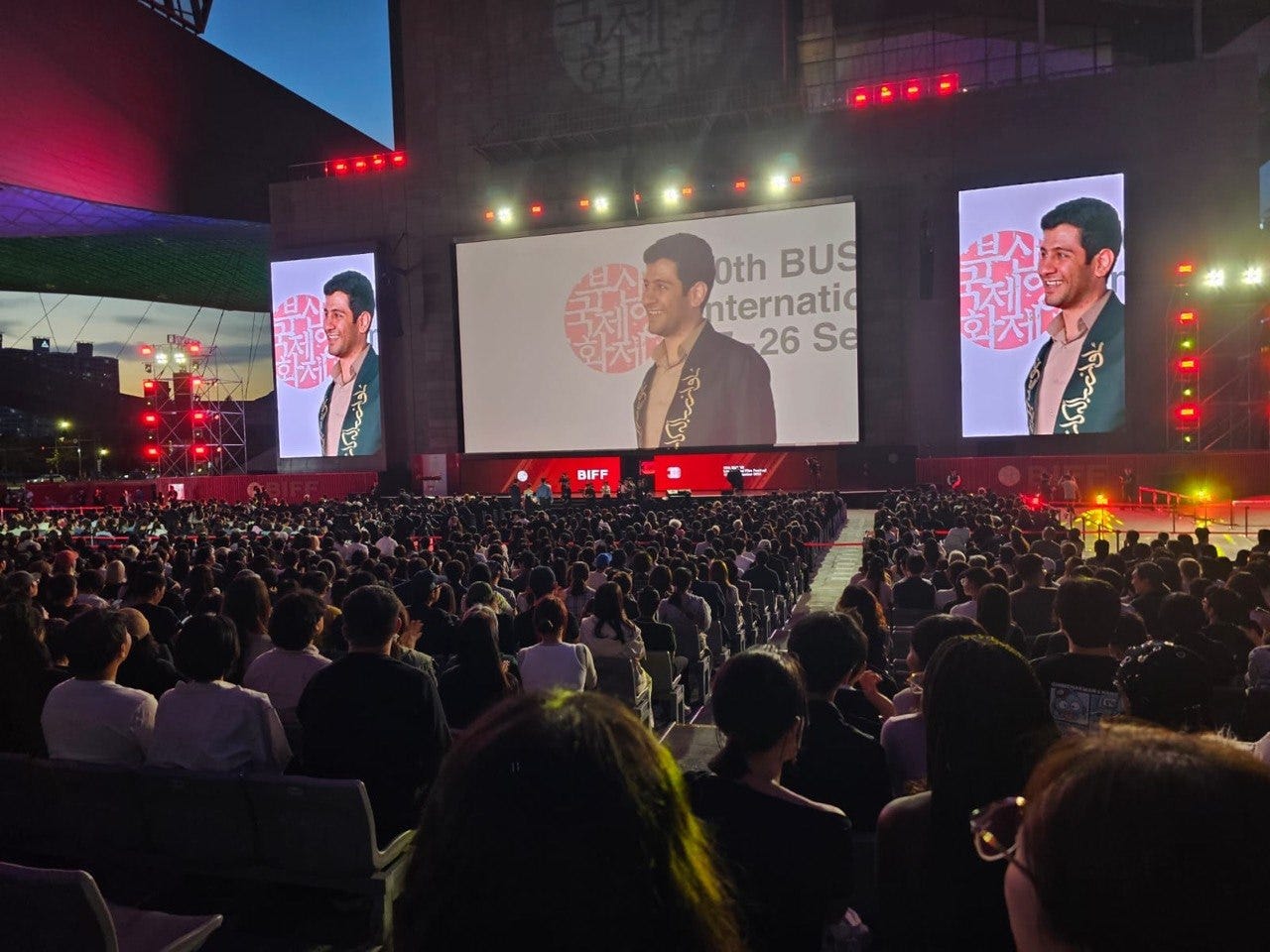
Abbas: Mr. Khaledi, first of all, congratulations on your recent success. I heard that after your film won Best Asian Documentary in Busan and also received an award at Full Frame, it won the Best Feature-Length Documentary Directing Award at this year’s Cinema Vérité festival in Tehran. I want to congratulate you on all this hard work.
Let us begin from the very first point and enter the world of the film. The idea for this documentary began with your childhood stories about storks. What was the first moment when you realized that this “local story” could become a feature documentary with wider, global layers?
Hemen: In fact, we were supposed to make a documentary about the coexistence of Kurdish people with storks. Since childhood, storks have always been fascinating to me. I remember that when the storks returned, we used to sing children’s songs to welcome them.
When I began researching storks, I traveled to most of the Kurdish villages and cities in Iran. In the villages around Lake Zarivar in Marivan, I saw that the lives of the storks and the people there were much more closely intertwined. The storks in these villages were facing a major problem, which was repeated collisions with power transmission lines. Whenever people found an injured stork, they would voluntarily take care of it.
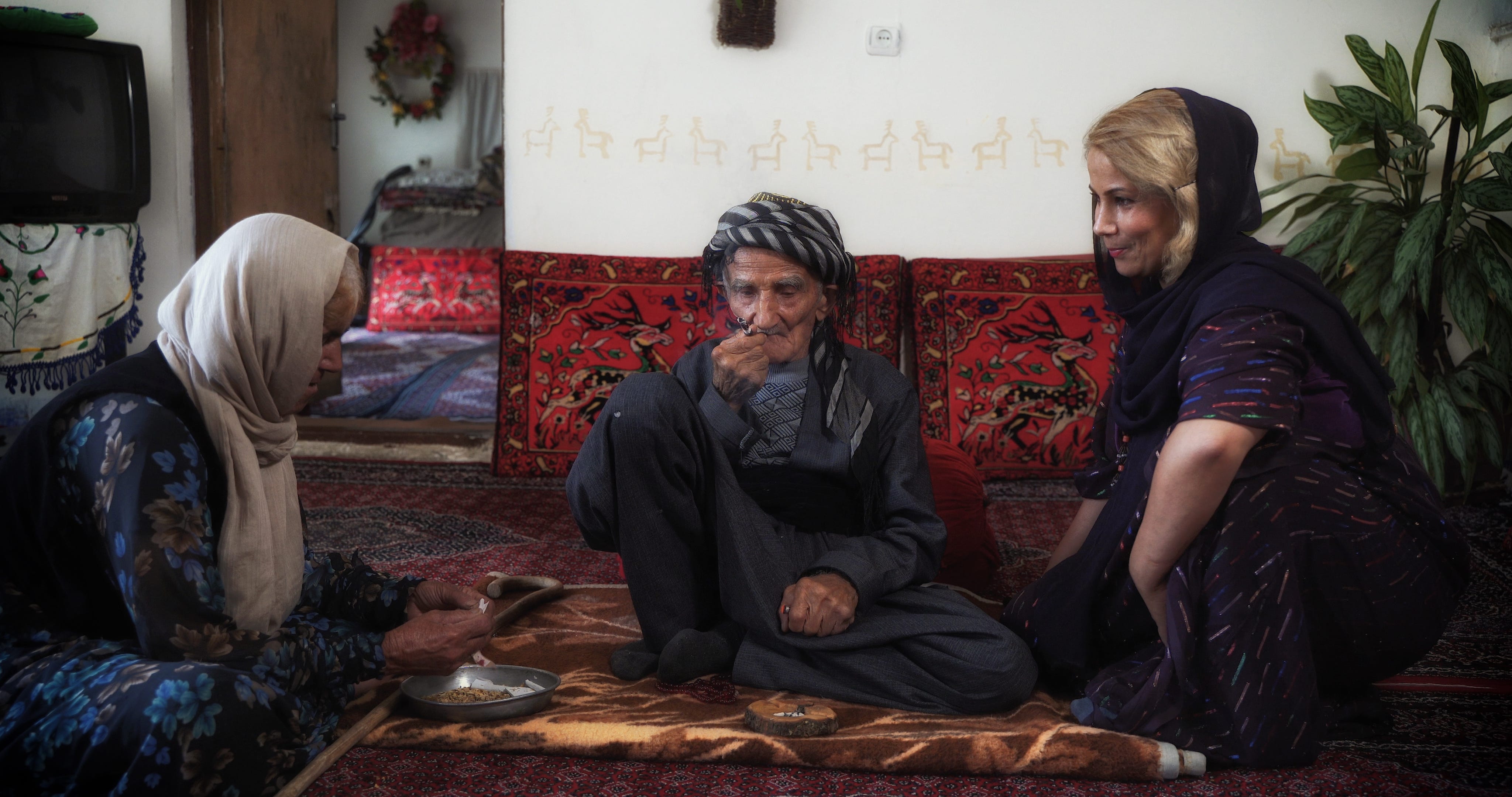
During the research stage, I rented a house for one year in one of the villages around Lake Zarivar and stayed in constant contact with the people of the villages around the lake, especially the village of Darreh Tefi. I remember one day when I went to Khadijeh’s farm for further research. Her family had also taken care of an injured stork the year before. I was asking Khadijeh about her view on the migration of storks, and while she was working on her farm, the conversation moved toward human migration and the plan of her daughter, Zhaleh, to migrate.
That day, Khadijeh’s words became inspiring for me and opened the path of my film. It made me stay awake the whole night, thinking about the similarities and differences between human migration and the migration of birds.
Abbas: So the subject was shaped completely from within reality and in a very natural way. To reach this level of intimacy with the characters, did you also live in the village during filming? How long did the whole process of making this documentary take?
Hemen: The making of the film, from the research stage to the final cut, took four years. But the filming itself took one year. As I mentioned earlier, during the research stage, I stayed in one of the villages close to Darreh Tefi. During the filming, the main crew and I stayed in “Darreh Tefi” itself.
Abbas: So this long-term presence must have helped build trust with the family. In the film, we see Khadijeh’s daughter preparing to migrate. How long did it take for the family to trust you and allow your camera to record not only a bird, but also these fragile and private moments of a human separation?
Hemen: As soon as I became aware of Zhaleh’s migration, I spoke with her, her husband who was in the UK, and their children. Because of the close relationship that had already formed between us and the family of Majid and Khadijeh, and also because of the love for culture and art that exists among many Kurdish people, they agreed to cooperate with us on this matter.
Abbas: Still, working with an elderly woman, a real family, and an injured animal is ethically very sensitive. Were there moments when you decided to pull the camera back or not film something?
Hemen: From the beginning, we tried to approach our characters like family. I was always accompanied by my wife, who is also one of the producers of the film. For us, more important than making the film was to communicate that we truly saw them as our own grandparents, and that we would never place the making of the film above preserving their dignity.
We tried to make the camera feel like one of the family members, so that its presence would not disturb the family’s daily life. In many cases, even if our camera recorded something that we felt belonged to parts of their lives they might not want to be shown, we did not use those rushes in the final edit.
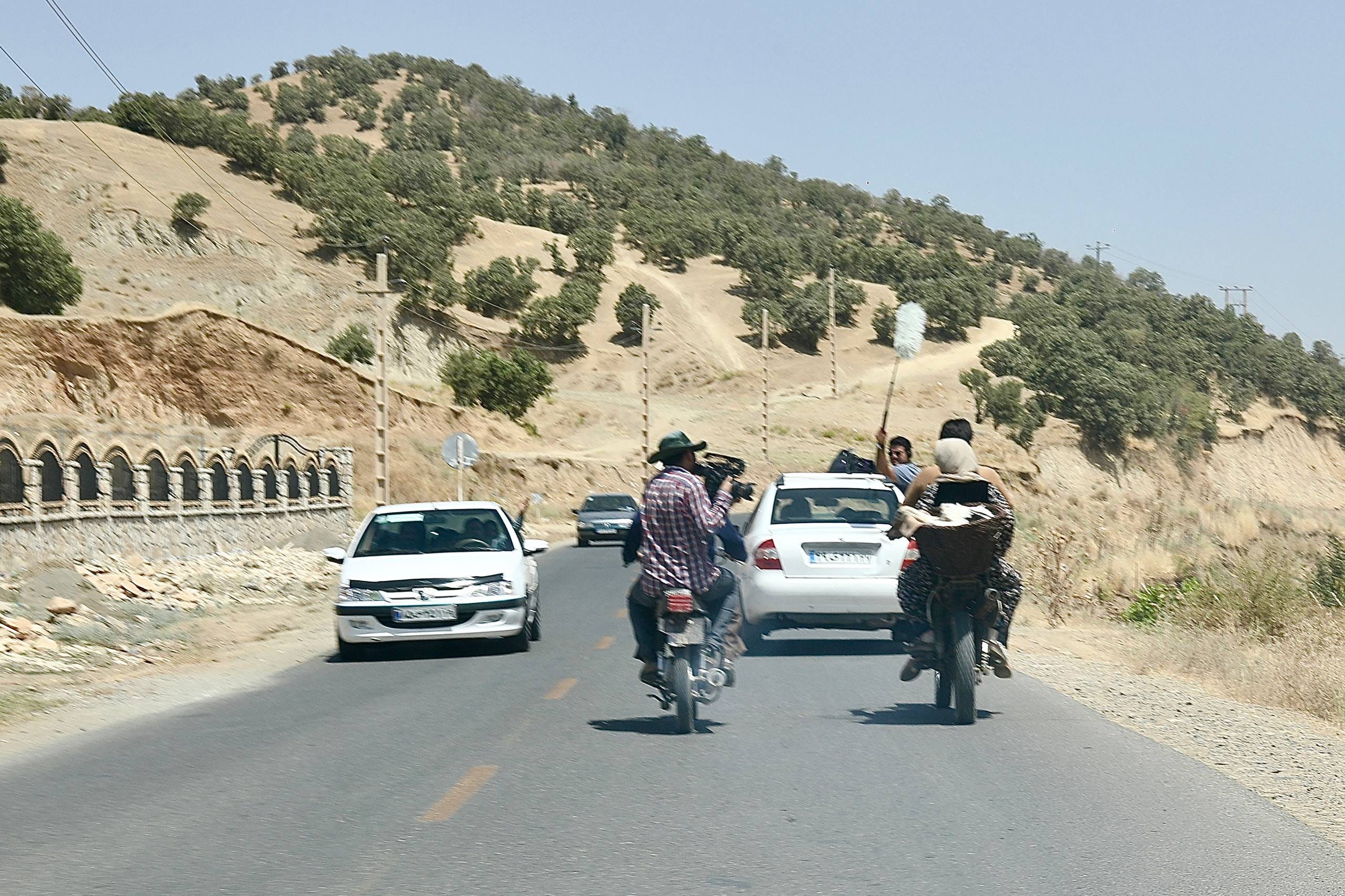
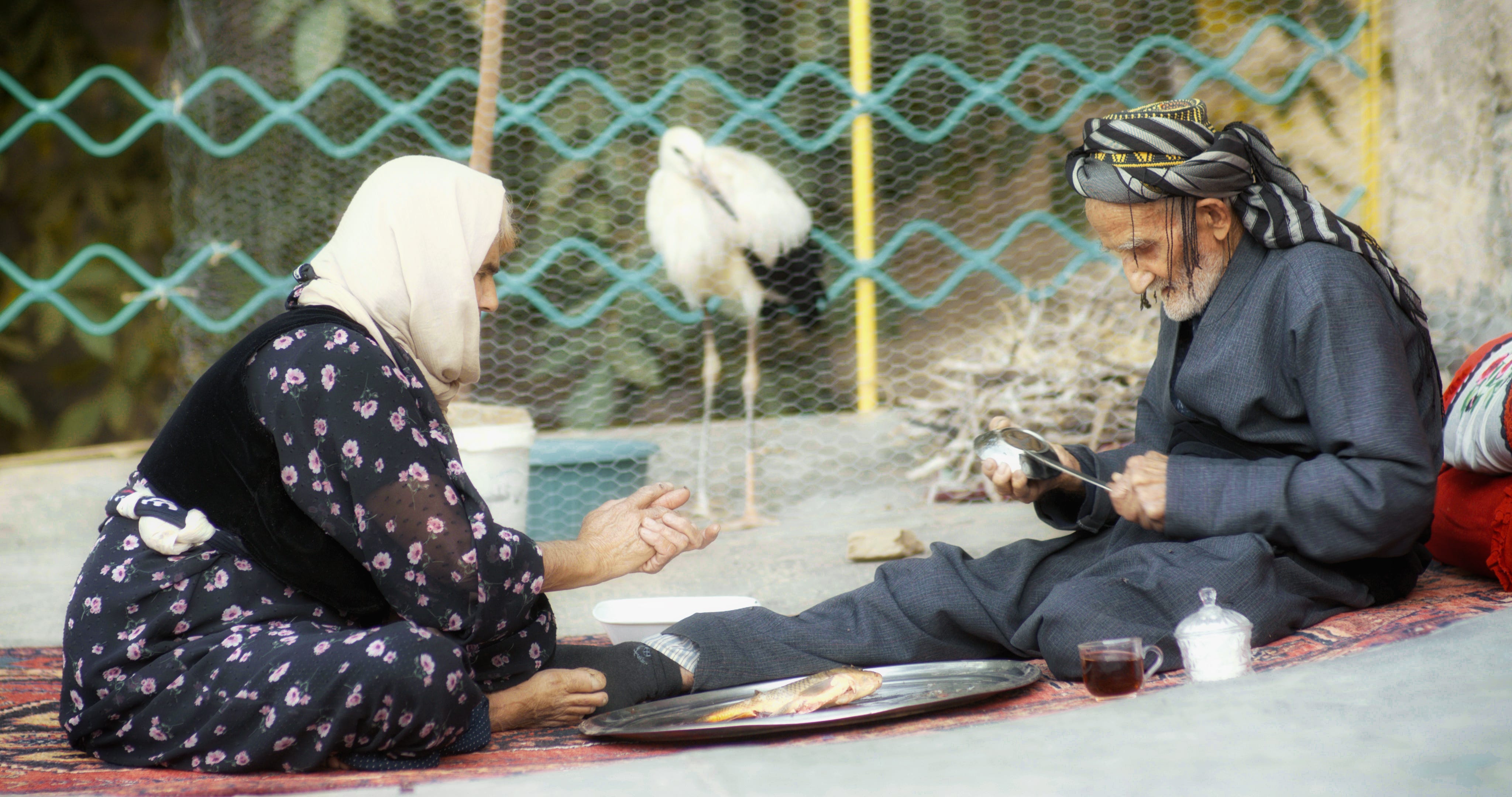
With the bird, too, we did everything we could, both during filming and outside the filming hours, to avoid causing it any unintended harm. As much as possible, we placed the assistants and crew members at a proper distance near the filming location. In most scenes, only I, the cinematographer, and the sound recordist were present.
Abbas: We know that in documentary cinema, unexpected events can sometimes completely change the path of a film. In Singing Wings, which unexpected event had the greatest impact on the form or direction of your story?
Hemen: In fact, the sudden death of the stork was one of those moments for us to some extent. But because I had consulted with several specialists and veterinarians, I was partly prepared for it. I had even imagined two possible endings for the film: one with the death of the stork, and one with its survival.
But something even stranger happened during the project. One day, when we went for filming, we realized that the night before, Khadijeh had slipped on the stairs and injured herself. After an X-ray, we found out that her leg had a fracture and needed to be put in a cast.
We filmed some of the early stages of this situation, but for two reasons we stopped filming for 21 days until Khadijeh recovered. The first reason was for Khadijeh’s comfort, and so that she would not feel that the film mattered to us more than she did. The second reason was that we did not want the audience to think we had deliberately added this event to the story as a metaphor, or that we were trying to deceive them.
During this time, our production manager, who was in Marivan, regularly visited both the stork and Khadijeh and helped them as much as he could. When Khadijeh recovered, we resumed filming.
Abbas: So stopping the work was also a conscious decision, and it was connected to maintaining that boundary and ethical space. Let us move a little toward the visual form of the film. In your work, the instinctive migration of a bird is placed beside the chosen, or perhaps forced, migration of a human being. During the shot design and filming process, how did you visually connect these two parallel lines so that they could reach one unified tone in the edit?
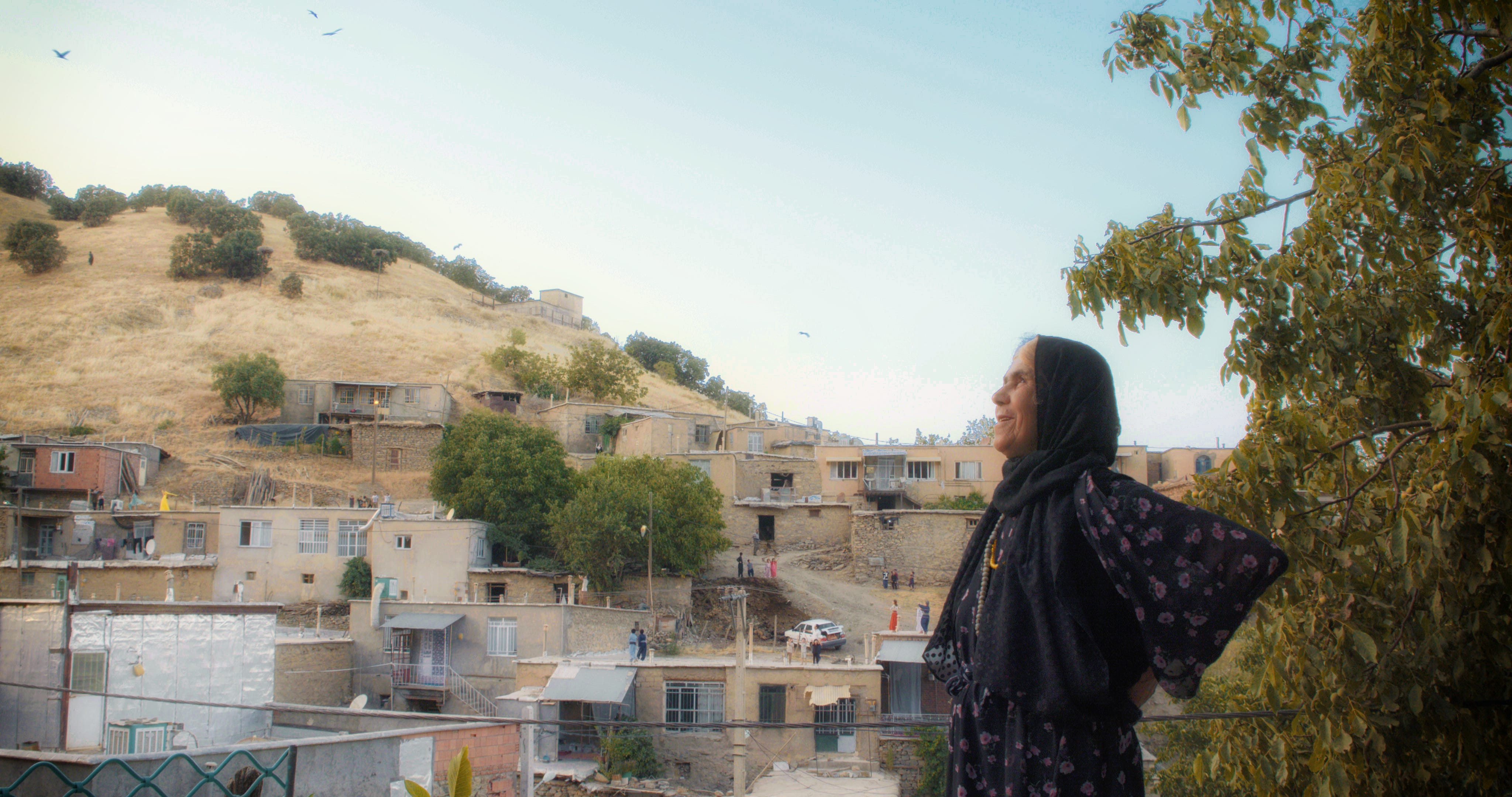
Hemen: As you can see in the film, the lives of the people unfold on the ground and on the slopes of the mountains, while the lives of the storks unfold in their nests and in the sky. I tried to show the connection between them through camera movements from below to above, and the other way around, through tilts down and tilts up. I wanted to connect them within a single shot, not only through editing or by placing separate shots next to each other.
Of course, the relationship and interaction between the villagers and these birds helped us a great deal. Also, the presence of the injured stork as a migratory bird inside the family, whether in the background of the images or at the center of attention, strengthened this idea. It helped the audience, and also us, consciously or unconsciously, to see the two parallel stories of the film as one whole.
Abbas: In fact, within these interactions, you mentioned that the birds were colliding with power lines. During the making of the film, did you intervene as a documentary filmmaker in this part and create any change?
Hemen: Yes. During the research stage, we had gone to the villages around Lake Zarivar, and the villagers explained to us that every year there were storks whose legs or wings were injured or broken. This was strange for us. Then they explained that some storks, while flying back and forth to the lake to hunt, were electrocuted because of the size of their wings and their collision with power lines.
We made some suggestions and, by explaining the necessity of changing the cables, we were able to present this as part of the cultural activity of the electricity department. In the end, the cables were replaced along a large part of the route, and this also had a positive environmental impact.
Abbas: About these interventions and suggestions, there was something in the film that I did not fully understand. The stork whose wing Khadijeh takes to make an instrument from, was it the same stork she had been taking care of, or was it one of the dead storks?
Hemen: As you saw, Khadijeh had developed a very close relationship with the stork. Our process during the making of the film was to make suggestions to them based on what they themselves said. For example, everything Majid says in the film is his own words. We only sometimes talked together and made suggestions.
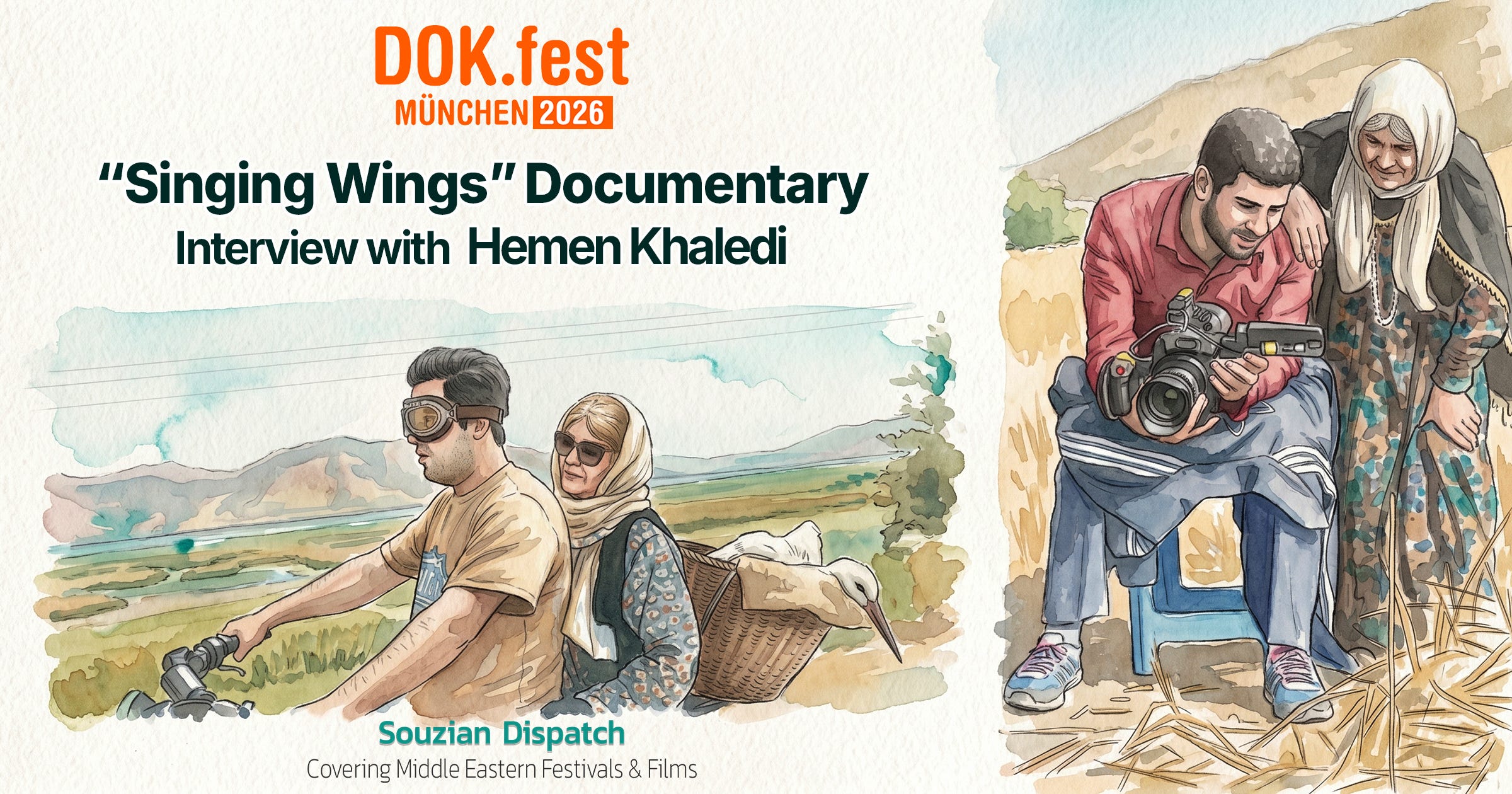
For example, early in the film, it was said that storks have very strong beaks and that they could even blind someone. At that point, I suggested that if this was the case, Aunt Khadijeh should wear glasses, and she accepted. We then sent the children to get glasses that would be visually interesting and would also fully cover her eyes. Unconsciously, she looked a little like a pilot, and that also pointed toward the theme of migration.
About the instrument made from the wing, I should say that even before filming began, I knew that some storks die and some survive. Based on this, I had two possible endings in mind, and I had written what would happen in each one.
For the ending in which the stork dies, I had spoken with several musicians in Kurdistan. I had heard that people make an instrument from the wing of a bird called “Dalash”, which is a kind of vulture, or from an eagle’s wing, because it is stronger and larger. But as we move toward Marivan and Kermanshah, birds such as cranes and storks are used more often.
After what happened to the stork’s wing, and following the suggestion of the musician who appears in the film, we made a dozaleh from the stork’s wing. We agreed that if it turned out well, it would stay in the film, and if not, we would keep it in the archive.
I decided not to film the stork’s body, because I did not think it would be right to show the body of a dead animal in the hands of an elderly woman. I tried to show it in a way that the audience would understand the stork had died. We also did not show the process of separating the wing from the stork’s body, because of the film’s poetic style, and because it was important for us that the film remain suitable for all audiences, including children. But it is completely understandable for the viewer.
Before separating the wing, NGOs suggested other options, such as taxidermy, but Khadijeh was not interested in that. I also suggested that a dozaleh could be made from it. Khadijeh found this idea interesting, and we went with her to see Kak Mustafa.
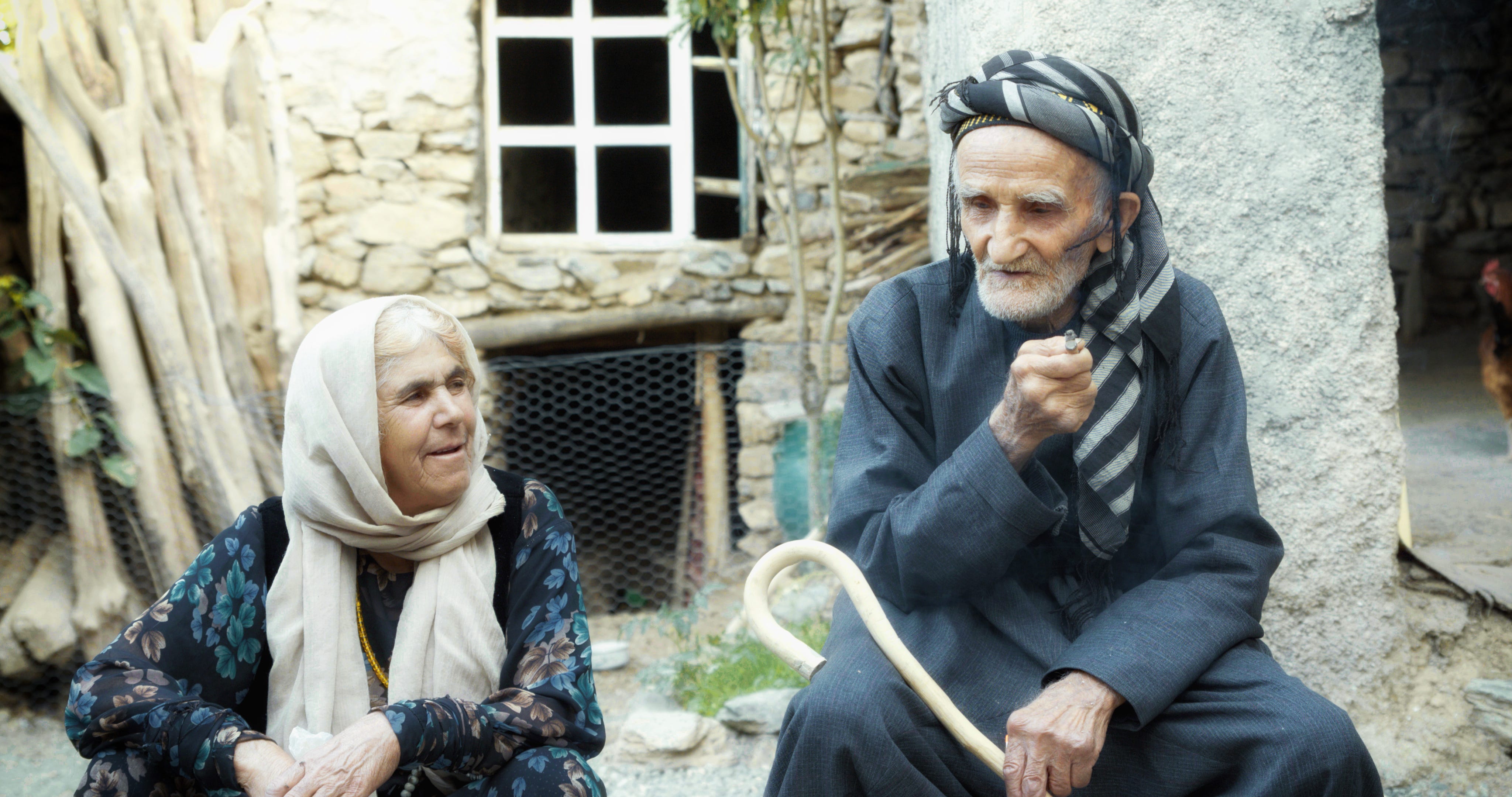
When Uncle Majid spoke about his interest in learning to play the dozaleh when he was young, I suggested that he play the instrument, and this part became very funny in the film. Then we decided to show this instrument at the same ceremony that is held every year for the storks. Usually, there is a singer and a dozaleh player at that ceremony. But to make the instrument more visible, I suggested that we not use a singer. Later, they gave that same instrument to me.
Abbas: I have to say, the section with the instrument became truly dramatic, and I was very moved by it. About the idea of taxidermy, I kept thinking to myself, I hope this does not happen. When they made the wing into an instrument, I suddenly remembered the title of the film: Singing Wings. The way these pieces came together was remarkable. And now that you say many of these things happened organically during the process, it makes your documentary even more fascinating. Also, those aviator glasses somehow became a symbol of the film.
Hemen: I had written a 60-page treatment myself, and I had thought about everything. Especially because I had written two possible endings, and I knew that taxidermy might happen, or that an instrument might be made. But as we moved forward, I could not force that old woman or old man to do something they did not want to do.
Majid himself also has a different view from Khadijeh in the film, especially toward nature. And to me, that view is very interesting. The idea that humans do not need to interfere too much with nature, and that nature itself is bigger and stronger than we think. All of this helped a lot. Before filming began, my wife and I lived with them for a year and a half, and we still love them very much.
Abbas: That shared life is exactly what has made the film full of delicate humor, playfulness, and the lightness of everyday life. Kurdish cinema is often associated with images of suffering, political hardship, and border struggles. Was this a conscious formal choice to move away from that cliché, or did the nature of Khadijeh and Majid themselves bring this tone into the film?
Hemen: This choice is partly connected to my own personal view, and partly to the nature of Khadijeh and Majid themselves, their relationship with each other, and their temperament.
In fact, I think the hardships and suffering that Kurdish people have gone through have already been shown in the films of great directors such as Yılmaz Güney and Bahman Ghobadi. It may be better for someone like me to focus on other aspects of Kurdish life that have received less attention, but are also very important. For example, the way Kurdish people relate to nature and animals, or their worldview toward life.
Abbas: Please tell us about the film’s music as well. The score is very closely tied to the mood of the story.
Hemen: The music of the film was composed by one of the great composers of Iranian cinema, Mr. Sattar Oraki. After watching the film, he liked it and accepted the offer to collaborate.
At our first meeting, we became so close that it felt as if we had known each other for years. We became intimate very quickly, almost instantly. During our conversations about the film, he suggested that, considering the delicacy of the storks themselves, especially their wings and legs, and also considering the form of the film and his own personal style, he would design a delicate and minimal score for the film, using only a few instruments, but in an effective way.
Mr. Oraki emphasized that the film’s music should be universal, and that without occupying the audience’s mind too much, it should touch their spirit. At my suggestion, he also added a relatively Kurdish theme to it. We recorded part of that in Kurdistan, and in the end, both of us were happy with the result.
Abbas: And that universal quality of the music really sits beautifully with the film. Let us speak a little about the philosophy and symbolism of storks. What place do these birds have in the myths and collective memory of Kurdish people? For you, are they a symbol of returning home in this time of migration?
Hemen: Among Kurdish people, storks are seen as a symbol of goodness and blessing. For me personally, they remind me of the stories of my childhood, stories that my mother or the elderly women in our family used to tell us. They remind me of the time when we celebrated their return on the rooftops. They have shaped part of our collective identity.
I think leaving one’s homeland and land is very difficult for anyone. But for some people, there may be a kind of force or necessity behind it. Returning home or leaving it is a decision that can have a different meaning for each person. But the feeling of leaving one’s homeland is something that creates a relatively shared feeling among human beings.
It seems that the film places the audience in front of a question, and I think it is better for them to answer it with their heart: Is this film about leaving, or about staying?
Of course, whenever the storks return, they are welcomed by the people.
Abbas: In fact, the film’s first screening in Germany was also at DOK.fest, in a country where there are many debates around migration. What do you think a European audience, facing major migration crises today, sees of itself in the village of Darreh Tefi?
Hemen: In my view, after watching this film, or films like it, European audiences may realize that migrants are people much like themselves, and that many of them have migrated out of necessity.
Instead of taking a defensive position toward migrants, it may be better to face them with more empathy. This empathy may not make migration completely justified in every case, but it can at least help both sides accept each other more peacefully to some extent, and live alongside one another.
Abbas: With this in mind, I come to my final two questions, which are actually connected. If Singing Wings is, for you, a film about “leaving,” does it think more about “staying” in the end? And another question, one that may be the concern of many young people in the Middle East and Iran: why should we migrate, or why should we stay? What is your view as a filmmaker?
Hemen: If migration is a free choice, made to improve one’s personal abilities, then it can be very good. It may even be temporary, and it can bring benefits to both the society of origin and the society of destination.
But it becomes painful when it is no longer a choice and turns only into a necessity. In my view, when an artist becomes distant from their land and society, they need a long time to create again. They may lose their sources of inspiration, and perhaps they may no longer be able to create meaningful works as they did before.
But if migration is for gaining experience, and if it is short-term, then in the long run it can be helpful and constructive.
I would like to thank Hemen Khaledi for taking the time to speak with Souzian Dispatch, despite the difficulties around travel, distance, and internet access. Singing Wings had its German premiere at DOK.fest München 2026.
The film screened in Munich and nearby venues on Thursday, May 7 at 6:00 PM, Saturday, May 9 at 6:00 PM, Thursday, May 14 at 6:00 PM, and Friday, May 15 at 9:00 PM. Screening venues included HFF - Kino 2, Pasinger Fabrik, Liliom Kino Augsburg, and HFF - Audimax.
Read more on the official DOK.fest München film page:
https://www.dokfest-muenchen.de/films/singing-wings?lang=enFollow Hemen Khaledi on Instagram:
https://instagram.com/hemen_khaledi
About Singing Wings
Singing Wings is a documentary by Hemen Khaledi about Khadijeh, an elderly Kurdish woman from Iran, who cares for an injured stork while her daughter prepares to move to the UK. Through this simple and intimate story, the film reflects on Kurdish rural life, migration, care, and the quiet bond between humans and nature.
License
This piece, published by Souzian Dispatch and written by Abbas Souzian, is licensed under the Creative Commons Attribution-ShareAlike 4.0 International License (CC BY-SA 4.0), unless otherwise noted.
Images & Videos Credits and Rights
Certain images and videos included in this piece are not owned by Abbas Souzian or Souzian Dispatch and are not covered by this license. Rights to those materials remain with their respective copyright holders.