


All of Khadim Dai’s films take shape within dramas concerned with life in exile and migration, family, dependence and attachment, the absence of a homeland, and forgetting. His own lived experience becomes cinema. As a child, he fled the persecution of Hazaras in Afghanistan with his family and moved to Pakistan. In 2013, after surviving a school bombing, he went to Indonesia, where he remained for three years...
These bitter experiences now find their way onto the screen. In Your Dust Will Carry, Dai tells a painful story through memory, loss, and the responsibility survivors bear towards what has happened. His subsequent film follows Machid, a girl from the second generation of Hazara refugees in Quetta, Pakistan. Even before these two films, his short Resilience: The Journey of LGBT Refugees had expressed his concern for human vulnerability amid exile and displacement.
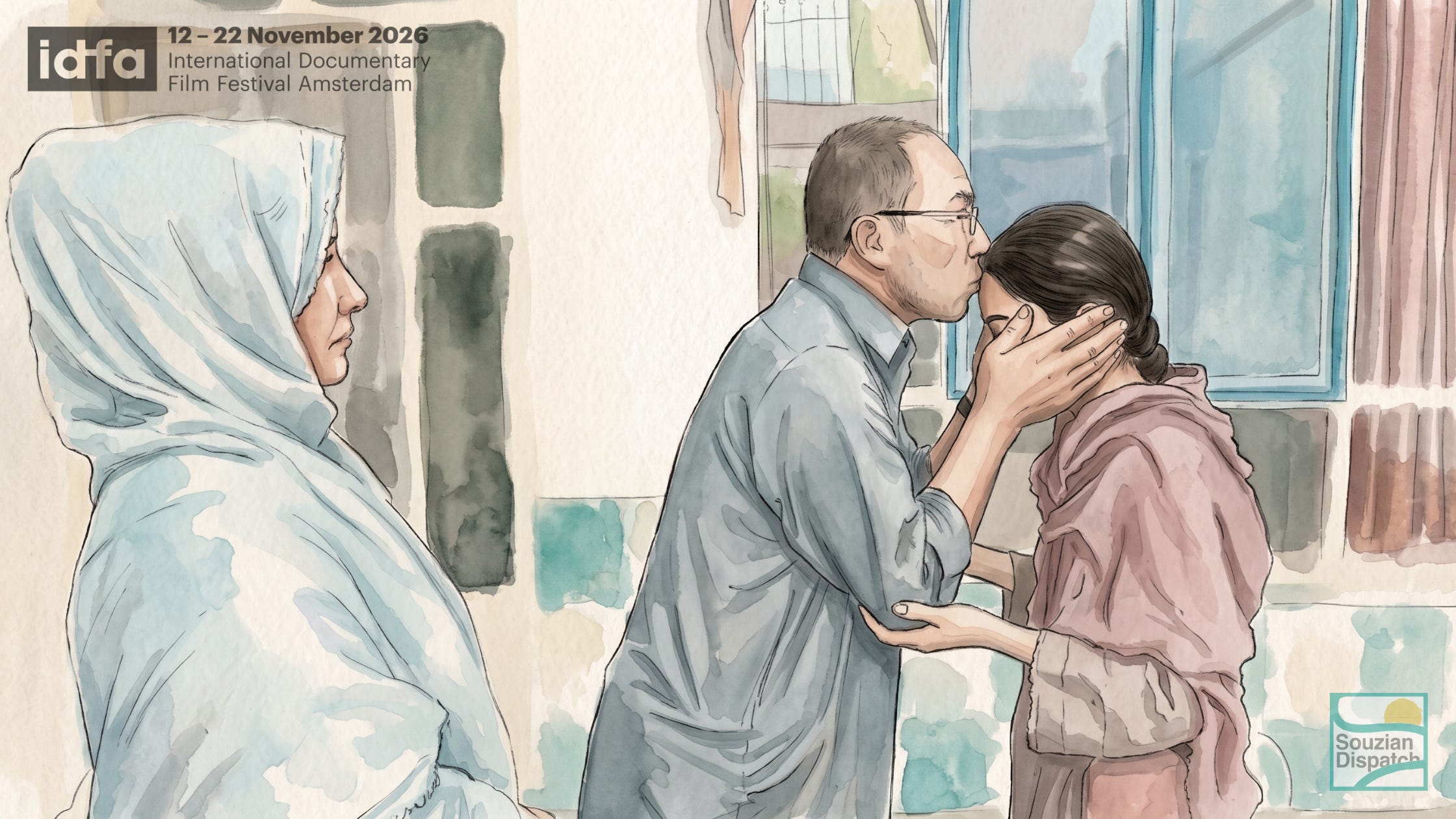
To approach his latest film, Hazara Town, we must first consider the concerns that shape his filmmaking: memory against forgetting, children surrounded by violence, Hazara identity and belonging, and ordinary life under extraordinary conditions. Dai places a family’s individual or collective experience of catastrophe at the dramatic centre of his films. That experience can become an important and credible record of countless others who remain unseen, whose stories have never reached anyone. His films examine the inner lives and memories of victims, the hardships of second-generation refugees, their vulnerability and survival, and the family in exile facing an uncertain future. They also explore the relationship between historical time and the everyday present of exile.
Dai keeps violence off screen while recognising his responsibility to recount its hidden history. He tells the stories of people who have survived, yet must live their present within the turbulence of what has already happened. Beyond the film, in the world of official history and its chronology, we know that war, terror and killing continue. But Dai turns towards people who protect their families and their memories, people who cannot even come to terms with the deaths of their friends.
They are constantly talking to one another, whether side by side in different circumstances or through mobile phones and video calls, so that the silence and terror of war and death do not erase them and their past. Beyond protecting themselves, they also seek to preserve the neighbourhood and the home they have made in exile. The neighbourhood recreates a sense of ethnic and social belonging, while the home shelters privacy and security. Outside both lies a larger world, a boundless place of exile with which contact is restricted or difficult. These concerns shape Dai’s social, and at times political, mise-en-scène.
In his earlier films, the child or adolescent is neither an absolute victim nor simply a window onto history. They are observers discovering the world around them. Through their presence, suffering becomes more than the visual content of an official report intended for others. The films share the everyday experience of exile. Within the architectural boundaries of neighbourhoods, cemeteries and domestic interiors, they explore how a person grows and takes shape as a refugee.
In Hazara Town, all these elements serve the unfolding of a single drama. Dai brings the concerns of his other films together, intertwining the history of exile, the life of a family, and the meaning of home. The film returns repeatedly to the home: protecting it, repairing it, loving it, leaving it, and returning to it.
In exile, the home becomes a shelter for people who have fled Taliban violence and entered a life of refuge, sometimes approaching something closer to homelessness and displacement. It becomes a place to practise living with one another and enduring exile, a place to learn flexibility and to reveal the strength of mutual love against an uncertainty that surrounds everything. Home is the last stronghold of identity.
Afghanistan, the motherland, is in flames. Pakistan, where a new home might be built, remains a place of exile for Hazaras. It cannot offer lasting security, however kindly or humanely it may receive refugees. It is also a point of departure for a third migration. Yet the film reminds us that, while safety may exist in a third country, the family will no longer mean what it once did after this further dispersal.
Dai shows the worsening conditions that make another migration necessary. To reach safety, the family, despite all its love and attachment, is gradually condemned to come apart. Migration is essential, but fragmentation is its price. His latest film offers a bitter and harrowing account of two needs set against one another: individual rescue and collective survival.
And then there is the film’s most painful aspect, something from which the world of exiles and displaced people seems unable to escape: the forced disappearance of people and the erasure of their faces, echoing the deliberate killings of Hazaras. Through exile and second and third migrations, those who have been killed slowly disappear from both public and private memory. Their lives recede into a fading recollection, surfacing occasionally amid daily routines as a brief sigh or a tear in the corner of an eye. At its bleakest, a life becomes a statistic, a number in a newspaper.
Dai’s films resist this process. In recording cemeteries, he refuses to turn them into mere archives that remind us how many more exiles are absent for ever. They become places that stand against forgetting, keeping a place among the living for those who lie in their graves. They resist collective amnesia. Here, human absence itself becomes living evidence of violence against refugees.
The cemetery is more than a place of burial, death and forgetting. It is where surviving families reveal a history of violence in a silence of profound meaning. Dai and his camera approach it with precisely this reversal of purpose.
Through his film, Dai tries to begin again, so that collective memory does not surrender to complete oblivion. His camera bears witness to this act. The children in his film carry the future of memory across generations, through second and third exiles, while the portraits of those who have died become an effort to resist the politics of forgetting.
At home, the camera records life and memory. At school, it records childhood and the future. In the cemetery, it records death and forgetting. Through these three pillars, Dai succeeds in making a film that reaches beyond people who have lost their homeland. It is about people who, I think, anywhere in the world, face the possibility of losing the world they share.
As I suggested at the beginning, the camera’s purpose is not simply to record violence or reproduce familiar images. It seeks to preserve the world of people in exile before it is forgotten, to leave future generations a record of reality and truth.
A human tragedy brought to the screen with the utmost dignity.
In a solemn, meaningful silence, like a mother whose loudest, clearest, most devastating scream reaches the world through lips sewn shut.
And cut!
Hazara Town (2026), directed by Khadim Dai, had its world premiere in the International Competition at IDFA 2026 in Amsterdam. The 103-minute documentary is a co-production between Belgium, Australia and Germany.
Editor’s Note
Abbas Souzian: I believe film criticism should make room for different voices and independent perspectives. Reviews published in Souzian Dispatch reflect the personal views and interpretations of their authors.
As editor, my role is to respect each writer’s voice while maintaining our standards of accuracy and fairness.
You can explore more independent reviews in our Film Criticism section.
