

![Abbas Souzian [Journalist]'s avatar](https://substackcdn.com/image/fetch/$s_!jkIz!,w_108,h_108,c_fill,f_webp,q_auto:good,fl_progressive:steep/https%3A%2F%2Fsubstack-post-media.s3.amazonaws.com%2Fpublic%2Fimages%2Ffa826ba8-cee6-41c0-830f-dfeaee93b2ca_1330x1330.jpeg)
In today’s world, travel and communication have shortened the distance between countries, but they have not made migration emotionally easier. People may leave their country to study, work, pursue personal growth, change their environment, or escape the difficulties they face in their homeland. Yet crossing a border does not mean becoming detached from one’s roots.
Friends, relatives, streets and homes remain part of a migrant’s life. At the centre of these ties is family: parents, sisters and brothers whose lives continue after one member leaves, but who still carry that person’s absence with them.
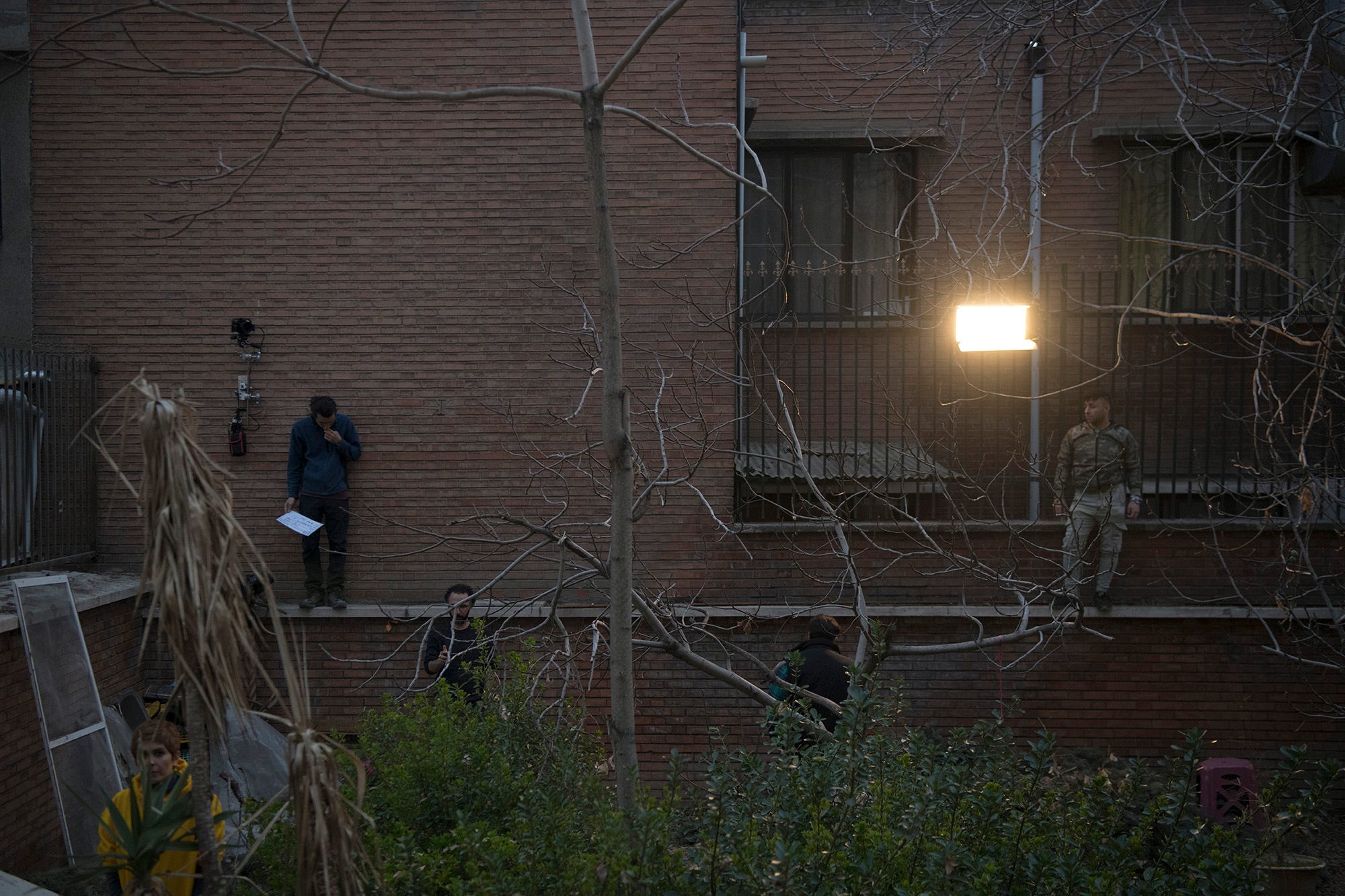
In the documentary Past Future Continuous, Morteza Ahmadvand and Firouzeh Khosrovani approach migration from this perspective. The film does not focus on the migrant’s new life at the destination, but on the family, home and country left behind. Cameras installed inside the house offer a means of care and communication across a long distance, while also recording the absence of someone who is no longer there.
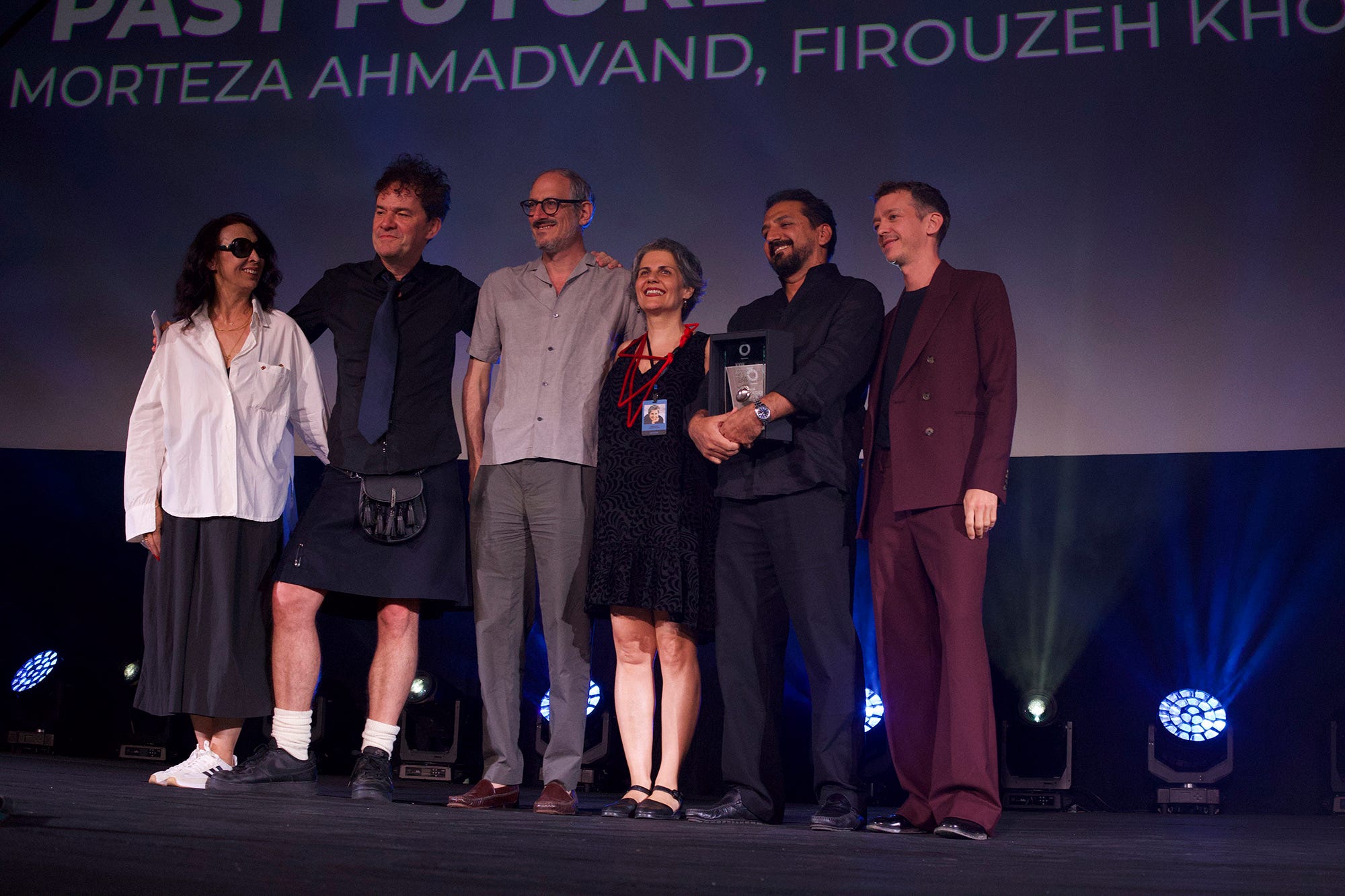
Past Future Continuous received the IDFA Award for Best Film in the Envision Competition in 2025. The documentary later screened in the International Full-Length Competition at the 23rd Golden Apricot Yerevan International Film Festival, where it received the Silver Apricot in July 2026.
The following conversation with Firouzeh Khosrovani and Morteza Ahmadvand took place in Yerevan during the Golden Apricot festival. It was conducted in Persian and translated into English for publication.
Abbas: The first question is usually where the original idea came from. What first led you towards this subject?
What I saw in Radiograph of a Family was an approach that uses archives and personal stories to address a wider subject. It enters people’s living spaces without looking down at them from above. Instead, the story emerges from within the different layers of their lives.
Is this a path you intend to continue across several films, using similar subjects or forms, or did it develop naturally for this particular project?
Firouzeh: Our subjects are very close to life, to our own experiences and, more broadly, to Iranian society.
A large part of that closeness comes from the fact that migration is on almost everyone’s mind. Every Iranian has thought about leaving at least once, and every Iranian living outside the country has thought about returning at least once.
So the question of leaving and staying is a familiar story.
The cameras and the other ideas within the film also came from several familiar situations and examples close to us, from experiences that Morteza and I had encountered.
Abbas: While developing the story, did you consider that the people in the house might object to the cameras, resist them or say, “You have invaded my private space”? Or would they eventually accept them? Did you think about showing such a reaction in the film?
Morteza: Yes. We dealt with that issue in considerable detail in the early drafts.
When you first come across something unusual, like installing cameras for elderly people, it seems striking. For example, I had a friend in Canada whose mother died while we were working on the film.
He had installed a camera in a similar way. It was pointed towards the chair where his mother always sat to watch television. After she died, the camera remained on for a long time, still watching that empty chair.
We found the situation very interesting. But later, when we researched it and spoke to someone who installed CCTV systems, we discovered that cameras are often installed for elderly people and children, not only for ordinary home security.
The early drafts included many different positive and negative experiences, as well as numerous contradictions. We even considered establishing a direct exchange between Maryam and her parents, allowing them to narrate parts of the story. But once we removed the parents’ voices, many of those sections disappeared too.
In the end, the idea of the cameras, together with the image of Maryam hiding beneath a sheepskin and similar motifs, provided a framework for the film's opening.
Even when we talk about the film, we do not place too much emphasis on describing it as a film about CCTV cameras or about watching someone from a distance. At a certain point, the film turns towards the idea of the homeland. The cameras become a way of looking at the country the migrant has left behind.
All these ideas created a structure through which we could work on the central concept, shape it and turn it into an artwork.
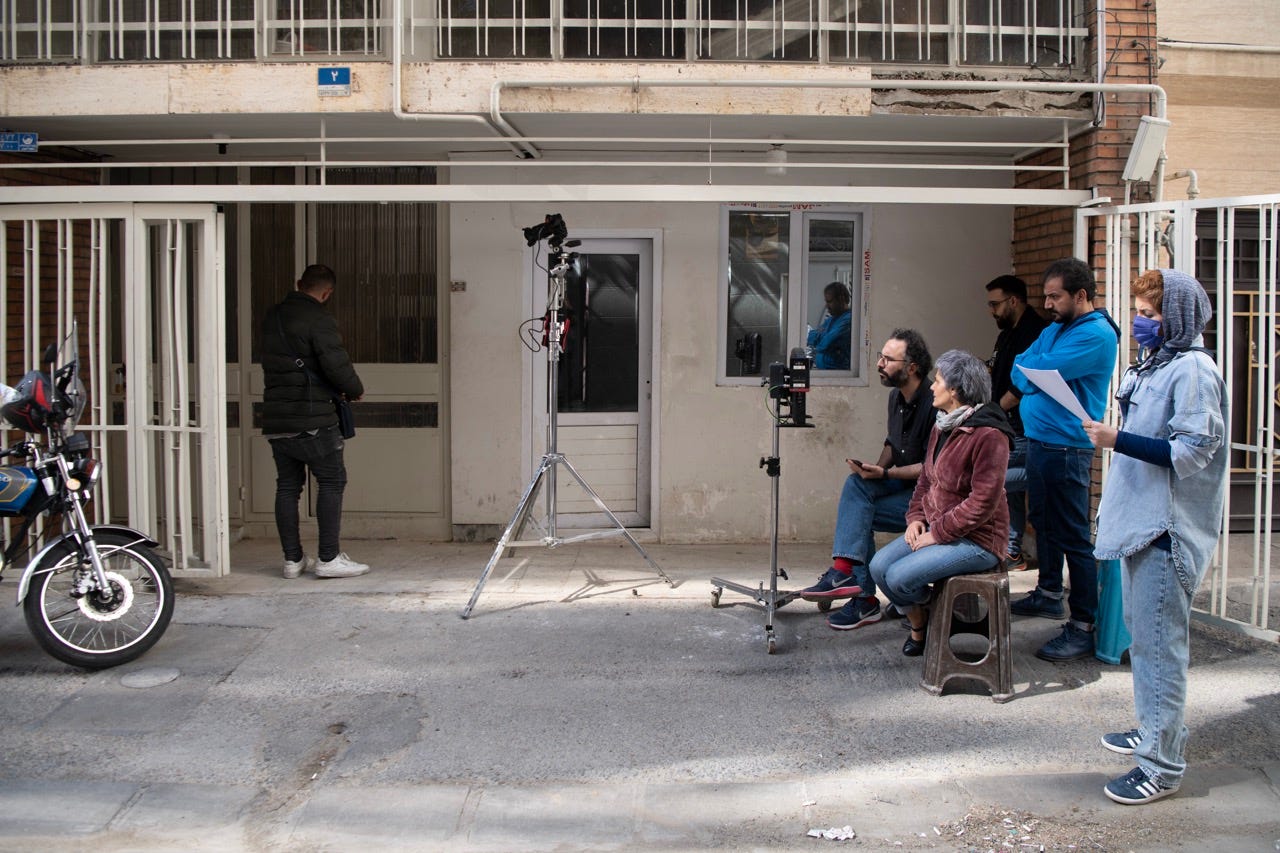
Abbas: Something else that really caught my attention was the positioning of the cameras. The mise-en-scene, the arrangement of the space, the lenses and the composition of the frames were very strong.
The elements are carefully placed, with the father and mother positioned on opposite sides. Could you talk a little about the film’s cinematography?
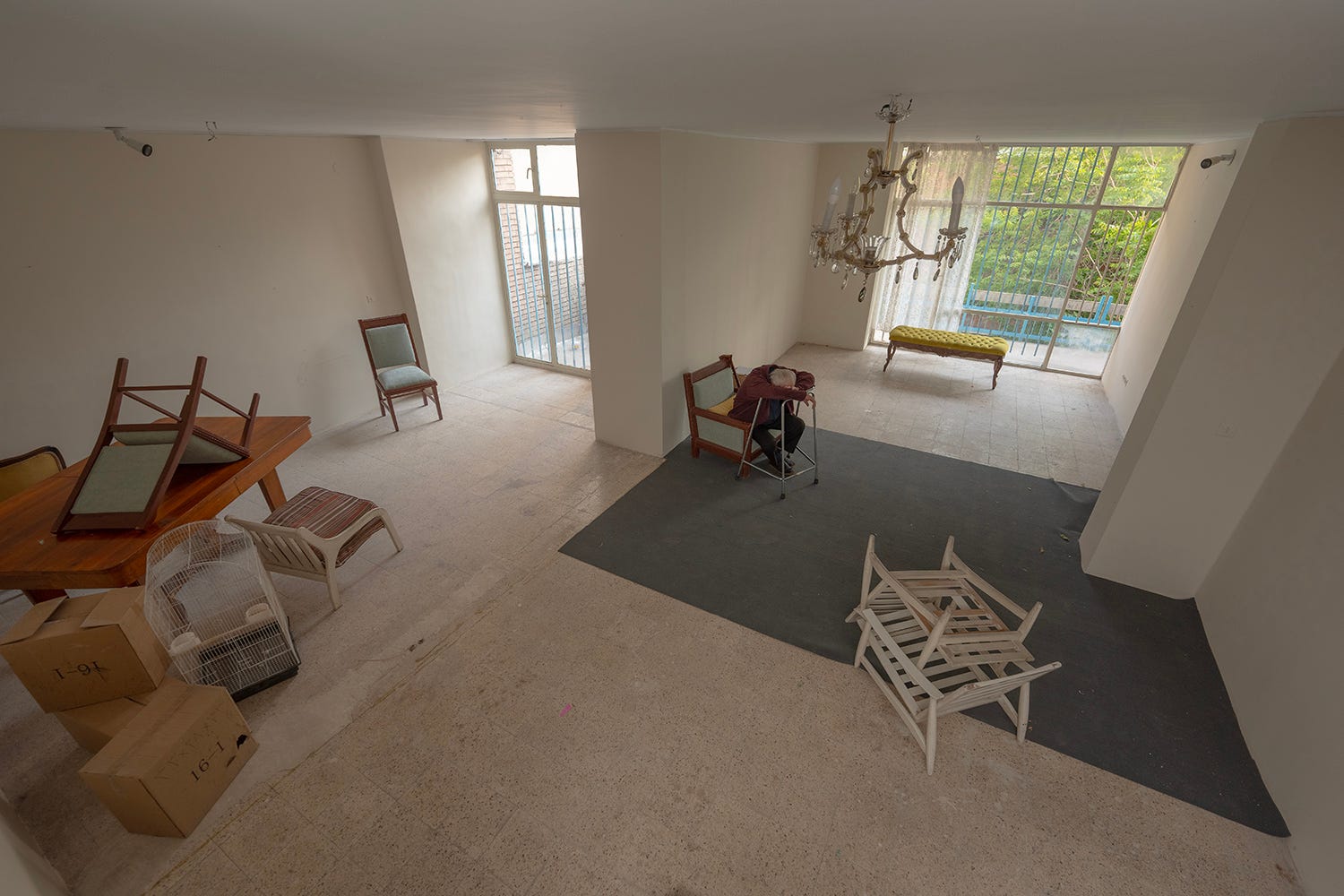
Firouzeh: Everything was designed with a great deal of care and patience. Even when we were designing the set, we went into considerable detail in shaping the house.
Everything the audience sees in the image had been designed repeatedly on paper. Every detail you noticed was something we had thought about, including every human figure.
For example, we did not want our two non-professional actors to move too close to the cameras, because that would distort their bodies and faces. Their positions in relation to the camera always had to be carefully designed.
We even moved objects each time we placed a camera in a different part of the house.
Then we had to decide which lenses would create the least distortion or curvature while still looking as much as possible like genuine CCTV footage.
Morteza paid attention even to details such as image noise. We wanted it to seem as though we were seeing exactly what Maryam was seeing on her monitor.
So we had to ensure that every image appeared to be coming through Maryam’s own devices.
Building a Film from Different Images
Abbas: Unless I am mistaken, the film contains four different types of image: the CCTV footage, material filmed in Iran, material filmed in the United States, and the archive images and artworks.
How did these different images come together in the edit? Many of them have very different visual qualities, particularly the artworks, which seem to belong to a separate space.
You have tried to connect them through narration and storytelling. The voices of Leili Rashidi and Ali Mosaffa appear to bring them together. Could you explain how these images found a relationship with one another during the editing process?
Morteza: Whenever someone asks how we brought them together, I say, “With a great deal of effort,” because we had very different kinds of material.
Let me give you an example. When you are working on a painting and trying to place an image within the canvas, you begin with a broad composition. You draw the initial design and then, depending on the harmony you want to reach, you may first add the lighter areas, then the darker ones, and finally apply the glazes.
It is a process of gradually reaching the harmony you have in mind. It is also highly technical and time-consuming. It takes shape by placing things together, removing them and putting them back.
Exactly as you said, we repeatedly sat down and listed the kinds of material we had.
We divided them into four groups of images and designed timelines for them. On the timeline, we would note that, for example, around the fifteenth minute we needed a particular kind of image.
At that stage, we were not even discussing the subject matter. We were only talking about the texture and quality of the image. Here we had a sharp, filmed Full HD image, while somewhere else we had a noisy image.
Once all of that had been arranged, the images had to establish the right thematic relationship with one another and serve the narrative.
When that stage was complete, we still had an extensive post-production process ahead of us. I remember Mohammad Haddadi, our cinematographer, also working with us on colour correction and post-production.
To reach the harmony we wanted, we genuinely used every tool that post-production made available to us.
One of the things that makes me happy is that, from the outside, films like this can look simple, as though only a few images have been placed next to one another. But in my opinion, the effort required to achieve that simplicity is far greater than in many projects that use extensive visual effects or place their subject in the service of technique.
Just yesterday, after the screening, someone asked me the same question: “How did you manage to make this?”
I said, “With a great deal of work. We spent more than five years on it.”
They said, “Really? I thought you had made it very quickly, under pressure, last summer.”
I asked, “Why did you think that?”
They replied, “I’m a filmmaker, and I simply couldn’t believe it.”
But even if that is the impression the film gives, I am happy. The time you have invested in an artwork is not something that should be displayed to the audience.
Ultimately, the audience should experience a fluid work. Whether we spent five years, ten years or any other amount of time on it is not something we need to push into the viewer’s face.
Firouzeh: when you have a consistent visual language, a clear camera approach, a screenplay and a defined mise-en-scene, the process can move forward much more smoothly.
But when you are constructing 76 minutes piece by piece, and none of our shots lasted longer than a minute or a minute and a half, you have to weave them together.
The narrative keeps moving through a voice-over, and you constantly have to see whether that voice works with the image.
It is what Morteza always says: where the elements should be in harmony and where they should be in contrast.
The work is like weaving. You weave it together in very small pieces and gradually move forward. You do not have the advantage of a ten-minute sequence.
Look at the video artworks, for example. Some last only 50 seconds. Organising all this material, and managing the dialectic between the text, meaning the words, and the frame, was very difficult.
We are both meticulous. Some of our characteristics are similar, while some are different, and those differences actually helped the layered nature of the work.
Morteza might say, for example, that after seeing a particular image, a sentence should arrive one beat later.
All of this took an enormous amount of time in the editing and sound design.
It is clear that films like this cannot be made in a hurry. You have to keep the heat low and allow them to simmer slowly until everything settles into place.
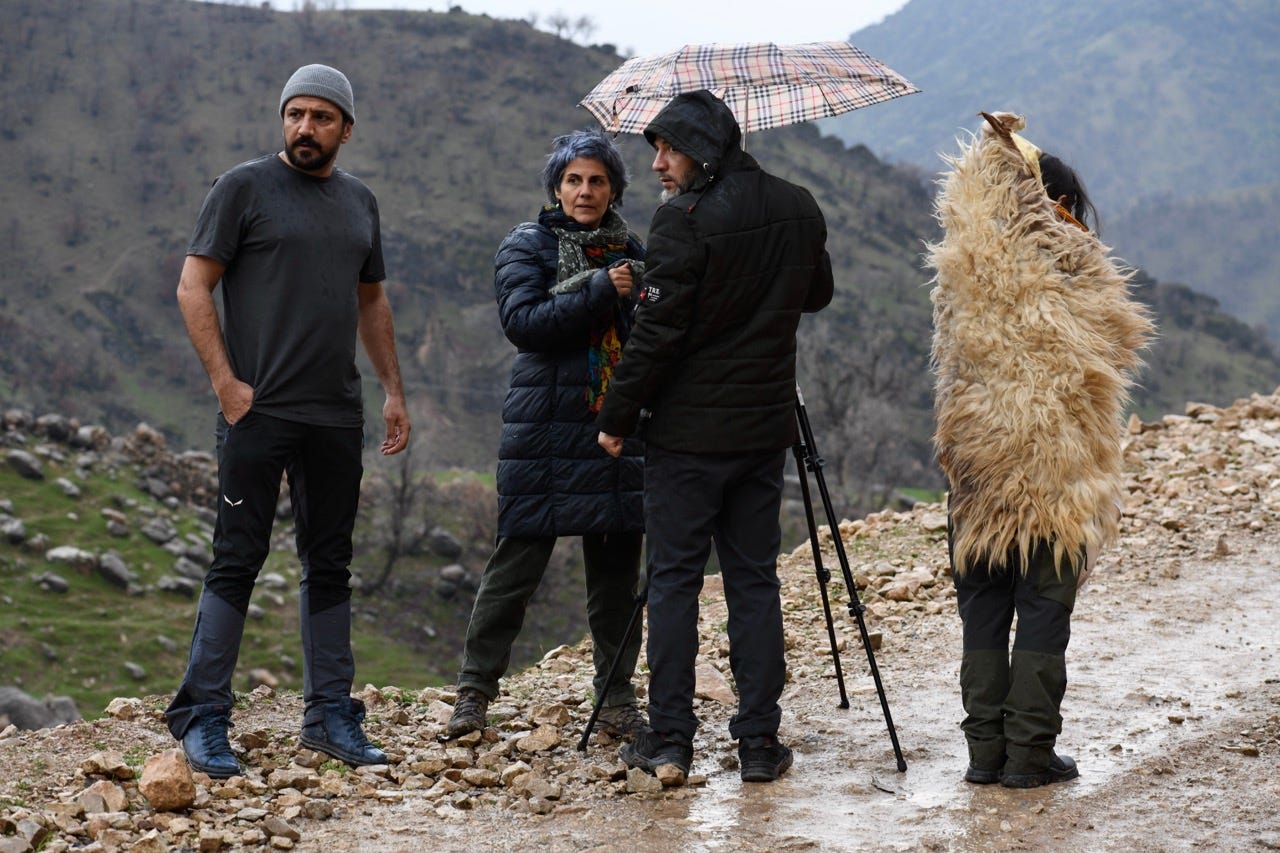
Abbas: I also have a question about the archive material. Where did those photographs and stories come from? There was, for example, a childhood photograph of Maryam. Were those materials real and did they belong to the same Maryam, or did they come from another story? Did you ever create material based on what you knew?
Firouzeh: First of all, our Maryam is not one person. There is more than one Maryam, because we wanted Maryam to represent every migrant.
She is anyone who has left, especially someone who has left and cannot return. She also represents all of us who have experienced leaving and being away for a period of time.
During the pitching sessions, we always said, “Maryam is all of us. I am Maryam, and you are Maryam.”
But I had a friend named Maryam who had a very good archive. So we had access to well-preserved, high-quality material. Whenever an image fitted our text, the sequence of scenes or the turning points in the film, we used it.
The process of selection and removal was therefore extensive.
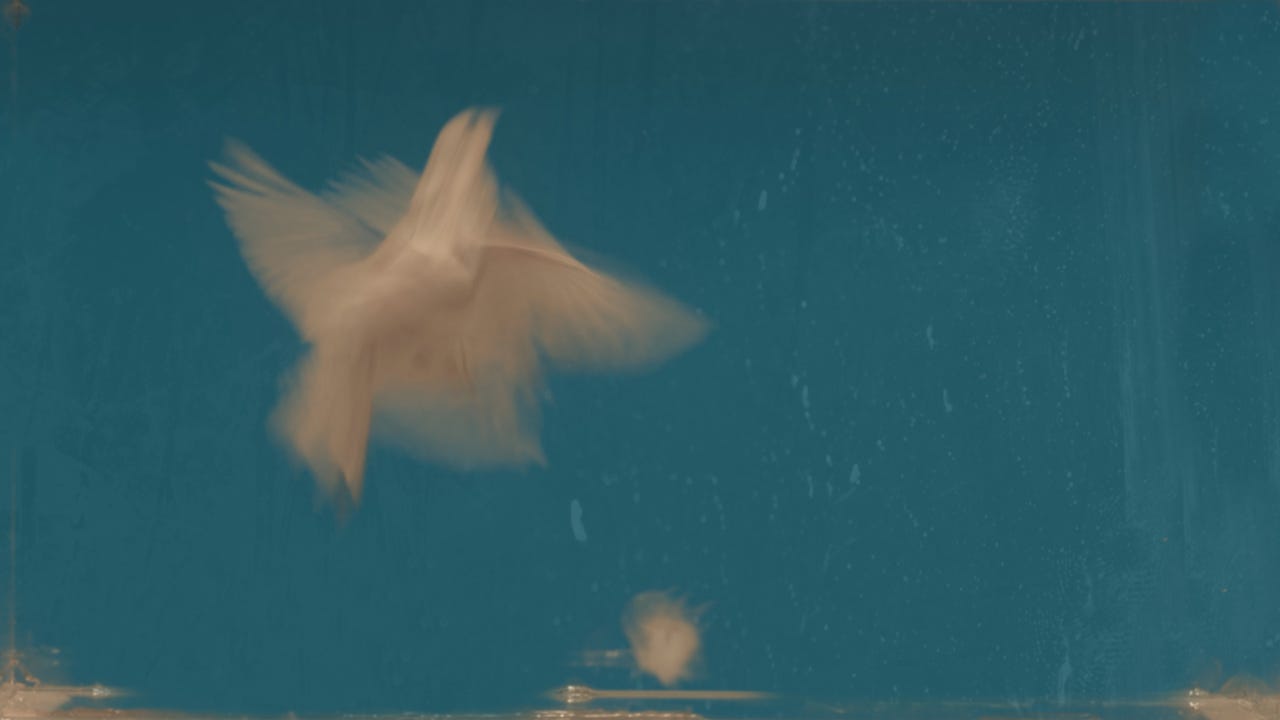
Abbas: Could you also explain the artworks, particularly the video installation Flight, and how your broader visual-art practice, which has also been documented by Centre Pompidou, shaped the visual language of Past Future Continuous?
Morteza: At a certain point, we decided to move away from the conventional use of archive material.
For example, in Radiograph of a Family, we had used archival images to address the subject of the revolution. Images of the revolution have been seen many times, so we began looking for alternatives.
The most immediate option was the material we already had. These video artworks came directly from our own hard drives and archives.
Much of the archival material used in the film had not been created specifically for this project. Some of it had been sitting on a hard drive for ten years, waiting for the day when ten or twenty seconds of it might become useful.
These images come from my own video artworks, pieces that have shaped my visual world and artistic language over many years. From the beginning, we did not want them to function merely as decorative or graphic elements. We wanted them to enter the narrative as a metaphorical layer.
When we introduced them into the film, we saw that this visual language connected naturally with the film’s world and created new meanings. That encouraged us to strengthen their presence and extend them through different parts of the film.
For example, in the scene where the fish move in the shallow basin of an empty pool, they are really an extension of the metaphor of the bird, the same blue bird that appears several times throughout the film. Sometimes it is inside the frame, while at other times only the trace of its image remains.
It is the same absent presence at the centre of the story: the migrant far from home, continually looking back at the place left behind and the path already travelled.
It was important to me that these motifs should emerge from my own mental and artistic archive, rather than being designed only for this project. The video artworks are therefore not simply visual elements. They are part of my memory and personal world, and here, in dialogue with documentary reality, they have acquired a new meaning.
More broadly, the film’s visual language comes directly from my long practice in painting, video art and installation. I did not approach this project as a documentary filmmaker borrowing from visual art. I approached it as a visual artist discovering what cinema could become.
The birds, the fish, the layered images and the house as a living presence all emerged from a visual vocabulary I had been developing for many years. Past Future Continuous became the meeting point between that visual world and Firouzeh’s documentary practice, and that dialogue ultimately shaped the film’s cinematic language.
I had previously experimented with multi-channel images in different ways, including the video installation Flight. Its nine channels corresponded with the idea of CCTV cameras. We took that idea and presented it in a different form, placing it in the service of the film’s central metaphor.
The rain that moves upwards came from a reversed work made in 2011, which we reconstructed using a photograph by Abbas Kasri, the same image of Mount Damavand that appears elsewhere in the film.
The image used in the end credits, the cage on which the birds come and sit, was also taken from a cube video artwork.
We placed these works in the film, saw that they worked, and then filmed or reconstructed them again according to the needs of the present project. The final one was an exception.
That last video has a visibly lower image quality because it dates from 2010, and we did not use the entire piece.
I should also mention a few names so they are not overlooked. Our young and very talented editor, Solmaz Eftekhari, devoted a great deal of time and care to the film.
I have already mentioned Mohammad Haddadi, our cinematographer.
We also had a unique experience while developing the text. For a period of around eight days, I think, we went into a house with Naghmeh Samini and spent the entire day talking about the text and writing it.
Naghmeh would write, and then we would take the text and work on it again. Before that, we had also worked together online for around three months.
A great deal of the film’s good fortune came from Firouzeh’s strong relationships. Some of the best people came to support the film.
We had exceptional friends and colleagues who helped us with real commitment.
Interestingly, they often had similar experiences themselves. Either migration and the homeland they had left behind were part of their own lives, or someone close to them had gone through such an experience.
That is how the video artworks entered the film.
The House and the Person Who Left
Abbas: Something I found interesting is that we do not see migration only from the perspective of the person who has left. We also see it from the perspective of those who stayed.
You have shown both sides of this separation. Ali Mosaffa’s voice represented the house and those who remained, while Leili Rashidi’s voice represented those who had left.
We Iranians have a deep attachment to our country, our homes and our families, and it is very difficult for us to let go of them. Could you talk a little more about this perspective in the film?
Firouzeh: Yes. We wanted to look primarily at the effect of migration on the country of origin, meaning Iran.
The story of a migrant, the life that a migrant builds elsewhere, has been told many times. Our concern was not to follow who Maryam was becoming in America, what she was doing or how she was living.
From the beginning, we wanted to show Maryam’s empty place.
It is the empty place left by the migrant. Whenever one person leaves a home, the light in one room goes out. That empty space, that absence, cannot be filled by anything else.
Our homes are gradually losing the presence of their best children. Iran is a country that is losing its children every day.
Morteza: There was no single, fixed position from which we could say exactly what Ali Mosafa's voice represented or did not represent.
We consciously avoided defining that voice too clearly until the second half of the film.
The voice wants to be the house. For a foreign audience, there can even be a misunderstanding that it is the father’s voice. Some people did interpret it that way.
For more than half the film, almost the first two-thirds, that possibility remains open. It could be any of those things.
It is only at the end that the voice clearly becomes the house. Then the house grows into something larger than itself. It can become the homeland.
That idea also went through a long process before taking its final form.
I can confidently say that nothing in this film was selected casually or without considering ten other alternatives.
Whenever an idea entered the film and remained there, we had probably considered nine or ten other possibilities before choosing it.
We never suddenly attached ourselves to something and said, “This is good. We have found it,” and then kept it unchanged until the end.
The voice-over went through the same process. It was written several times in different forms: a male voice with extensive details, the father’s voice, the mother’s voice, until it finally reached the form you now hear.
What you see and hear in the film went through a very long process.
There is also an important point that may be less visible, and I would like to mention it. There is actually very little text in the film.
When we placed this short text beneath the images, we became terrified about what to do with the empty spaces. There was a real sense of fear.
It was the same during the editing. An editor usually needs a source of sound to establish a rhythm.
The final days of editing coincided with the twelve-day war. We had to finish the edit and then move on to the sound.
Through Leila Maleki’s work, we created openings and gaps in the sound. The rhythm emerged through those gaps and silences.
The easiest thing for a sound designer is to fill the soundtrack. This was much more difficult. In some places, the sound first had to be filled and then emptied again.
Until the final moments, we had long and difficult discussions about this approach to sound and point of view.
This also leads into the way we worked together. I had some smaller experiences before entering this field, but my first feature-length documentary experience was clearly my collaboration on Radiograph of a Family.
A Shared Visual Language
Abbas: Could you explain how your collaboration worked?
Morteza: Our shared language is visual art. Most of the examples we discussed during the process came from visual art rather than cinema.
Visual art has a much longer and more extensive history, with many compelling examples and references that can be borrowed for the world of the moving image.
I deliberately use the term “moving image” rather than cinema.
For me, there is no fundamental difference. At one point, your material may be canvas, paint and painting. At another, it may be frames and design. At another, it may be film. For me, they have always belonged to the same continuum.
Firouzeh brought her own experience and the different works she had made, and an interesting dialogue developed between us.
We each maintained our own perspective. At times, both of us insisted on particular choices. But the result was that a shared visual language gradually emerged between us.
Firouzeh: Being image-based is very important.
Many people enter cinema through literature and work primarily with words. They are word-driven. We are image-driven, and our point of departure has always been the image.
It could even begin with a painting.
There were many occasions when we looked at the work of a Danish painter and thought about building our visual aesthetic around a particular artwork, in terms of colour, light or mise-en-scene.
We often begin with the image and move towards the story afterwards.
There is a broad concept, but that concept is itself based on an image.
First the image, then the word.
Creating a Presence Through Absence
Abbas: There was one sequence, one frame, that I loved. I called it “pure art”. It was the moment when they danced in front of the cameras.
Each of them was in front of a separate camera, with a clearly defined angle. There was the house, the loneliness, their effort to bring happiness, and someone watching them from somewhere else.
I expected us to see them from the front, through the lenses of those cameras. But when I thought about it later, I realised how pure the scene was. It felt as though we were both inside the frame and watching other people within it.
Was that scene inspired by something, or did it develop during the process?
Firouzeh: No. It came from the idea that they should not dance with each other. They should dance with the wall and dance for the camera.
Even we did not know whether it would work. I remember Morteza saying, “Let’s see whether it becomes useful later,” because we also filmed a lot of material that was eventually discarded.
But the scene worked so well that, at one point, we considered opening the film with it.
Then we realised that it would be better to begin with the installation of the cameras. If we had started with the dancing, the audience would have been confused for a long time before understanding what was happening.
We first needed to establish that cameras had been installed in the house. Then we could show the parents’ gesture of dancing for the cameras to make Maryam happy.
Because the film gradually moves towards the sadness of absence, we also had to design moments of happiness.
This was one of the places where there was life, health and still a sense of joy. It carried the love of parents who want to say, “We are fine.”
I often think about parents who tell their children, “Do not worry about us. We are fine.”
They may be physically weak, losing their abilities or living with serious pain, but they still say this to their children.
That is pure love. Unconditional love, simply as it is.
Abbas: As the film travelled to different festivals, how did non-Iranian audiences respond to it?
I am also thinking about audiences in places with extensive experiences of migration, such as Eastern Europe, the Arab world and North Africa.
Firouzeh: I do not think there is much difference between Iranian and non-Iranian audiences in terms of the film’s emotional impact.
Just yesterday, someone said there was nothing in the film that could only have happened in Iran.
Human relationships are not fundamentally different. The love and concern a child feels for ageing parents is the same, regardless of whether the distance is long or short.
You may even live in the same city and still experience the same feeling.
Everyone can eventually recognise something of their own parents in the film.
Leaving the family home, the homeland and childhood memories is a form of pain, a feeling and a shared global experience.
So I do not think there is anything in the film that only someone raised within Iranian culture can understand while a foreign viewer cannot.
I do not see it that way.
Abbas: Has anyone said something to you after a screening that has remained in your mind?
Morteza: Let me explain what Firouzeh has just said in another way, through an example from visual art.
In a somewhat imprecise division, if you separate visual art into figurative and abstract work, then in contemporary art, moving towards abstraction often increases a work’s capacity to enter an international conversation.
When you restrict yourself to highly local signs, the viewer may need a historical or cultural understanding of that specific culture in order to connect with the work.
But if you can reach an appropriate degree of abstraction, the possibility of entering an intercultural or international conversation becomes greater.
I believe this film has succeeded partly for that reason.
First, it does not approach migration through highly local signs. As far as possible, it deals with the subject through abstraction.
Its use of metaphor works in the same way. Throughout the visual history of the world, birds have been connected with migration. They do not belong only to us. The fish do not belong only to us either.
There are also the ways we use human images. When the camera deliberately rotates, you see people who appear East Asian, as well as people who may appear African.
Even now, when I watch the film, my eye follows one of those faces, despite having seen the film dozens of times and moved through it more than a hundred times in the edit.
Let me give you an example. At a screening in Taiwan, I came out of the cinema and saw a young Chinese woman who was deeply affected and expressing her emotions to her friend. You could see that something had happened to her.
Then she came over and spoke about her experience. She had been forced to leave China for Taiwan and could not return.
She described going through exactly the same experience with her own family.
There have been many examples like that.
Just yesterday, during the screening here, I stepped outside for part of the film. When I came back, I wanted to observe something I always find interesting: how the faces in the audience connect with the image on the screen.
When I looked at them, it seemed that a strong emotional connection had formed and that they were closely following the film.
Let me add one final point. I often say the same thing about Radiograph of a Family.
I like to remind the audience that they have watched a film without ever seeing its central character.
You are following someone you have never seen.
I find that very exciting. There is something deeply satisfying about creating a presence through someone’s absence.
Everyone talks about Maryam, and I have to remind them that they have never actually seen her.
The audience identifies with someone whose absence, in my opinion, creates a stronger presence.
Maryam’s absence gives birth to her presence within the viewer. People begin to see themselves as Maryam.
If Maryam had appeared in any concrete form, if a real Maryam had been presented like the figurative artwork I mentioned, she would inevitably have become distant from part of the audience.
Her absence allows everyone to imagine Maryam in relation to themselves.
I think this is one of the reasons people become attached to the film.
Abbas: Something else I noticed was that questions of gender and the difficulties faced by women in Iran did not directly enter the film. Even Maryam did not seem strongly defined by gender. I found that very interesting.
Morteza: Yes. Every artwork is ultimately a series of choices.
You can address those subjects. You can borrow or use signs connected with those issues.
For example, Maryam is a woman, and she may face additional difficulties. You can choose that path and probably bring part of the audience with you, especially if that is your central concern.
Or you can decide not to follow that path and consider a different audience.
It was a conscious decision. Maryam’s absence was intended to allow the audience to internalise the story, to see it within their own inner mirror and begin imagining her.
If that happens, the film has achieved what it wanted. If it does not, then this was simply the extent of what we were able to do.
Abbas: It is clear that both of you have moved away from addressing people’s immediate, everyday concerns directly.
Firouzeh: No, those are social concerns.
If we had chosen to address them, the result would not have been this film. It would have become another film. The weight of the work would have changed, and a different perspective would have entered it, one that was not ours.
We also avoid familiar forms of lament. We always want to take things further, to make them more widely applicable and more universal.
This was something we paid close attention to in Radiograph of a Family as well.
We wanted to create metaphors, to make certain elements more symbolic, to avoid unnecessary explanation and to leave some things unsaid, allowing the audience to construct them through their own imagination and move with the film.
That was something we consciously pursued.
Neither of us wanted to bring seasonal subjects or the immediate concerns of the day into the work in a way that would give it an expiry date.
The work needed to move beyond that and have a longer life.
It should be possible to watch and feel it in different periods, without it belonging only to one particular moment.
Abbas: Tell me one thing about the film that you have never said anywhere before.
Firouzeh: After all these years of working together, I often think about the life an idea goes through, from its one-line beginning until it reaches its final form, and about how much we grow with it and how our experiences are shaped along the way.
We often have to let go of ideas that were initially very important to us. As the expression goes, “Kill your darling.”
This was one example. Let me describe what felt like a small miracle.
We kept thinking about finding someone who could play our Maryam.
We considered different faces. We even asked a friend named Mahnaz to become Maryam for us. We filmed several tests, and when we were making the trailer, the idea of the bird had not yet entered the project.
People kept asking, “Why do we not see Maryam?”
Because the story was built around Maryam, they needed to believe in her in order to believe in the story itself.
So we thought about it a great deal.
At one point, we considered filming a house in the United States and showing a presence only from behind, perhaps a shadow or a hand, without revealing her face, as though she were watching the cameras.
One day, Morteza and I were sitting in a cafe in Turin, in northern Italy. We were due to meet Naghmeh Samini the following day.
We were drinking coffee and talking. There was a paper napkin and a pen on the table.
Morteza said, “What if she were a bird?”
It was as though a spark had suddenly appeared. After that, the film was transformed. It felt as though we had found another opening.
That was it.
We both accepted the idea very quickly. When Naghmeh arrived and we told her, she also responded very positively.
The bird introduced the deeper symbolic layer we had been searching for and helped complete the film.
It gave the film the symbolic quality we had been searching for. It also created what you mentioned, something that is not defined by gender.
Reaching the right element was one of our greatest achievements.
At that point, we were also thinking about the Simurgh, whose story is told at the beginning of the film.
Its metaphorical capacity was enormous, and it found a natural harmony with the work.
A Screening in Yerevan
Abbas: Could you also talk about the festival? How was the screening, and how did the audience respond? You were not present for the first screening.
Morteza: We were not here for the first screening. We arrived for the second one, which was yesterday.
I thought it went very well.
Golden Apricot takes place in the lovely city of Yerevan, and the staff working here are warm, young and wonderful people.
There are strong filmmakers here, and some very good Iranian films as well.
We have not attended many festivals with this film. Since it began its journey, there has either been a war or the events of January 2026, so we have travelled to only a small number of festivals.
But among the few festivals we have attended in person, this has been one of the most welcoming.
There is also a strong sense of cultural closeness between us and this place.
I like to close my eyes and forget that I am in another country.
My genuine feeling during these days is that Yerevan is very similar to Iran. At most, it feels as though I have travelled from Tehran to Tabriz. It does not feel much further than that.
This cultural closeness also contributes to the warmth of the atmosphere.
Firouzeh: Something that has just occurred to me, and something I think we can genuinely be proud of, is that through our collaboration we developed a clear working method.
Much of that came from Morteza’s ability to use different kinds of exercises on paper, with both images and words. It was extremely helpful.
Very often, it felt as though we built the film once on paper, using a series of diagrams. It was something like storyboarding, but much freer and more flexible.
This gave us an overview of the whole film.
We constantly drew the timeline. We would say, for example, that the film begins in one way, that this is the end of its first third, that this is its middle, and that the second third introduces a particular subject.
It was very enjoyable.
We were designing the film’s dramatic structure, its use of time, its rises and falls, and the economy with which we used archive material and video art.
The right dosage was important. Everything needed to be measured. The film should not become verbose. Each element needed to be justified, simple and intimate.
All of that was very enjoyable. We have kept the papers.
As a result, the process behind the film was exciting and playful. It had the quality of a game.
From the beginning, it forced us to ask: where does the film end? Where do we place its beginning and ending? Where is its middle? Where should we define the key turning points?
We had to understand where something needed to be introduced on paper, where a new subject should appear, and where something should suddenly be revealed and create a shift.
All of this had been carefully considered.
So when we finally entered the real field of production, we were very well prepared.
I would like to thank Firouzeh Khosrovani and Morteza Ahmadvand for taking the time to speak with Souzian Dispatch in Yerevan.
Past Future Continuous screened twice in the International Full-Length Competition at the 23rd Golden Apricot Yerevan International Film Festival: on Sunday, July 12 at 11:00 AM and Friday, July 17 at 6:00 PM, both at Nairi Cinema.
More About the Film
The 76-minute documentary follows Maryam, an Iranian woman living in the United States, who installs surveillance cameras in her elderly parents’ home in Tehran. The cameras become a fragile connection to her family, her memories and the country she left behind. The film is an Iran, Norway and Italy co-production.
Festival Journey and Awards
Past Future Continuous had its world premiere at Giornate degli Autori, Venice Days, in 2025. It later screened at festivals including IDFA, Göteborg Film Festival, Visions du Réel, Hong Kong International Film Festival, Taiwan International Documentary Festival, Sydney Film Festival and Golden Apricot.
Selected Awards
Special Mention, Cinema & Art Award, Giornate degli Autori, 2025
IDFA Award for Best Film, Envision Competition, 2025
Golden Firebird Award, Documentary Competition, Hong Kong International Film Festival, 2026
Silver Apricot, International Full-Length Competition, Golden Apricot, 2026
License
This piece, published by Souzian Dispatch and written by Abbas Souzian, is licensed under the Creative Commons Attribution-ShareAlike 4.0 International License (CC BY-SA 4.0), unless otherwise noted.
Images & Videos Credits and Rights
Certain images and videos included in this piece are not owned by Abbas Souzian or Souzian Dispatch and are not covered by this license. Rights to those materials remain with their respective copyright holders.