

![Abbas Souzian [Journalist]'s avatar](https://substackcdn.com/image/fetch/$s_!jkIz!,w_108,h_108,c_fill,f_webp,q_auto:good,fl_progressive:steep/https%3A%2F%2Fsubstack-post-media.s3.amazonaws.com%2Fpublic%2Fimages%2Ffa826ba8-cee6-41c0-830f-dfeaee93b2ca_1330x1330.jpeg)
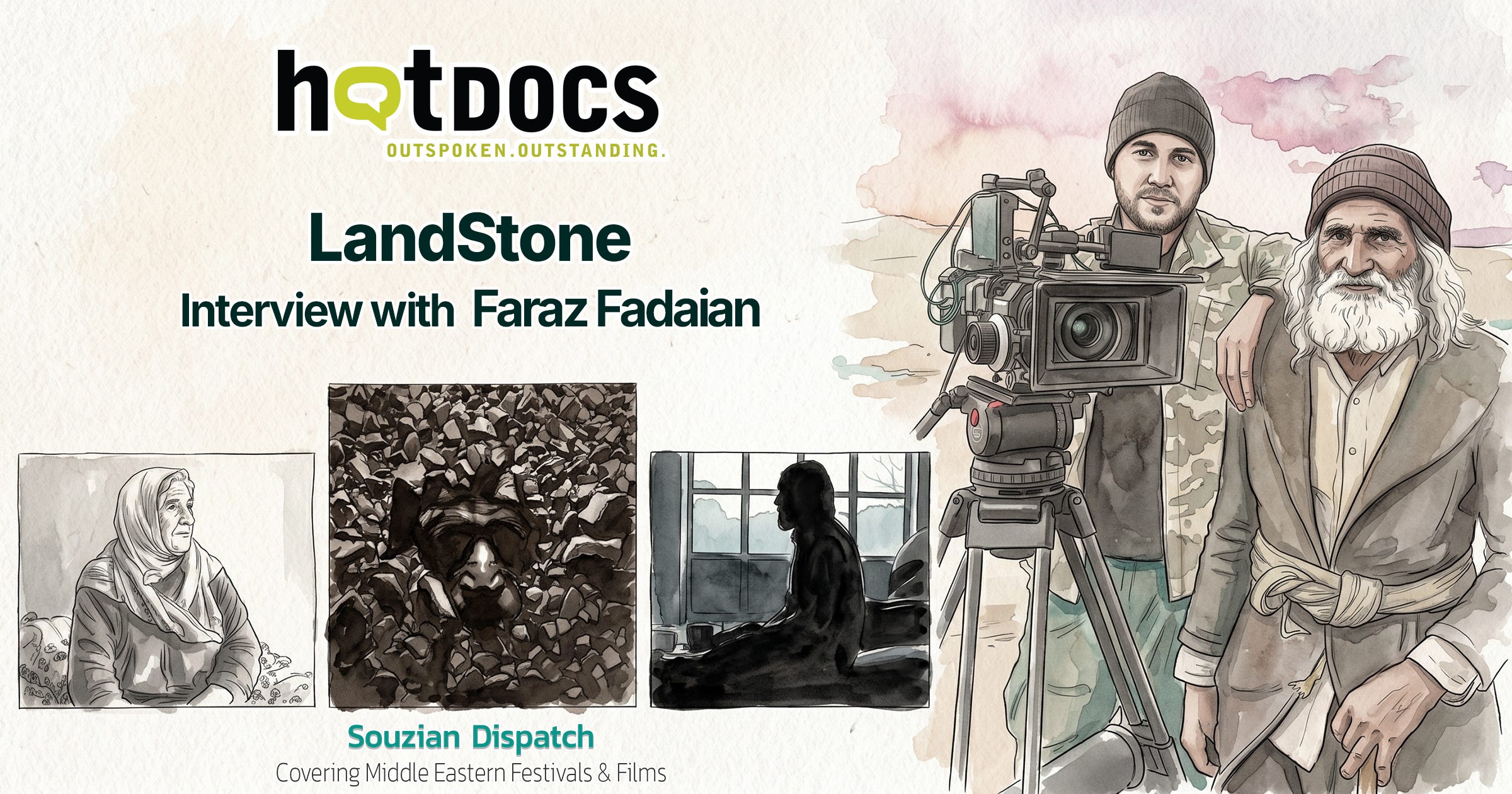
LandStone, directed by Faraz Fadaian, is a documentary about aging, mortality, memory, and a rural way of life slowly disappearing.
Set in the Iranian desert, the film follows an elderly man living with his wife as he faces bodily decline, emotional distance, and the nearness of death. In search of solace, and perhaps a way back to his past, he returns to a handmade cave, a place somewhere between home, memory, and land.
Without dialogue, Faraz Fadaian builds the film through image, silence, sound, and the rhythm of daily life. In this conversation, he speaks about the making of LandStone, meeting the elderly man and his wife, the choice of silence and black and white, the role of sound and music, and working with his father, the filmmaker Farshad Fadaian, on the edit.
The Making of LandStone
Abbas: To begin, I would like to ask about the moment the film started to take shape. How did you meet this elderly man and his wife, and what was it in their daily life that made you feel this world could become LandStone?
The old man in the film seems to live between two spaces: the house and the cave. How did you understand this movement between shelter, memory, loneliness, and the past?
Faraz: When my first film, The Last Breath, and my second film, Luckless Lake, were finished, I wanted to make a third film that could perhaps become part of a trilogy about Iran’s dry water basins. For the first film, I went back and forth for ten years. It was a kind of classroom for me. The second film took two years. After Lake Urmia and Bakhtegan wetland, I wanted to go to Khuzestan, to Hoor al-Azim. Gavkhouni no longer had any life on the map. Jazmourian had been forgotten for decades, and Parishan was more troubled than ever. My father had worked on Khuzestan for years. Hours of flying over that unique geographic horizon. The further I moved forward, the less willing I became to do the work.
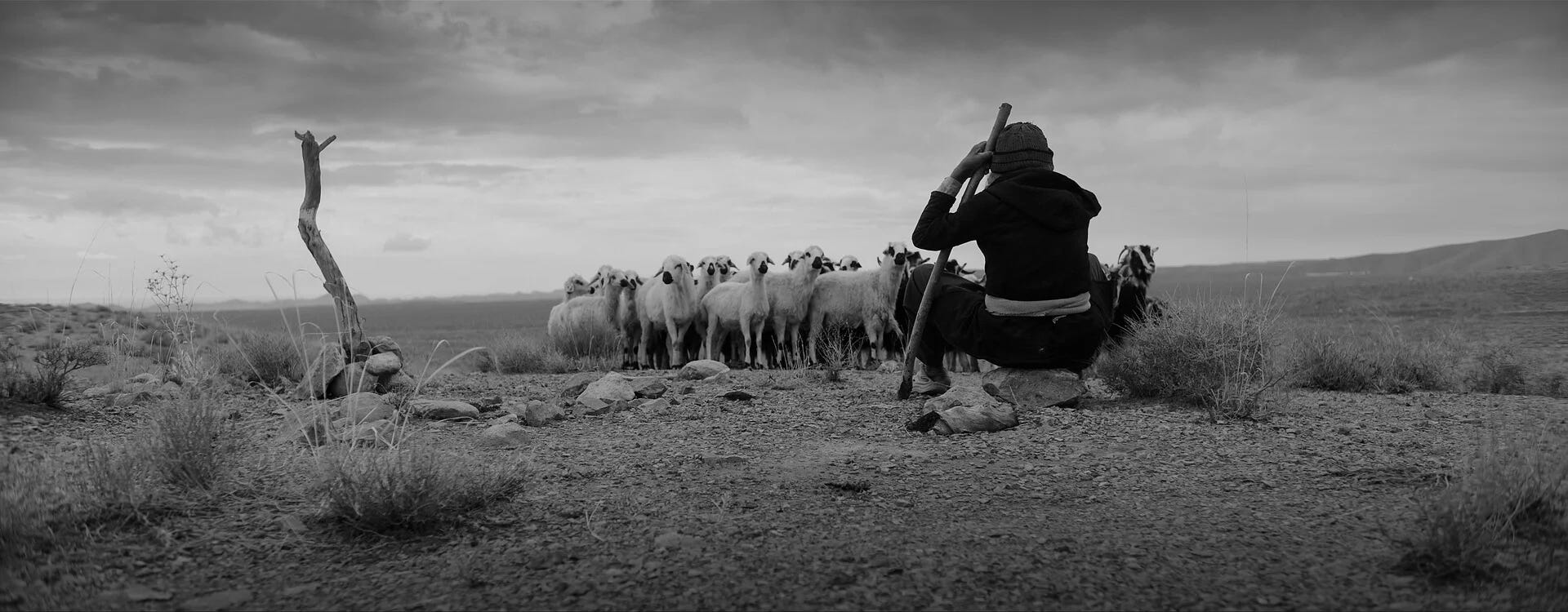
Khuzestan had been off-limits. Making a film there was considered an unpleasant activity. I let it go. Then I came across a phenomenon called “Bukan”. Bukan is the same as bum-kand, something dug into the earth. It was a deprived phenomenon. Even in written history, I could find almost nothing beyond a small mention. Bukan had been forgotten, and shepherds had turned to concrete rooms instead. It was in ruins, its corridors collapsed. Only two half-alive ones remained, along with an old man who owned it. I met the old man - the same old man from the film. He was fighting three cancers. His medication was hard to find. I said maybe I could help. He said, if you come back, I’ll move my sheep from the storeroom back into the heart of Boken. I said, you mean you’ll go back to the plain? He said, Ha! I said, then I’ll make your film.
Trust And Closeness To The Characters
Abbas: Trust is very important in a film like this, because the camera enters silences and private moments of life. What path did you take to reach this closeness with them?
Faraz: Altogether, I saw the old man twice. He showed me the area. He told me about his dreams. Maybe out of loneliness, he just wanted to talk. He played music for me. When you go to an old man deep in the desert, who doesn’t even get a visitor at his home once a year, it’s not unlikely that he’ll welcome your presence. But he was sharp. His wife was kind and gentle too. Until the last day of filming, I rarely spoke with her.
The Production Path
Abbas: During production, how much did LandStone feel like a solitary and personal project for you? Did it have a specific festival destination or producer from the beginning, or did that path take shape after the film was made?
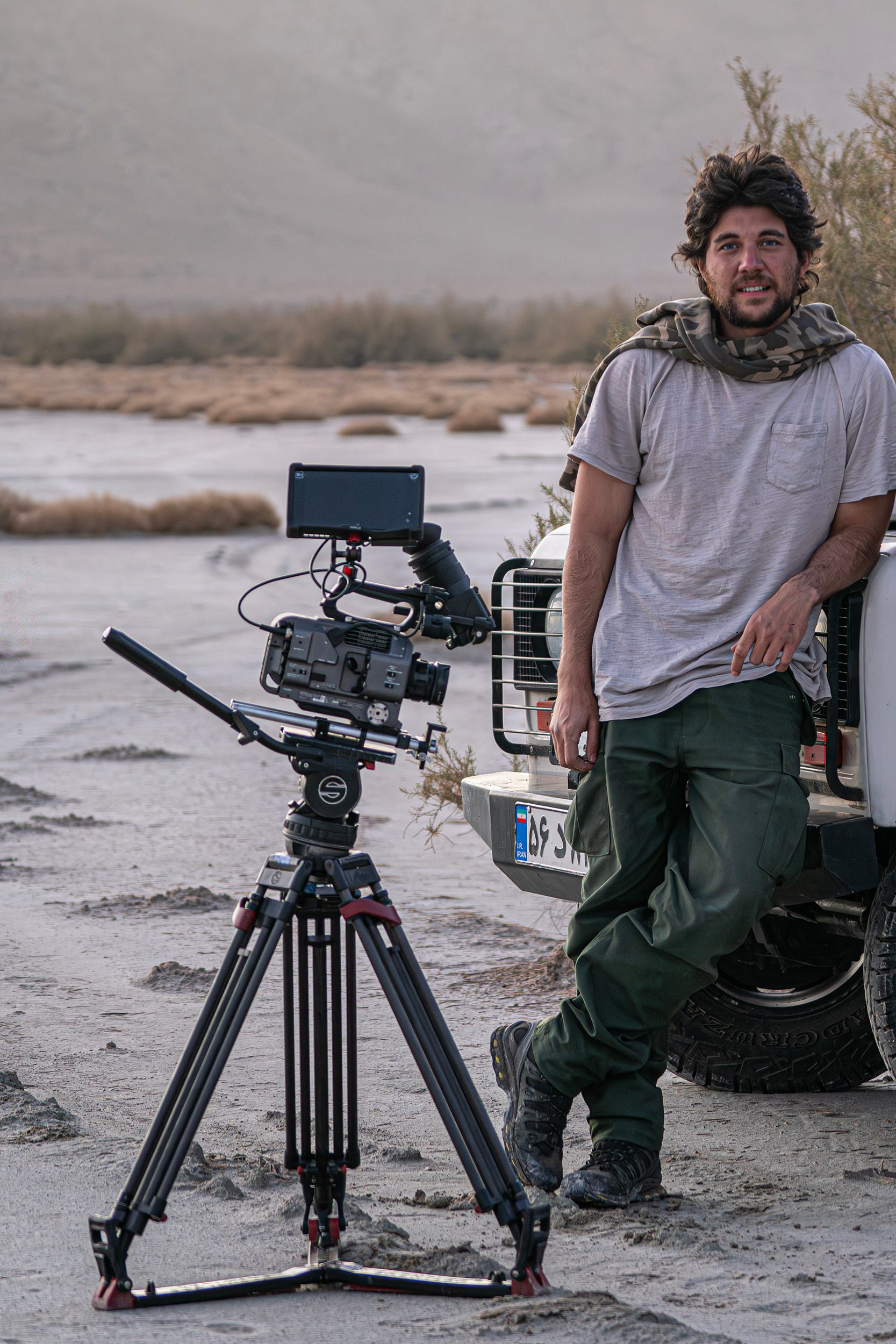
Faraz: During the production of this film, only my father was beside me. The film was not made for any specific place or with any clear goal. After the film was made, the producer showed interest.
Abbas: The film has no dialogue. When did you reach the decision that image, sound, and silence were enough to carry the film? Do you feel you lost anything by removing dialogue, and what did you gain?
Faraz: I did not lose anything. This silence was the sound of that house, the plain, and the Bukan. When you leave the city, people do not have anything to say. Gradually, they forget words. Silence becomes part of the reality of the place.
Black And White Image
Abbas: The black and white image gives the film a very physical feeling: stone, skin, dust, shadow, and erosion. Why did you choose black and white, and what did this choice reveal to you that color could not?
Faraz: My rushes were all shot in color, and when the title “LandStone” was chosen, the film lost color to black and white. Because of all the things you just mentioned.
The Rhythm Of Life And Editing
Abbas: The rhythm of the film is built on repetition, waiting, and small everyday gestures. How did you decide when the camera should stay with a moment, and when it should move away?
Faraz: The filming period was nine days. The old man intended to take the flock back to the plain and the Bukan with the first rain. On the eleventh day, it rained. Everything was moving in its place. I was following events. The night before leaving, the old man, who rarely used the bath, washed his hair and beard. The order of taking pills mattered to me. The well of the house was dry, and the pump could not bring the water up. The old man said he had once been the shepherd of seven hundred sheep, and now only thirty or forty remained. His hope was in the plain. Eating food was no different from taking medicine. I was following the old man. The rhythm of the film was the speed of that life. This rhythm took shape in the edit.
Abbas: You have a background in photography and visual work. In LandStone, when you looked at a landscape, a body, or an interior space, were you thinking more like a photographer or like a filmmaker?
Faraz: I do not know what to say. Obsession with the frame is not a unique quality. What matters is that you frame the image according to reality.
The Sound World Of LandStone
Abbas: Sound plays a very important role in the film: wind, the silence of the house, the sound of the body, footsteps, and empty space. How did you build the sound world of LandStone?
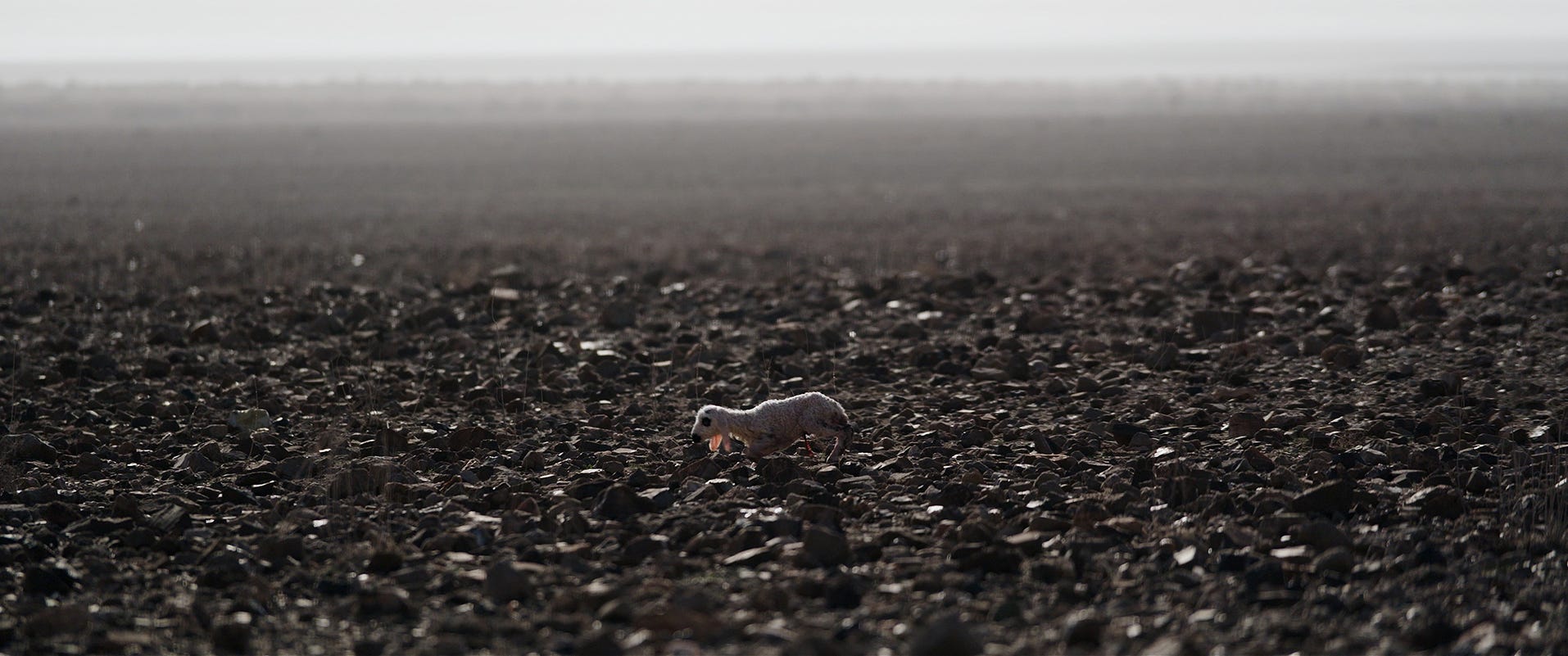
Faraz: Sound has a special importance for me. I remember my father always used Bresson as an example for me - how sound can replace image. In LandStone, everything is cracking. A pill and a pomegranate seed make the same noise. Everything has turned to stone and crunches. The old man cannot even comb his hair. The animals’ feed is dry almond skin, and the noise of the mine constantly fills the corridors of Bukan. I didn’t design anything. Maybe I only listened carefully.
Abbas: Ali Choolaei’s music in the film is minimal but precise. How did you decide where music should enter, and where silence should remain complete?
Faraz: Music appears in three places. The beginning, the end, and somewhere in the middle, where we see images of cut and dried tree trunks. The nature of the music is also from the nature of LandStone. The bows are played harshly. During filming, I met a musician from Brazil, Daniela Mars, who played Contrabass flute and Bass flute . I sent a message, we got in touch, and she was interested in letting me use one of her pieces. The piece felt like the sound of a breath trying to remain, and that was exactly what I wanted. In the end, the recording studio sent the license for the music too late, and that is why I contacted Ali. Although my initial idea was more about the sound of breath, what Ali wrote sat correctly on the film. The music at the beginning of the film is itself part of the process of turning into stone. At the end, the music worked better than silence or ambient sound. For the old man’s sleep, the music was also the entrance of that stone-like state into him.
Iranian Cinema and Sohrab Shahid Saless
Abbas: Your film reminded me of the atmosphere of Sohrab Shahid Saless’s Still Life, especially in its attention to time, silence, and the lives of people who are often seen on the margins. Has this film, or that kind of gaze in Iranian cinema, been an inspiration for you?
Faraz: I have been my father’s assistant in making his films for more than fifteen years. During all these years, my father always went toward people whom no one paid attention to, toward people and houses. These people did not necessarily have special abilities. They were not even living in special conditions. They were simply ordinary people, in even simpler conditions, away from the noise and the asphalt jungles. Perhaps more than anything, I have understood my father’s gaze toward the matter of how people live. People in their relations with their surroundings. I love Sohrab Shahid Saless and his cinema very much, but I cannot say that I developed an idea under the influence of such a world. Of course, all of us are undoubtedly influenced by everything we encounter in life.
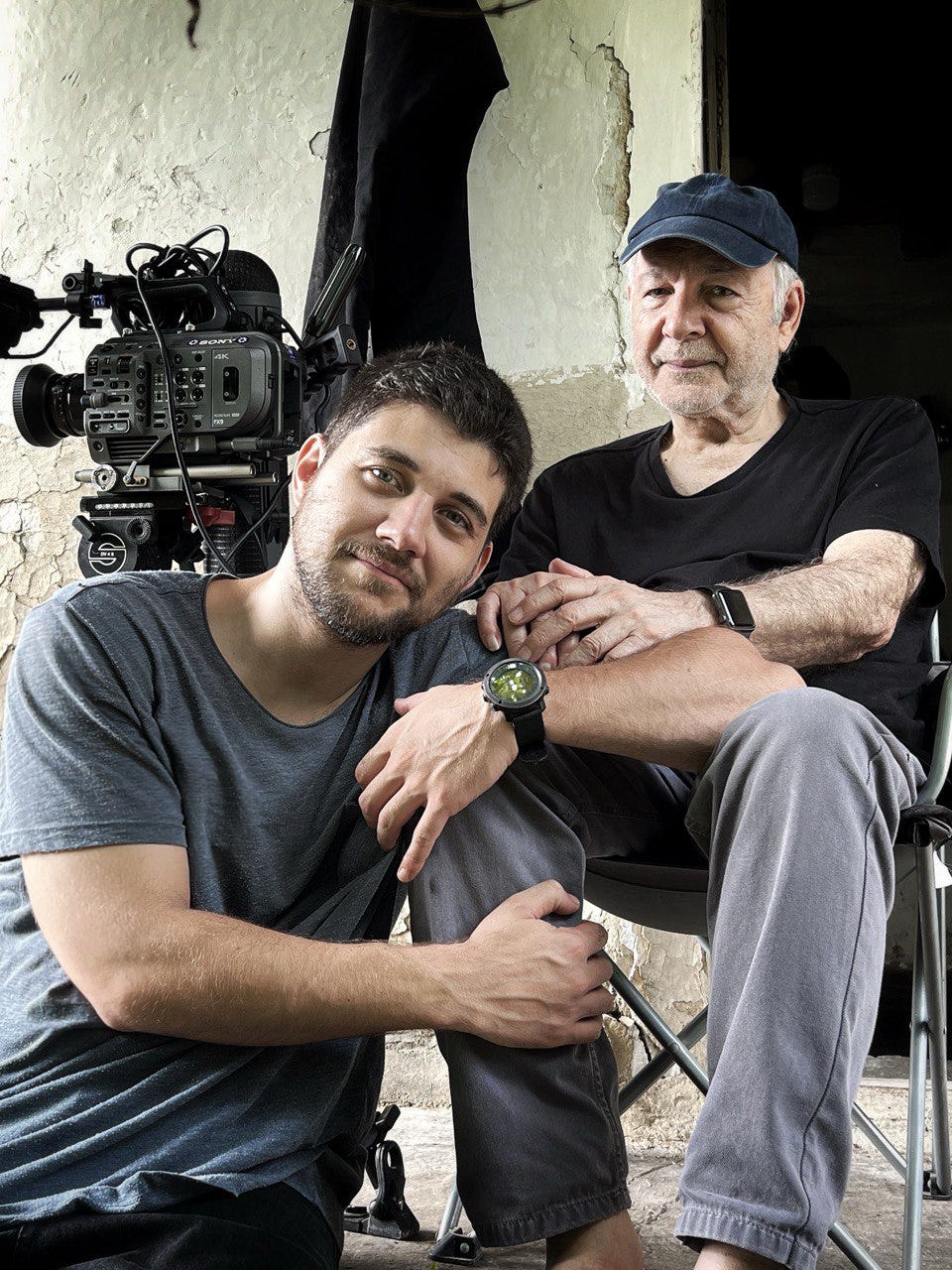
Editing, Father, And The Ethics Of Filmmaking
Abbas: The film was edited by your father, Farshad Fadaian. We know him and his artistic background well. How did your conversations in the editing room unfold? What did his presence add to the rhythm and final gaze of the film? And more broadly, how has your father influenced your work artistically?
Faraz: I learned cinema and image from my father, and this process of learning continues to this day. But that doesn’t mean we agree on everything. This project was no exception. Even though the amount of footage shot was very small compared to the final running time, the editing took several weeks. My relationship with my father is that of father-son, colleague, brother, and even closest friend. At the editing table, this relationship goes beyond the usual father-son conventions. So any suggestion or idea I bring up has to be solid - has to hold water - for him to accept it. Farshad Fadaian knows editing and cinema well, and for him, getting the work ‘right’ is more important than anything else. My father has edited all three of my feature films, and even the dozens of short films I made as exercises - even the ones where he himself is the subject - I always finalize with him in the end. I think editing, especially in documentary cinema, is everything. There is always a gap between your images and your ideas; proper editing bridges that gap.
Undoubtedly, my path is separate from my father’s, because I look at the world in a different way. But what will remain is the commitment to ethics in filmmaking that I have been learning from my father throughout all these years. It is not something easy to obtain.
I would like to thank Faraz Fadaian for taking the time to speak with me about LandStone.
The film screened at the Hot Docs Canadian International Documentary Festival 2026 in Toronto, held from April 23 to May 3, 2026.
LandStone was shown twice at the festival: on Saturday, April 25, 2026, at 17:00 in TLB 4, and on Sunday, April 26, 2026, at 10:00 in TLB 3.
You can follow Faraz Fadaian on Instagram: @farazfadaian
License
This piece, published by Souzian Dispatch and written by Abbas Souzian, is licensed under the Creative Commons Attribution 4.0 International License (CC BY 4.0), unless otherwise noted.
Images & Videos Credits and Rights
Certain images and videos included in this piece are not owned by Abbas Souzian and are not covered by this license. Rights to those materials remain with their respective copyright holders.