

![Abbas Souzian [Journalist]'s avatar](https://substackcdn.com/image/fetch/$s_!jkIz!,w_108,h_108,c_fill,f_webp,q_auto:good,fl_progressive:steep/https%3A%2F%2Fsubstack-post-media.s3.amazonaws.com%2Fpublic%2Fimages%2Ffa826ba8-cee6-41c0-830f-dfeaee93b2ca_1330x1330.jpeg)
The remarkable speed of change in the modern world, especially in medicine over the past two centuries, has greatly increased our ability to control, treat, and understand illness, disability, and biological difference. But one basic question remains: how did people face these realities one or two thousand years ago? Did they see difference as part of the natural flow of life, and learn to live with it more simply?
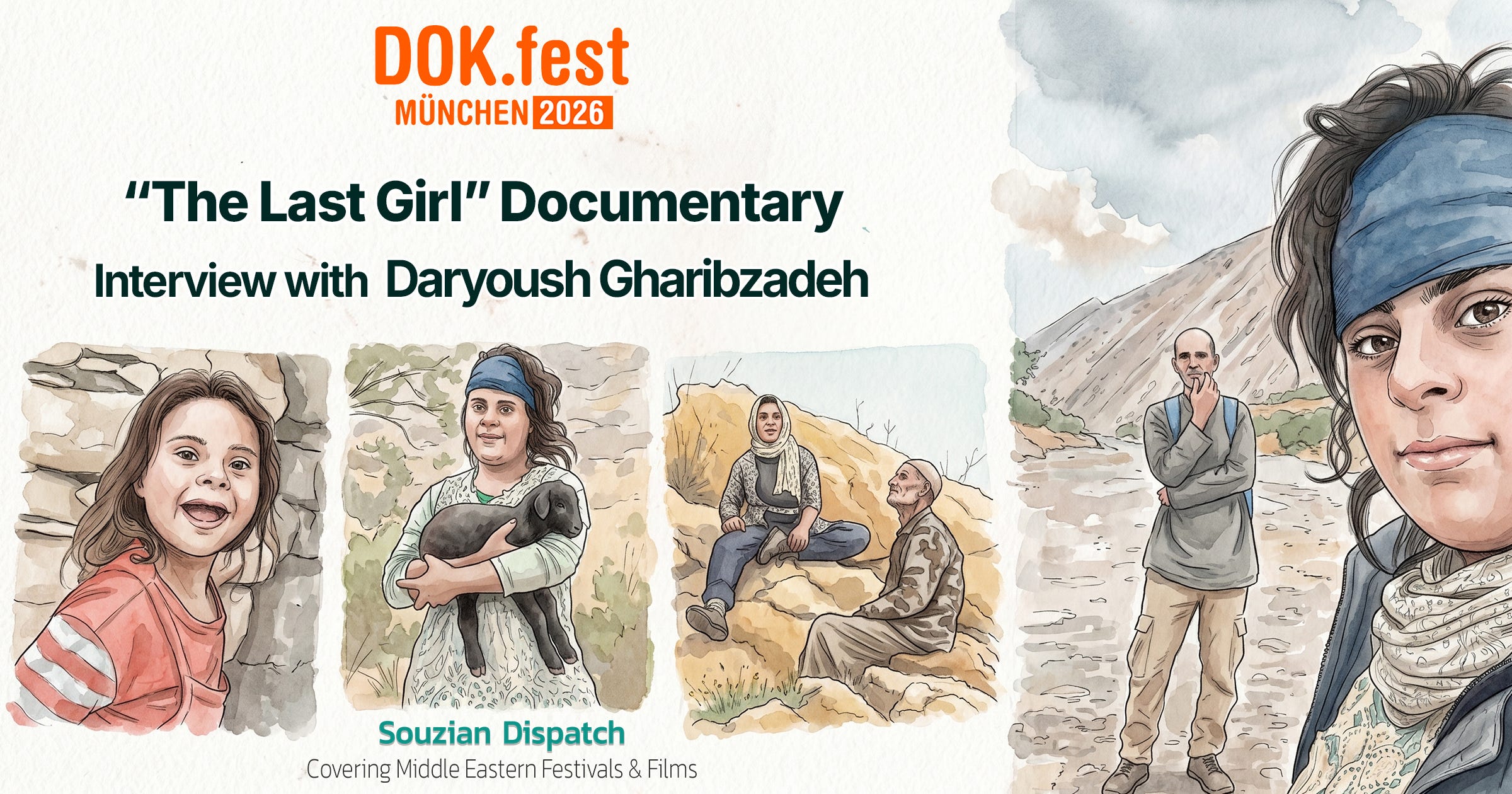
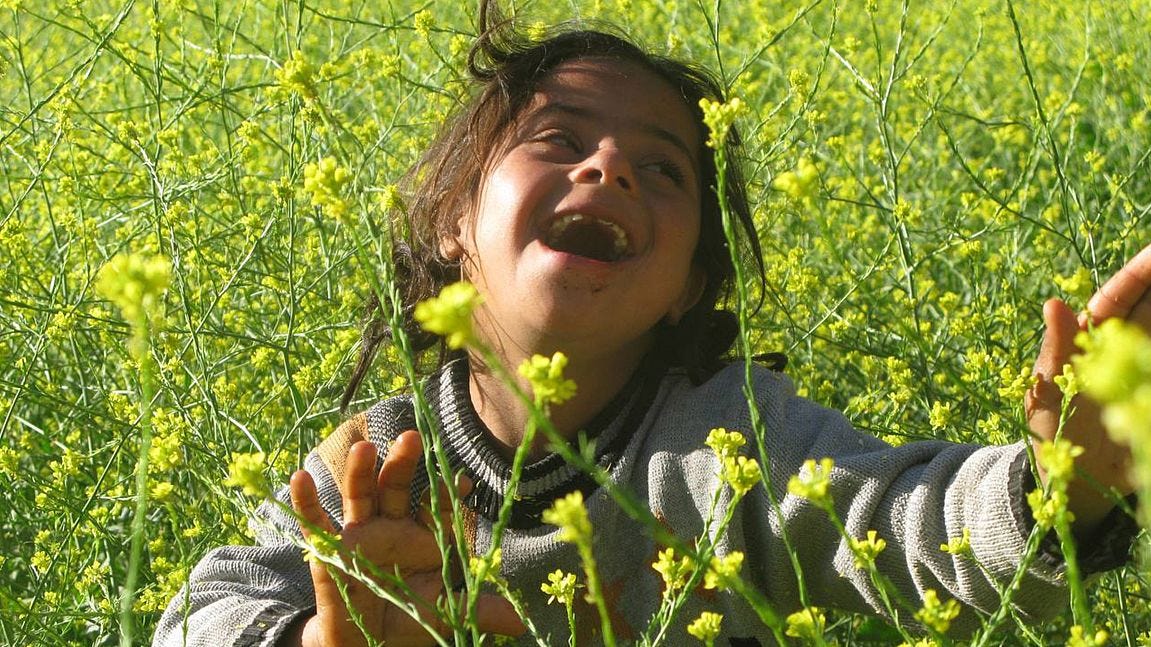
In his feature documentary The Last Girl, Bushehr-born writer, photographer, and self-taught filmmaker Daryoush Gharibzadeh moves toward this question through a long and patient act of observation. For 15 years, he lived and spent time alone with the Haji family in the remote mountains of southern Iran, following their life with Maryam, their daughter who was born with Down syndrome. Without judgment or a ready-made conclusion, Gharibzadeh turns his camera toward the daily reality of a family whose home is eight hours of difficult mountain walking away from the nearest road, and whose life is deeply tied to nature, animals, and the rhythm of the land.
Before this film, Gharibzadeh was known in Iranian cinema as an independent and respected figure in short filmmaking. His minimal works, including Boomerang, The Blue Man, and The Turtle, received several international awards and were recognized for their symbolic images and poetic gaze. In The Last Girl, this commitment to observing reality reaches a new scale. Working completely alone, without a film crew, he spent years in the same difficult conditions as the family, recording Maryam’s bond with nature, her father, and the world around her.
The film is now having its world premiere in the DOK.horizonte Competition at DOK.fest München 2026, bringing Gharibzadeh’s work to a wider international documentary audience. His cinema carries a quiet form of poetic realism: a way of looking at everyday life, hardship, solitude, resilience, and dignity without dramatic exaggeration or forced interpretation.
The following conversation with Daryoush Gharibzadeh was conducted in Persian under difficult conditions, during widespread internet disruptions in Iran. I am sincerely grateful to him for making time for this conversation despite those challenges.
Beginning With The World Of The Film And The Birth Of The Idea
Abbas: Your film has a deeply poetic tone. Before we enter the film itself, I would like to begin with your view of poetry in cinema. For you, when does a film become poetic?
Daryoush: When human beings invented words, poetry became written. So poetry existed before the alphabet. It was felt, but it did not yet have a language to be presented through.
I think poetry is the result of human presence in a place. Human beings give meaning and concept to their surroundings, and the human way of looking at existence carries emotional sensors.
In cinema, images carry the main weight of meaning. So, in a way, we return to before the invention of words. We have a human being and a camera. When that camera focuses on meanings and concepts connected to human emotions, poetry appears.
It does not matter whether the film is fiction or documentary. Sometimes there may not even be a human character. We may only see an ant, struggling with great effort to carry a grain of wheat to its nest. For me, that shot can be deeply meaningful and poetic, because it contains two important elements: feeling and meaning.
Abbas: That is a beautiful example. In your film too, it is often these small details between human beings, nature, and the environment that create feeling and meaning.
When you first arrived in that remote region, Maryam’s story was not yet supposed to be the center of the film. What was the first image, sound, or moment that made you feel there was a film there?
Daryoush: Today, even in the most remote villages of Iran, the natural ambience has disappeared. You hear the sound of cars, electrical devices, and mechanical tools.
My presence in Gisakan felt like being thrown onto another planet. I could only hear the wind, birds, the rustling of leaves, and the distant and nearby voices of cave-dwelling people.
Before that, I had made several short fiction films that had been recognized nationally and internationally. But in my first encounter with the mountain, I told myself: Daryoush, everything else stops now. Just take your camera and document this way of life for the future and for the archive.
I did not have any documentary plan at that time. At first, I only wanted to record the last form of cave-dwelling life, because I had not seen it in any Iranian documentary or fiction film.
Abbas: At first, the idea was more about documenting a way of life. When did you feel that Maryam had emerged from within that world, and that the film was slowly becoming her story?
Daryoush: Maryam was a special case. In 2009, I witnessed the residents moving to the city. Gradually, Maryam’s fourteen brothers and sisters also left for the city.
From the beginning, I knew that one day she would be left alone with her father and mother. Day and night, I kept thinking about what would happen to this child with Down syndrome. Who would provide her with medical care? What specialist nurse would support her? And many other questions.
That is why I followed her, except for a long break during the Covid-19 pandemic. I was terrified of going from the city to them, because there was a high possibility that I could carry the virus with me and cause irreversible harm in a place without medical facilities.
Sometimes I would only go to the mountain, stand about 200 meters away, shout to ask how they were, and then return. I was even afraid to leave a biscuit or a sweet there for them to pick up, because I feared transmitting the virus.
Abbas: How did the family and the people there first react to the camera? Was it strange for them that someone wanted to record their everyday life for so many years?
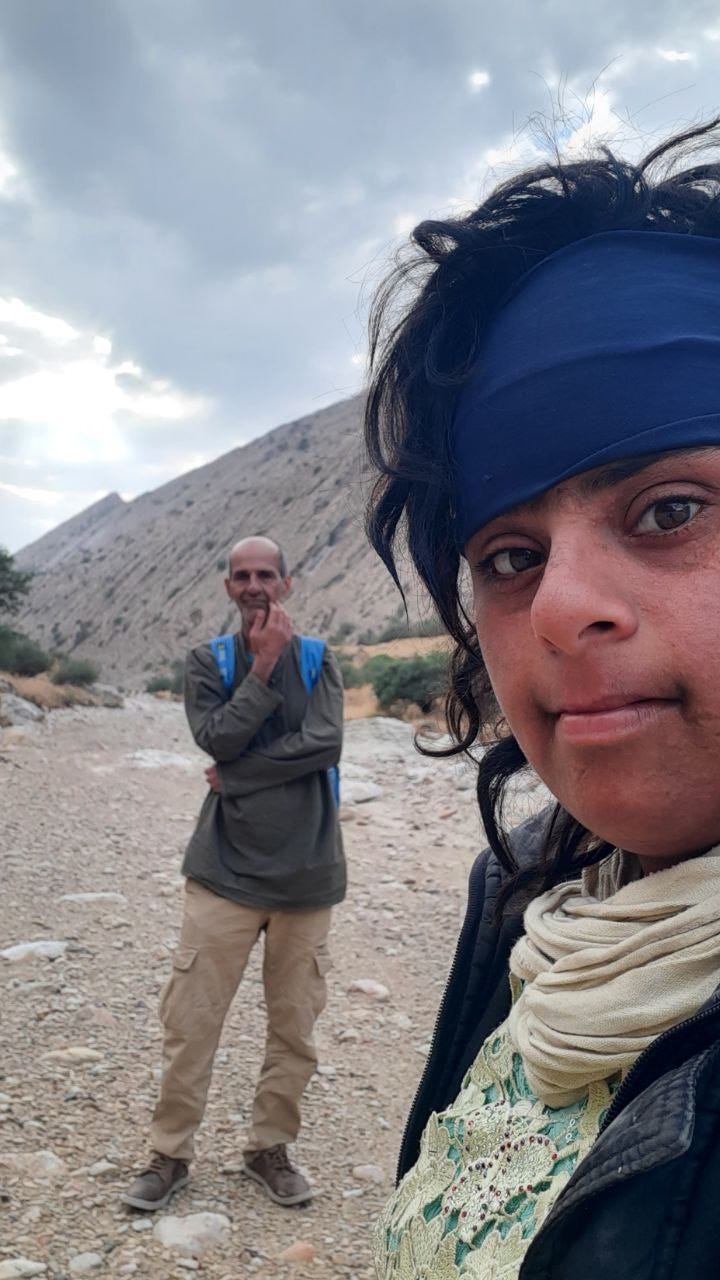
Daryoush: From the beginning, I did not point my camera at them. On the contrary, I would give the camera to them and say: press this button and take a souvenir video of me.
Then I would show them the video they had recorded of me. I have many images like that. This is how the barrier of the camera was broken, and they began to live very naturally and comfortably in front of it.
I did not bring a tripod, lights, or any accessories that would draw attention. I only had a camera in my hand and a piece of cloth. I would fold it and place it on a stone, a can, or a water barrel, and that worked as my tripod when I needed a stable shot.
Trust, The Filmmaker’s Presence, And The Challenges Of Production
Abbas: You decided to work without a film crew, to live with the family, chop wood, work with them, and enter the rhythm of their daily life. Do you remember a moment when you felt you were no longer just a “guest with a camera,” and that your presence had become natural for them?
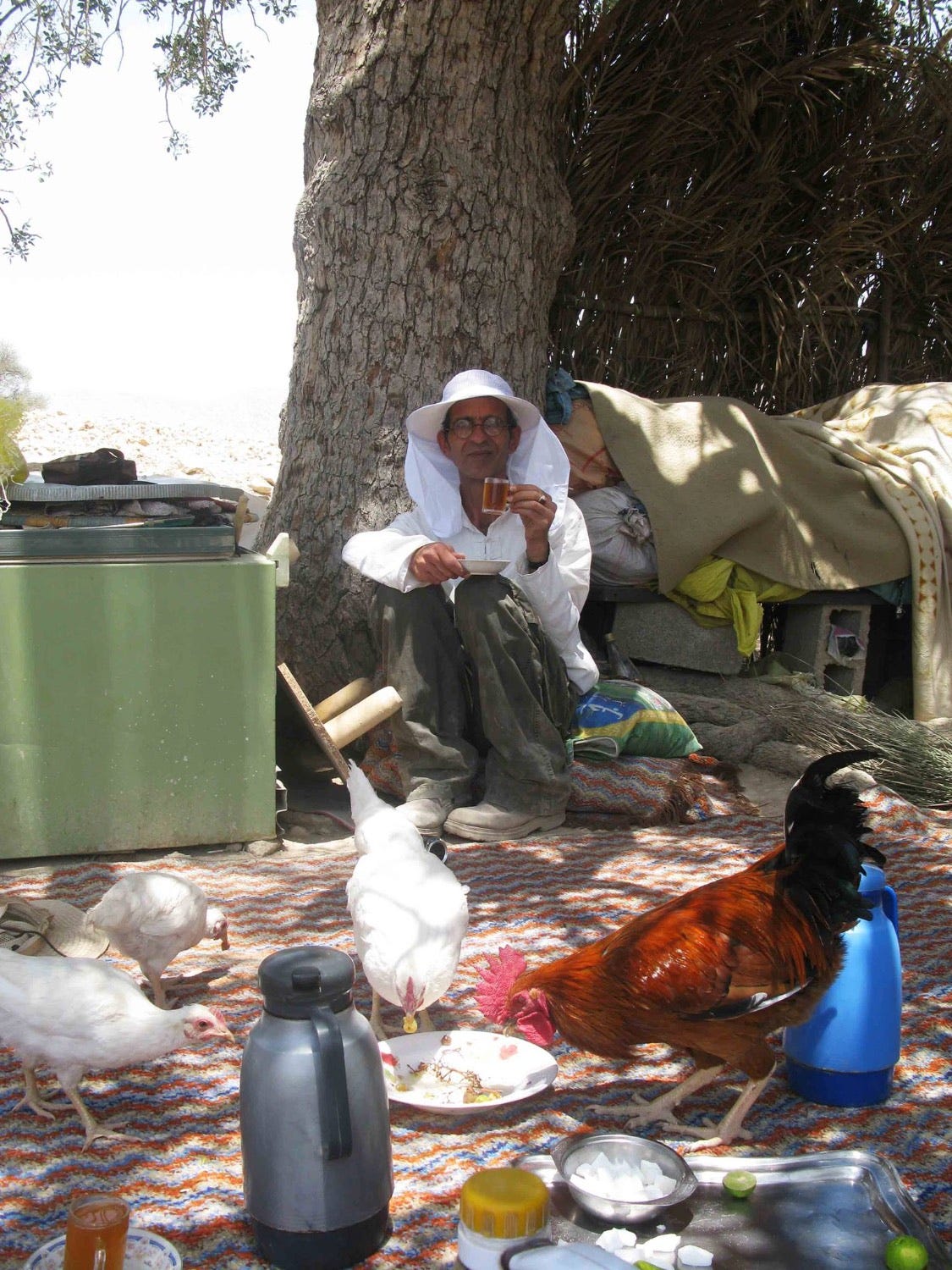
Daryoush: From the very first day, I lived with them. Villagers across Iran are deeply hospitable people. If you are a guest in an Iranian village for even a year, they will put everything they have on the table. They may even sell parts of their own household belongings to make sure you do not feel any lack.
I knew this. On the first day, they wanted to turn a live rooster into lunch for me. I begged them, took the knife from their hands, and the rooster was released. I told them I did not like meat and that I loved potatoes.
Documentary has many branches. In human-centered documentaries, I think paying attention to these details is very important. That was how they accepted me.
Abbas: Filming a vulnerable person and a family in a remote environment always brings ethical questions. Over all these years, how did you make sure that the relationship between filmmaker and subjects remained human and respectful?
Daryoush: My first trip was for leisure. I had taken things with me like a sleeping bag, mineral water, a food kit, and mountaineering equipment. But when I decided to make the film, I only used mineral water on the way there.
I did not take anything that showed city life or separated me from them. Only a flashlight, later a power bank, and canned food, which we ate together.
The conditions there are truly unbearable for us. I drank polluted pond water and suffered from digestive problems. In summer, there were many scorpions, snakes, mosquitoes, and bees. The mosquitoes there create painful, infected boils. I have footage of my wounded hands and face.
That is why I never took an assistant with me. It would have been enough for a fly to land on someone’s food and for that person to frown slightly, and the whole structure of the work would have fallen apart.
Over these 15 years, my relationship with them has become much closer than my relationship with many of my close relatives. To put it simply, we are like an intimate family.
Abbas: What was the biggest technical challenge for you? Managing image, sound, difficult routes, the mountain conditions, and daily life, all without an assistant, what kind of pressure did that place on the work?
Daryoush: For me, it was not a challenge. I had chosen a goal, and I had to stand by it.
In fact, being alone helped me. The presence of an assistant, or anyone else, would have disturbed my process of discovery. Making a documentary alone forces you to take care of the technical details of both sound and image properly.
Abbas: In a long-term documentary, even if the filmmaker is not seen in the frame, he slowly becomes part of the life of the characters. How did you decide when to film and when to put the camera down?
Daryoush: My camera was always beside me. You know, sometimes things happen there in an instant. For example, during the night wolf attack scene, I was asleep and the camera was next to my head. I woke up from the noise and immediately followed them with the camera.
Abbas: Yes, that is very clear in the film. In some moments, you suddenly move toward the scene, and even the camera seems to be asking what has happened.
When you are facing images recorded over 15 years, editing is not just about choosing scenes. It becomes a kind of selection from life itself. In the editing process, what did you leave out, and why?
Daryoush: I spent years writing short stories and making short films. I entered feature documentary from the world of saying things briefly.
The result of more than 50 trips, across all seasons over 15 years, was dozens of hours of footage. I have many beautiful images, but in the structure of Maryam’s story, they do not function as joints of the narrative. They are only fillers.
Using those images would have damaged the rhythm of the editing and created dispersion. Even with this 52-minute running time, I still feel anxious that the viewer might become tired or bored.
In my view, repeating the same condition in a documentary damages the structure.
Cinematic Form, Image, Sound, And Narrative
Abbas: The sound of the mountain, the wind, the animals, the silence, and the small sounds of everyday life feel very important in the film. From the beginning, did you think of sound as part of the film’s poetic language?
Daryoush: I recorded many audio files from the ambience of that environment, and I listen to them at home.
To me, it is a pure symphony orchestra. Music has always been an important part of cinematic narration. But here, we are facing a brilliant musical presence that flows through every hour of the day and night.
This was certainly not my art or creativity. I was only the person recording it.
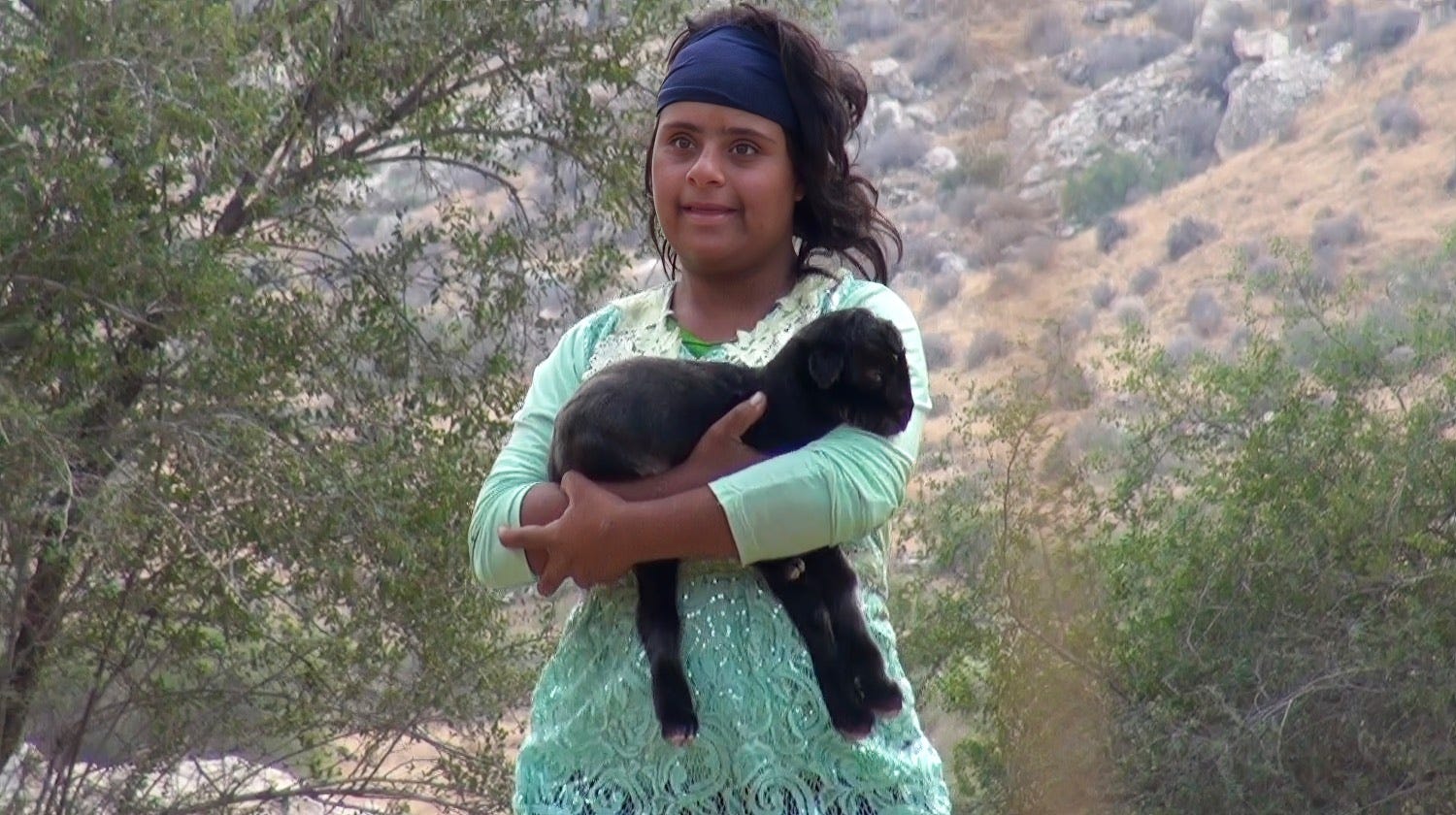
Abbas: In the film, the mountain is not just a background. It feels like a living presence beside Maryam and her father. While filming, did you see the mountain more as a location, or as a character?
Daryoush: I worked on two documentaries in the Gisakan mountains. The second film is about a cave-dwelling shepherd who carves sculptures of the animals around him from the stones of the mountain: roosters, goats, eagles, and human figures.
One of his sculptures, the face of a woman, is called The Queen of the Mountain. That film is still in production after 16 years of filming. It tells the story of this artist’s life and his forced migration to the city.
In that film, the role of the mountain is even stronger.
Abbas: You have worked with photography for many years. In this harsh, simple, and yet beautiful environment, how did your photographic eye influence the frames and the distance between the camera and the people?
Daryoush: Since childhood, I have loved the frames of Western films. I had albums of film frames and photographs from Western cinema.
Western films have an aesthetic quality that many other films do not have, and that is the presence of nature and mountains. That magical background, full of perspective.
These frames are rooted in my interest in Western cinema.
Abbas: You are also a writer, and your stories are closely connected to southern Iran. How did your experience in writing fiction affect the way you shaped this documentary? In editing or narration, did you ever look at Maryam’s life like a writer?
Daryoush: The world of fiction is based on imagination. Storytelling means transforming and reshaping reality in order to reach concept and meaning.
Throughout the entire process of filming and editing this film, I tried not to design or stage any scene. In editing, the difficult part was choosing the best moments and placing them in the right sequence.
Maryam, Nature, The City, And Care
Abbas: Nature plays an important role in Maryam’s life in the film. Do you think this environment gave her more room for growth and independence, or did it also create limitations for her?
Daryoush: My whole aim was to show the relationship between Maryam and nature. I could clearly see that she was part of that same nature, like a bird, a rabbit, or a living plant.
I do not know whether the idea of therapy through nature comes across in the film or not. But that was the important point I wanted to present.
Abbas: When Maryam went to the city, or when she faced an urban environment, what was that experience like for her? Did you notice any change in her behavior, calmness, or relationship with others?
Daryoush: Years ago, when Maryam was taken to a special school for children with mental disabilities, she disrupted the order of the class. She could not tolerate the four walls of the classroom. She stayed only for one or two days.
Unlike other children, she was not used to the rhythm of the city or to regular life inside a room. She was the child of the endless valleys of the mountain.
She still goes to the city sometimes. But even in that short time, I have seen her like a bird in a cage.
Abbas: So Maryam became used to the mountain, the animals, and its own rhythm, more than to the speed and structured life of the city.
This also seems true of Maryam’s father. For him, the mountain is not only a place to live, but part of his identity. In your view, is his decision to stay in the mountain more about love and belonging, or about a fear of being lost in the urban world?
Daryoush: I have spent many nights sitting by the fire pit with Haji, Maryam’s father. He would tell me about his childhood and about the time when dozens of families lived in the mountain.
Haji has memories attached to every inch of that valley. He is the last heir of a people. He feels a sense of ownership. To me, he is the king of the abandoned mountain.
He only goes to the city when one of his relatives has died. After offering his condolences, he immediately returns. He does not even spend one night in a city house.
Abbas: Many films about people with Down syndrome focus on medical care, social support, or limitations. In your film, Maryam is seen more through life, nature, family, and time. How did you try not to define her only through her physical or mental condition?
Daryoush: I showed the film privately to different groups of friends. At the end, many of them said that at some points they had forgotten Maryam had Down syndrome.
Although I was fully aware of her condition, I only refer to it at the beginning of the film. In my view, that reference did not need to be repeated.
As I said before, Maryam is a phenomenon, like other phenomena in nature. Yes, she has a deficiency, but nature itself takes her hand and heals her.
Abbas: Maryam grew up without formal therapy or modern medical care, but she became independent in her own way, and even takes care of her father. What questions did her life raise for you about care, growth, and independence?
Daryoush: I do not have even the smallest amount of medical knowledge. But my greatest wish is that specialists and therapists who work with children with mental disabilities watch this film.
The greatest reward for me would be to hear their thoughts.
Meaning And The Global Audience
Abbas: The phrase “king of the mountain,” which you used for Maryam’s father, feels very precise. Now the story of this king and his princess is going to be seen by the world.
This film comes from a very distant geography, and now it is being screened at DOK.fest München for an international audience. If you wanted to describe the film not only as Maryam’s story, but as a question for today’s modern, urban viewer who is caught in a fast life, what would that question be?
Daryoush: I have tried to make a film that invites urban human beings, from beginning to end, to discover nature.
I have tried to wash away a little of the tiredness that comes from monotonous city life, so that by the end of the film, they may smile with hope.
But the question is this: what are we doing to ourselves?
By “we,” I mean all human beings on this planet. Technology gave me a camera and an editing system so I could make this film. Technology has given me comfort and welfare. Compared with people who lived thousands of years ago, we are very fortunate.
But my friends, let us not forget that important instinctive part of ourselves. We Iranians believe that nature is our mother. Let us not forget the mother.
I would also like to thank the film’s producer, Mehdi Khajehpour, who was present in Munich and helped make this conversation possible. The Last Girl had its world premiere at DOK.fest München 2026 in the DOK.horizonte Competition.
The Last Girl screened in Munich on Thursday, May 7 at 4:00 PM, Sunday, May 10 at 6:00 PM, Wednesday, May 13 at 6:00 PM, and Friday, May 15 at 6:30 PM. Screening venues included Atelier 1, Bellevue di Monaco, Gasteig HP8 Projektor, and HFF-Kino 1.
More Information About the Film
Read more on the official DOK.fest München film page.Follow The Last Girl
Follow the film’s official Instagram page: @thelastgirl.film.More About Daryoush Gharibzadeh
Read more about Daryoush Gharibzadeh on his official website.
License
This piece, published by Souzian Dispatch and written by Abbas Souzian, is licensed under the Creative Commons Attribution-ShareAlike 4.0 International License (CC BY-SA 4.0), unless otherwise noted.
Images & Videos Credits and Rights
Certain images and videos included in this piece are not owned by Abbas Souzian or Souzian Dispatch and are not covered by this license. Rights to those materials remain with their respective copyright holders.