


A few years ago, my trip to Chile was cancelled, just a few days before my flight. I decided that until I could travel to Chile again and finally be there, I would visit the country through cinema, literature, poetry and music. These journeys of the mind happened again and again. Sometimes they were wonderful and unforgettable, and sometimes, disappointed, I abandoned the journey halfway through!
But travelling on the wings of Rafael Guendelman Hales’s passion, I experienced one of the finest lived cinematic experiences of my life.
A Journey Without a Beginning, a Journey Without an End
Rafael’s cinema and the world of his storytelling offer a deep cinematic journey into archives and memory. It is a journey through classical storytelling, perhaps one of the most difficult forms of narrative in contemporary cinema, a form that seems to have been forgotten! Everyone seems to be moving towards single-line, superficial narratives, often hiding behind grand-sounding definitions such as modern storytelling, postmodern storytelling and even storytelling without a story!
But can a human being exist without a story?
Rafael is a man whose hands and heart are full of people’s stories. People filled with memories and experiences, people who exist beyond political borders, whose stories are connected to places, sounds, smells and tastes, to history and mythology, to home and homeland, and even to the bitterness of migration. Above all, they are connected to a pure sense of humanity that no political force can strip of the beautiful individuality of their existence.
I think that to better understand the world of Rafael’s latest film, I need to move a little away from his personal Jewish-Palestinian background. I want to see him and his work in a long shot, before slowly moving closer, through a series of medium shots and close-ups, to examine his latest film.
Geography, Memory and the Human Experience
In Rafael’s films, a place is rarely just a background against which the drama takes shape. The architectural arrangement of locations and the spaces he creates become places that carry life and memory. Through their journeys to these locations, the characters find opportunities to rediscover both themselves and the places around them. Sometimes, even the harsh and restless urban environments outside homes and enclosed spaces replace the characters’ direct narration.
Within these spaces, Rafael tells history, a history that is rarely told by politicians or by media organisations trapped within the limits of modern politics. Rafael and his camera approach these stories with calmness and a careful understanding of human existence, allowing the characters themselves to take responsibility for the narrative. Their stories come in small pieces, but they are never broken or inarticulate fragments! They emerge through memories of the distant and recent past, through recollections of the history of a particular region, until the experience becomes a journey whose travellers are the viewers sitting beyond the frame, in their cinema seats.
Rafael makes his audience, and sometimes even himself, a traveller in these narratives. They come from the heart of family memories, the oral stories of friends and relatives, and even strangers. Through documents and records, sometimes carefully organised and sometimes scattered, he places the audience, and occasionally himself, somewhere between what people say and remember and what actually happened.
Sometimes Rafael’s journeys turn into wandering, and this is an important part of his cinema. It allows an act of discovery to take place within the viewer, a kind of physical, and perhaps even metaphysical, understanding. It is a discovery shared by the filmmaker and his audience through encounters with unfamiliar places and the stories of those who live there. Perhaps it is the discovery of a small, hidden history of a location through an accidental meeting with someone and their memories. Such encounters may lead us to reconsider a geography that we thought we already knew.
I believe this comes directly from Rafael’s own way of thinking and from the narrative form he has developed out of his personal life: a belief in chance, unexpected events and connections that may sometimes seem irrational.
His is a non-linear, open world, in which human beings, and perhaps Rafael himself, are placed before different geographies. The human mind and body face the vastness of nature, while nature becomes a space for experience and reflection. Silence takes the place of excessive talking, and within this silence, geography and the place where a person stands become an experience of the mind.
From a formal point of view, Rafael brings something from his personal life onto the screen, turning an inner experience into a visible one. In doing so, he may bring both himself and his audience towards a balance between feeling and understanding, keeping them in a state of sensory and perceptual balance.
Sometimes this balance is maintained through small but important things: objects left behind from the past, signs of everyday life, and personal or family keepsakes.
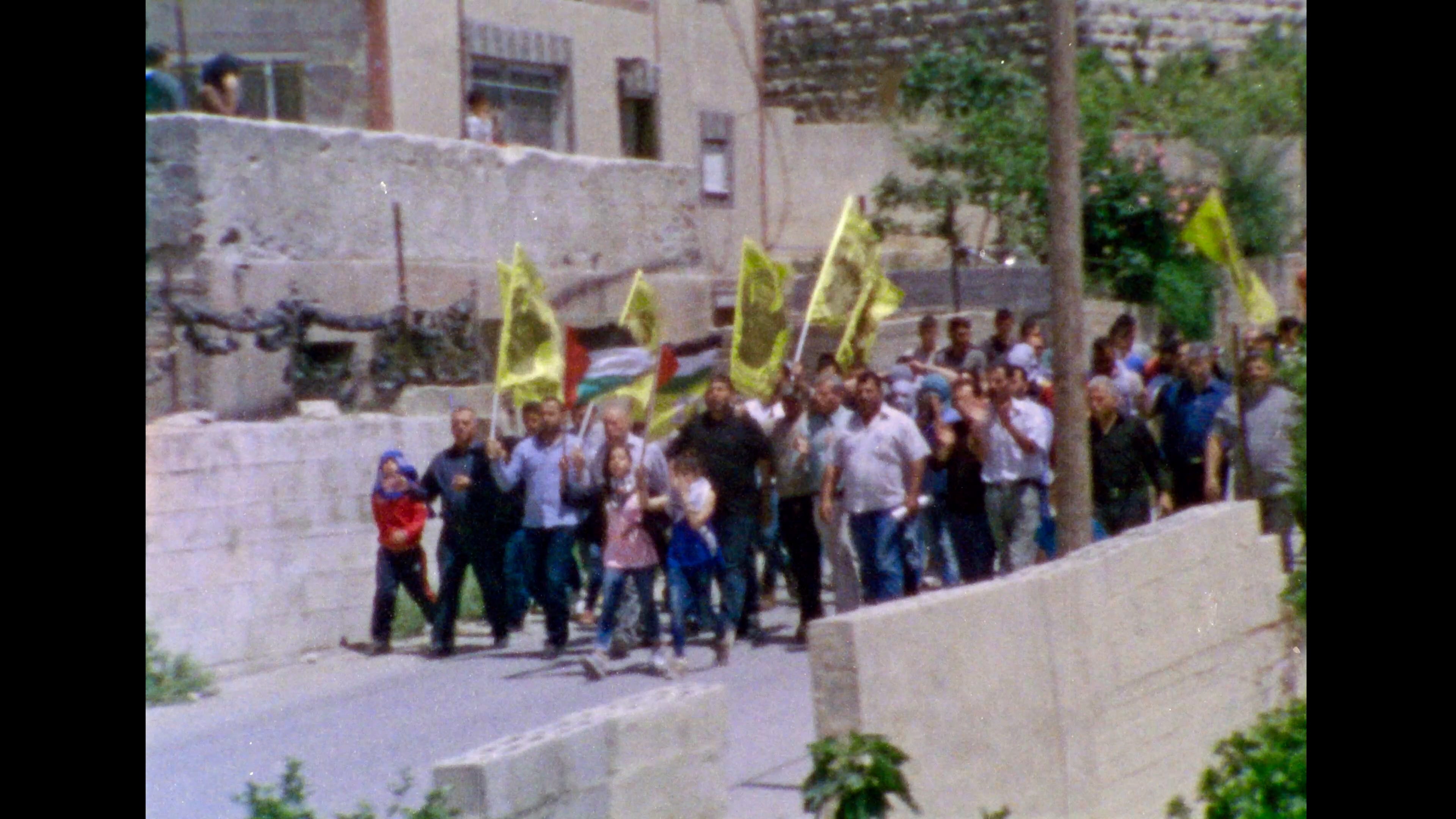
Rafael moves confidently through this territory because he understands how to use moving archival images as raw material. He knows how to bring his research and the process of gathering information into the creation of a visual work, and how to combine space and geography as a formal means of expression.
We should pay attention to the recurring motifs in Rafael’s films, and to how important they are in expressing an event, if we want to examine his latest work more closely.
The relationship between human beings and damaged environments or landscapes; the stability and instability of everyday life; encounters with difficulties and tragedies that disturb the ordinary order of existence; and the placing of the human body before landscape and nature, not as a confrontation or struggle, but as a way of discovering what remains hidden beneath the surface.
There is also the movement away from conventional storytelling, the way his characters tell their stories, and the presentation of families and human relationships as they confront personal experiences and political or social realities. Rafael creates small situations with the capacity to express much larger human meanings.
Migration and return, the meaning of homeland and belonging, and the relationship between people, their stories and the idea of a homeland are also central to his work. These questions unfold within the struggle against the empty political meanings and interpretations dictated by politicians.
All of these elements form the essential anatomy of Rafael’s dramas.
Through his cinematic journeys, Rafael attempts to tell stories of belonging and not belonging. Where is home, in fact? How long can memory continue working to understand the abstract meaning of home and geography after years of migration and return? What remains in a person’s memory of the past, and of the history that they, their family and their homeland have lived through? And what is the relationship between personal decisions, politics and the practice of politics?
This is part of Rafael’s artistic worldview, present in the journeys on which he takes his audience and in the stories he chooses to tell.
Az Zeeb
Everything I have discussed above appears in Rafael’s latest film, Az Zeeb, with a remarkable sense of maturity. The narrative and its structure, the atmosphere and visual geography, the characters and their presence, even at moments when we only hear their voices, all find their place within the film’s mise-en-scène and visual composition.
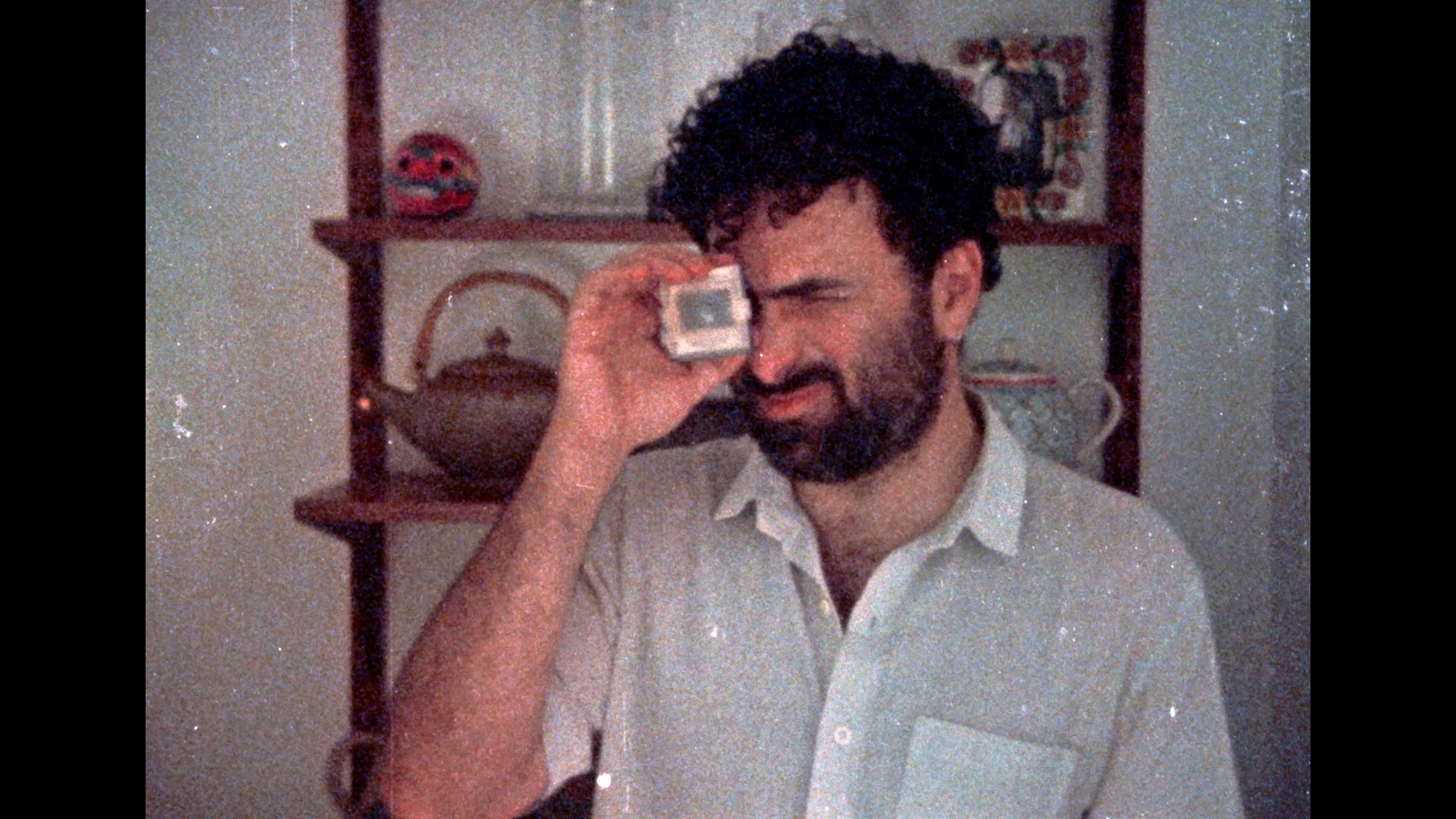
Once again, Rafael begins his film with a personal event: the death of his paternal grandmother and the discovery of a collection of Super 8 films and family photographs.
On his father’s side, we encounter a family with Jewish roots in Chile, their migration to Israel during the 1970s, and their confrontation with the political and social realities of a new geography. On his mother’s side, we encounter a family with Palestinian roots, their connection to the historic village of Az Zeeb, the history of expulsion and displacement beginning in 1948, and the scattering of family members who continue their lives in exile.
Ultimately, Rafael offers an unsentimental portrayal of the migration of his father’s family and the expulsion of his mother’s family. He places these two experiences within a historical and ethical framework that gradually reveals itself through a process of discovery.
Rafael begins his film with a prop, an object left behind from the past that can slowly reconstruct that past and connect it to the present.
His use of Super 8 is particularly important here. Through this format and the way he brings its elements together, Rafael develops the anatomy of his drama in such a way that there seems to be no boundary between past and present capable of interrupting the narrative. Time is no longer experienced in a linear way.
This is the journey I mentioned at the beginning of this essay: a journey without a beginning and without an end, moving between the contemporary world and past decades.
By using the grain of the images, drawn from the same visual material as the original family Super 8 films, Rafael creates a feeling of memory and loss. He also establishes a formal and dramatic relationship between two distant geographies, bringing the landscapes of Chile and Palestine together through a shared visual format.
This allows him to develop a continuous narrative across two different lands.
There is a particular intelligence in Rafael’s use of geographical montage to tell the stories of his family members. He creates a visual texture that works almost as the hardware of the film, while the different emotions of the family members become the software within that texture.
It is a texture in which the different members of the family complete one another through their stories: Rafael’s father and mother, his Palestinian uncle, his grandmother and grandfather, and even those who are absent!
The father carries the experience of Jewish identity and migration to Israel, together with silence and things left unsaid. The mother becomes the bearer of the family’s Palestinian memory, passing history from one generation to another through oral storytelling.
Then there is the uncle living in Lebanon, with whom Rafael begins a new conversation for his film. By placing the stories of his uncle and his father beside one another, Rafael creates a historical and familial symmetry.
The grandparents, too, remain present through photographs and the conversations of others.
None of these characters is developed primarily through dramatic action. Their presence is built through storytelling, silence, testimony, voices and their relationships with moving images recorded in the past.
But Rafael also uses a digital camera in a few shots.
There is the shot of arriving at the entrance to the village of Az Zeeb, followed by a conversation with his parents. From a formal point of view, this change is not simply a technical trick. Rafael changes the tone and visual format of his film at precisely the moment when the needs of the story and its setting demand it.
Super 8 belongs to the past, even when it records images of the present!
The digital image, in these few shots, becomes a return to the tangible reality of 2026. The house and the presence of Rafael’s father and mother are no longer simply parts of a memory. They have become a physical reality, and the house is a place that has survived from the past into the present.
Some truths and realities cannot be expressed within a nostalgic and poetic framework!
In certain parts of the film, Rafael places a memory from the past over an image of the present. But in the digital shots, he does not want to do the same thing.
Between the Material Archive and Living Memory
Throughout the film, Rafael takes us on two separate but closely connected journeys: one through the visual story of his father’s family, and the other through the oral history of his mother’s family.
At the end, he uses the voice of his maternal grandfather.
This is an important choice because Rafael begins his film with images and ends it with a voice.
It is a meaningful shift, a movement from the material archive towards living memory, from the reels of Super 8 film towards the human voice.
Perhaps Rafael’s intention at the end of the film is to suggest that, in the absence of an archive, since not everyone had the opportunity to record and preserve their lives in those decades, oral storytelling and human memory can resist forgetting in another way.
And certainly, the unstable, almost ghostlike quality of the Super 8 images can make the loss and destruction of a place or geography, and the exile of human beings, feel more tangible.
We should remember what the film itself tells us:
“When nothing remains, memory and words can still live on.”
It is almost dawn, and this essay has come to an end.
It is November, and once again, with the help of Rafael Guendelman Hales, I find myself in Santiago, Chile.
I am standing in front of the Cineteca Nacional de Chile, near La Moneda metro station, with a backpack over my shoulder and a cup of coffee in my hand, having arrived from a journey of fourteen thousand seven hundred kilometres.
And it was truly worth it.
And... Cut!
Az Zeeb (2026), directed by Rafael Guendelman Hales, had its world premiere at FIDMarseille in July 2026 and screened in the Best of Fests section at IDFA 2026 in Amsterdam, where it had its Dutch premiere. The 86-minute documentary is a co-production between Chile and Qatar.
Editor’s Note
Abbas Souzian: I believe film criticism should make room for different voices and independent perspectives. Reviews published in Souzian Dispatch reflect the personal views and interpretations of their authors.
As editor, my role is to respect each writer’s voice while maintaining our standards of accuracy and fairness.
You can explore more independent reviews in our Film Criticism section.