

![Abbas Souzian [Journalist]'s avatar](https://substackcdn.com/image/fetch/$s_!jkIz!,w_108,h_108,c_fill,f_webp,q_auto:good,fl_progressive:steep/https%3A%2F%2Fsubstack-post-media.s3.amazonaws.com%2Fpublic%2Fimages%2Ffa826ba8-cee6-41c0-830f-dfeaee93b2ca_1330x1330.jpeg)
For someone from the Middle East or West Asia, especially from an oil-producing region such as Khuzestan Province in Iran, oil never feels like an abstract subject. Its stories are tied to the landscape, politics and everyday life.
I have followed most films I could find about oil. Many approached it through extraction, labour, war, environmental damage or economic power. An Incomplete Calendar, directed by Sanaz Sohrabi, took me somewhere less familiar.
We often speak about what oil has done to economies and political systems. Its place in art, music, architecture and visual culture receives much less attention.
Sanaz Sohrabi has spent years researching the visual histories of extraction and the struggle of nations to control their natural resources. In this film, that work appears through music, photographs, newsreels, magazines, postage stamps, letters and oral histories. She uses cinema to bring these materials into conversation, rather than presenting the research as a conventional historical account.
The 77-minute documentary is a co-production between Canada, Iran, Turkey and Venezuela. It screened at the Golden Apricot Yerevan International Film Festival in July 2026. Earlier in the year, it had its world premiere in the international competition at Cinéma du Réel in Paris, where it received the Loridan-Ivens First Feature Award and the Young Jury Award.
Oil Beyond a Commodity
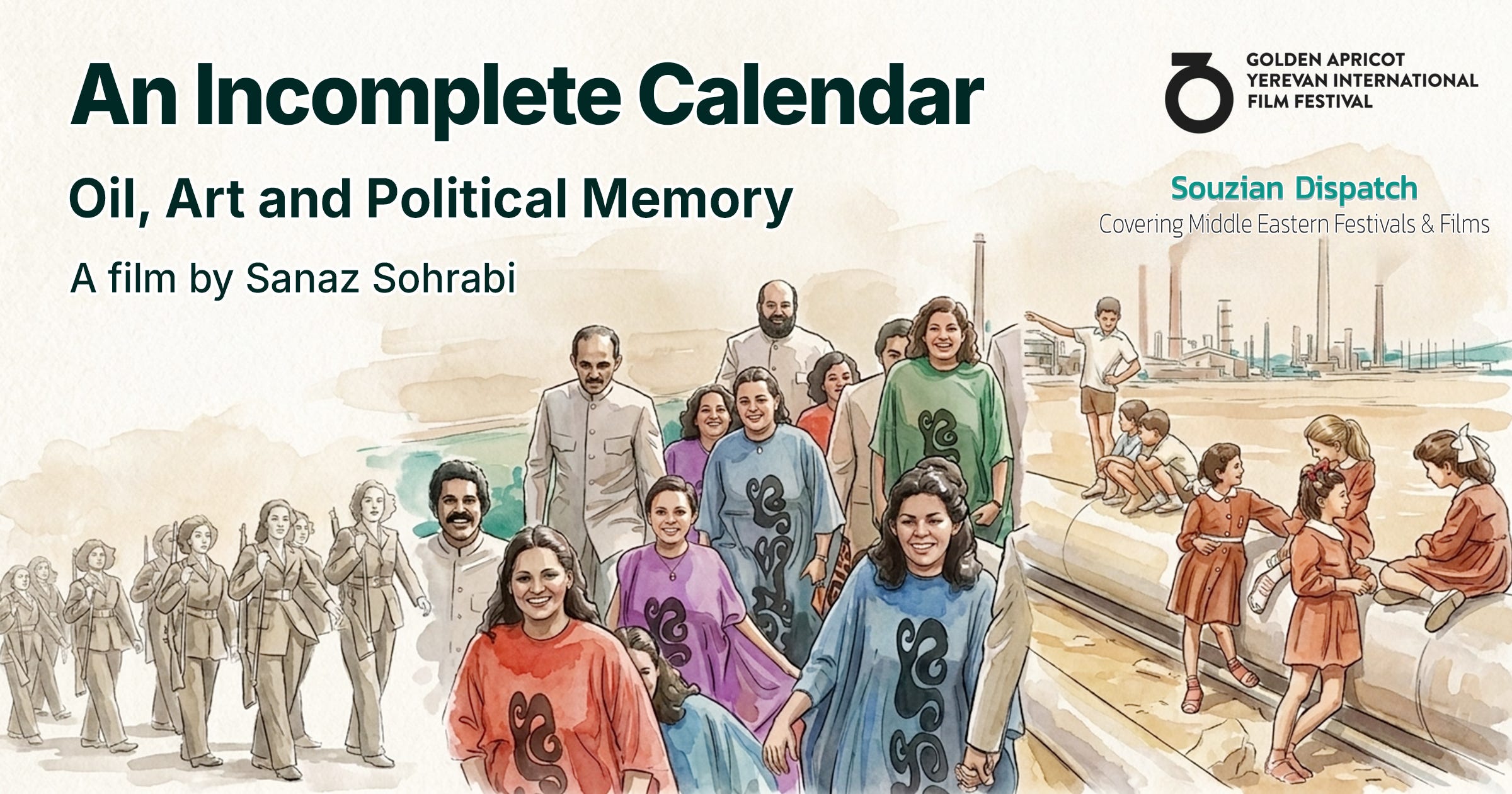
The film moves through a period stretching from the early 1950s to the beginning of the 1980s. It follows the nationalisation of oil, the establishment of the Organization of the Petroleum Exporting Countries in Baghdad in 1960, Pan-Arab politics and the use of oil as political leverage in support of the Palestinian liberation movement.
Control over natural resources was closely tied to the wider demand for economic independence across Asia, Africa and Latin America. The film places these histories beside the cultural institutions and artistic projects that grew during the same period.
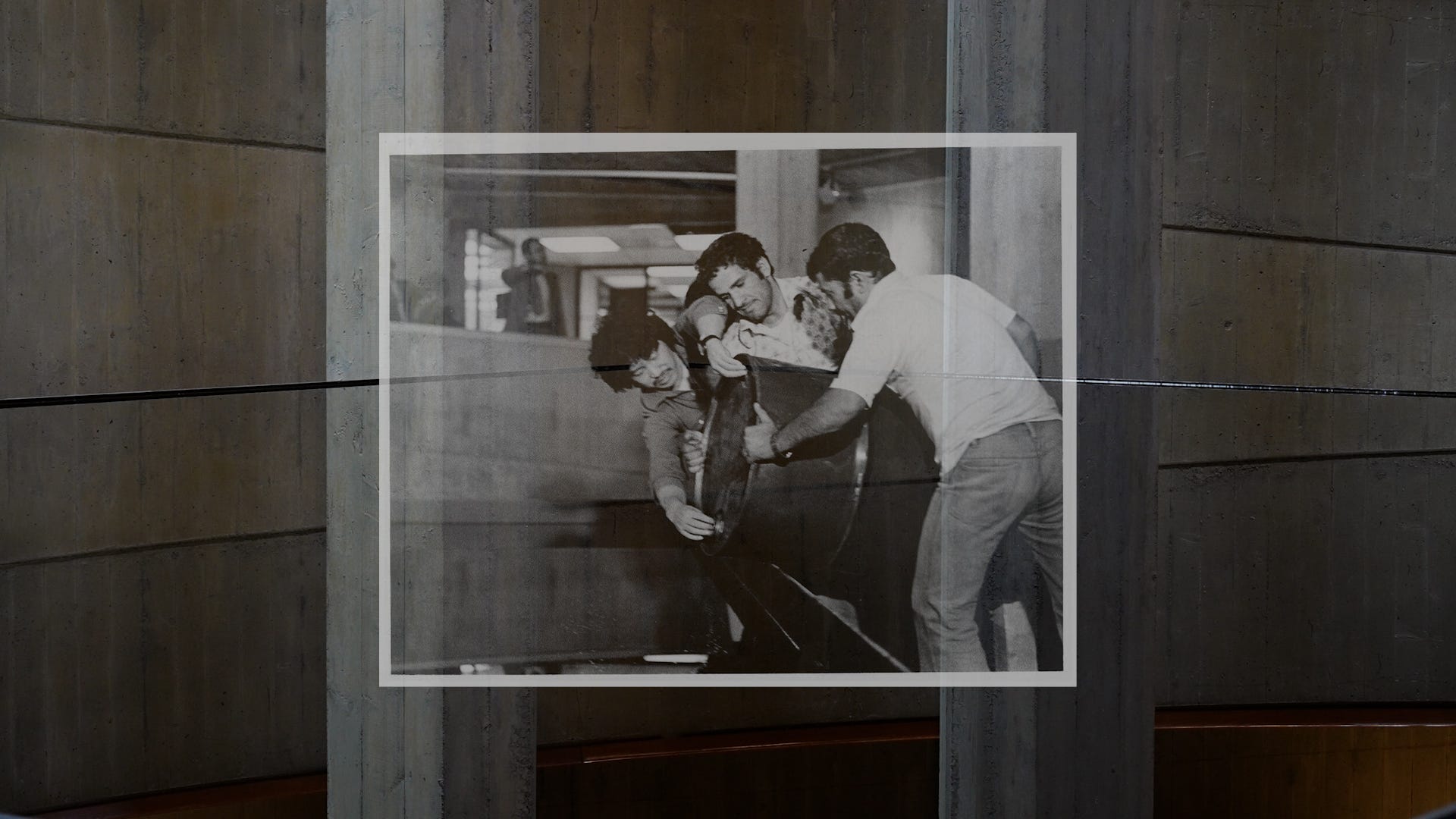
The Tehran Museum of Contemporary Art is one of its most direct examples. Opened in 1977, the museum holds Matter and Mind, also known as Oil Pool, by Japanese artist Noriyuki Haraguchi. The work consists of a large steel basin filled with oil and occupies a central place inside the building.
This image stayed with me. The substance that had financed much of Iran’s rapid development in the 1970s was physically present inside one of the country’s main cultural institutions, dark, reflective and still.
From Tehran, the film reaches the Aula Magna at the Central University of Venezuela. The concert hall is part of the University City of Caracas, a major modernist project connected to Venezuela’s oil-era development. Venezuelan architect Carlos Raúl Villanueva designed the complex, while Alexander Calder created the suspended acoustic panels above the hall, known as the Clouds.
The connection is carried further through music. The Concert Choir of the Central University of Venezuela performed in this space and recorded the album that became the starting point for the film.
Rhymes and Songs for OPEC was released in 1980 to mark the organisation’s 20th anniversary. The Spanish-speaking choir performed folk songs from OPEC member countries phonetically, including songs in Persian, Arabic dialects and Yoruba. Some of the words were difficult for native speakers to understand, yet the record preserves an unusual moment of cultural exchange among oil-producing countries.
An Archive Built From Fragments
An Incomplete Calendar completes Sanaz Sohrabi’s trilogy of essay films about oil, image-making and extraction. One Image, Two Acts, released in 2020, and Scenes of Extraction, released in 2023, worked mainly with materials connected to the Anglo-Iranian Oil Company and the British Petroleum archive.
For this film, she moved towards a different kind of collection.
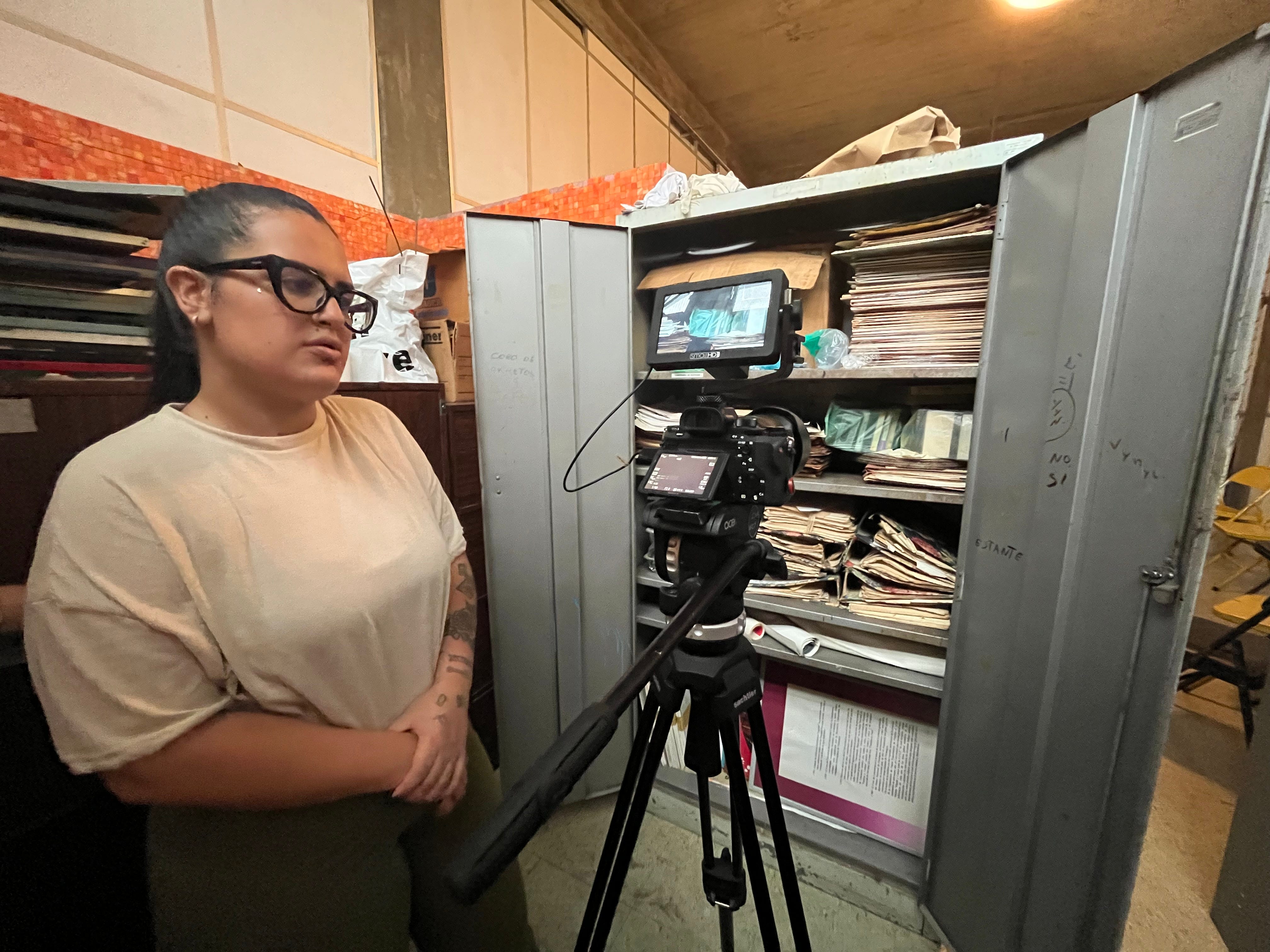
Over six years, she gathered magazines, political publications, stamps, envelopes, vinyl records, photographs and newsreels. Some came from bookshops and flea markets. Others were found online or sent across countries. Together, they formed an informal archive of energy infrastructure, labour, industrial nationalism and cultural exchange across West Asia, Africa and Latin America.
What held my attention was the physical way these objects were handled.
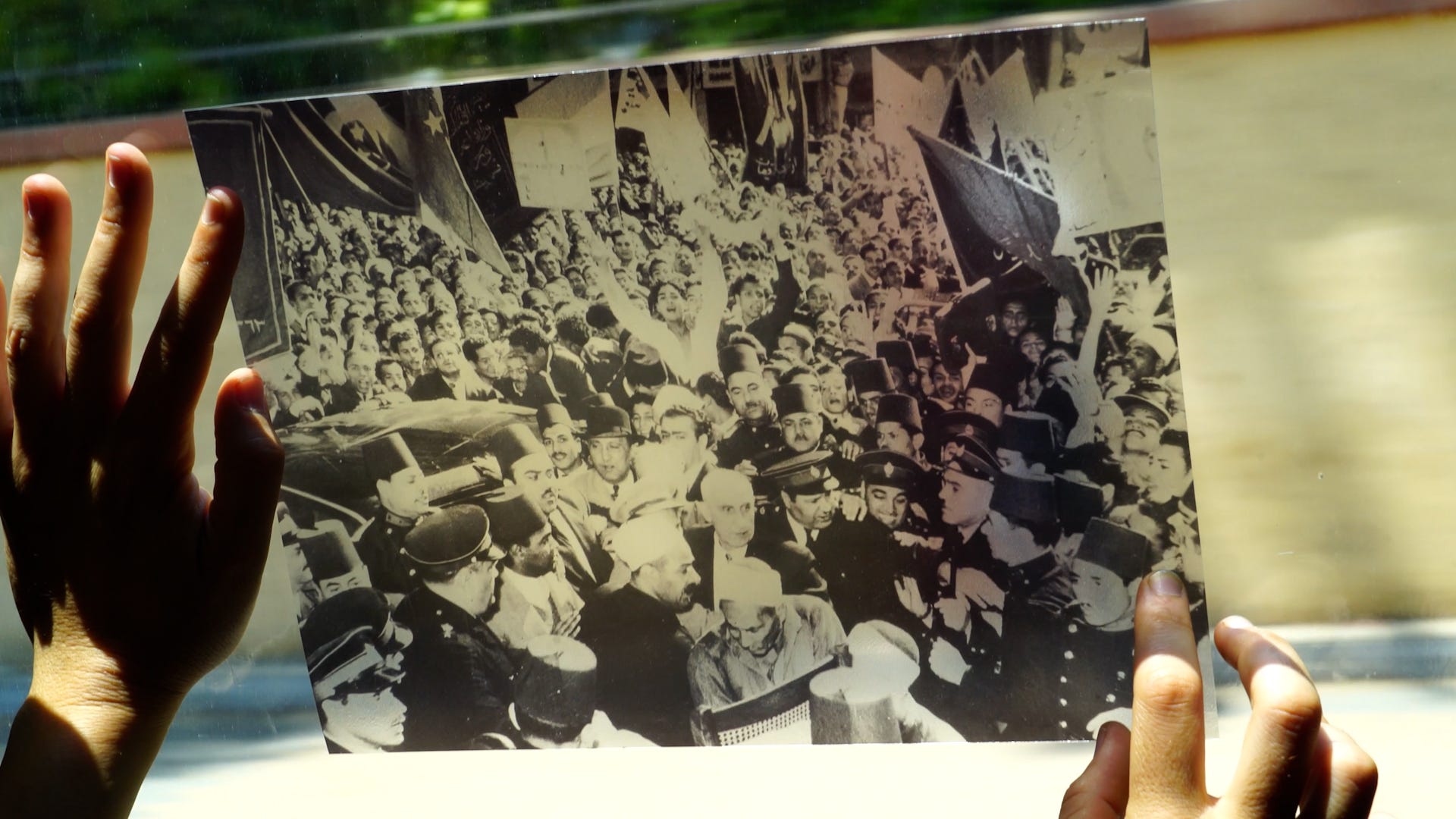
Much of the archive appears beneath a camera looking down at a table. Hands move photographs and printed pages across the frame. Moving footage is sometimes projected onto still images, while stamps, magazine covers and political documents are placed beside one another.
The arrangement does not hide itself. We see the materials being selected, moved, enlarged and connected. The archive arrives as something assembled in the present, with visible gaps between its pieces.
The chronology follows a similar rhythm. Tehran, Cairo, Caracas and Beirut enter the film at different moments. A political event in one country may be placed beside a song, a magazine or a postage stamp from another.
Sanaz Sohrabi has described the collection as a counter-archive to the visual system created by British Petroleum. Instead of beginning with the corporate images of extraction, she works with objects that circulated among oil-producing nations and within the political and cultural networks of the Global South.
A History Told Through Many Voices
The soundtrack does not depend on a single narrator. Alongside Sanaz Sohrabi, the film includes the voices of Jihan El-Tahri, Murtaza Vali, Laleh Khalili, Layla Maghribi, Eduardo Prato Moros and Leonardo Montaño Salas.
Researchers and filmmakers speak beside former members of the Venezuelan choir. They are usually heard over images and archival material rather than presented through conventional interviews.
In her conversation with Botagoz Koilybayeva for Senses of Cinema, Sanaz Sohrabi described these exchanges as archival conversation sessions. She prepared different groups of photographs, magazines, stamps and recordings for each participant, and allowed the discussion to develop through their responses.
This approach grew from the geography of the production itself. Research and filming took place across Tehran, Cairo, Beirut and Caracas. She has said that a history built through transnational friendships required a chorus rather than a single voice.
The film eventually returns to the Aula Magna.
Leonardo Montaño Salas, a former member of the Concert Choir of the Central University of Venezuela, stands in his former position on the stage and reads part of the film’s script in Persian.
The scene brings the record back into the space where the choir once performed. Persian is heard inside a Venezuelan concert hall built during the oil boom, beneath Alexander Calder’s suspended panels. The moment is simple, but it carries the distance travelled by the film, through languages, buildings, political movements and scattered archives.
Festival Screening
An Incomplete Calendar screened twice in the Regional Panorama section of the 23rd Golden Apricot Yerevan International Film Festival.
The first screening took place on Friday, July 17 at 12:30 PM, followed by a second screening on Saturday, July 18 at 5:30 PM. Both screenings were held at the House of Cinema, H. Malyan Hall, in Yerevan.
Sources and Further Reading
This report was prepared from the film, its official press materials and the following published sources:
License
This piece, published by Souzian Dispatch and written by Abbas Souzian, is licensed under the Creative Commons Attribution-ShareAlike 4.0 International License (CC BY-SA 4.0), unless otherwise noted.
Images & Videos Credits and Rights
Certain images and videos included in this piece are not owned by Abbas Souzian or Souzian Dispatch and are not covered by this license. Rights to those materials remain with their respective copyright holders.