

![Abbas Souzian [Journalist]'s avatar](https://substackcdn.com/image/fetch/$s_!jkIz!,w_108,h_108,c_fill,f_webp,q_auto:good,fl_progressive:steep/https%3A%2F%2Fsubstack-post-media.s3.amazonaws.com%2Fpublic%2Fimages%2Ffa826ba8-cee6-41c0-830f-dfeaee93b2ca_1330x1330.jpeg)
After the screening of Inside Amir, I walked out of the cinema and there was this strange silence around us. Some people were holding back tears. Others already had tears in their eyes. Amir Azizi’s film is about leaving, but the closer it gets to the end, the more it becomes about the things you only start noticing when you realise you may be about to lose them.
During the few days I was in Yerevan covering the Golden Apricot International Film Festival, my conversation with Amir slowly took shape. Some of it happened while we were walking around the city. Some came from shorter conversations between screenings and festival events. Eventually, we sat down for several hours and talked properly about the film.
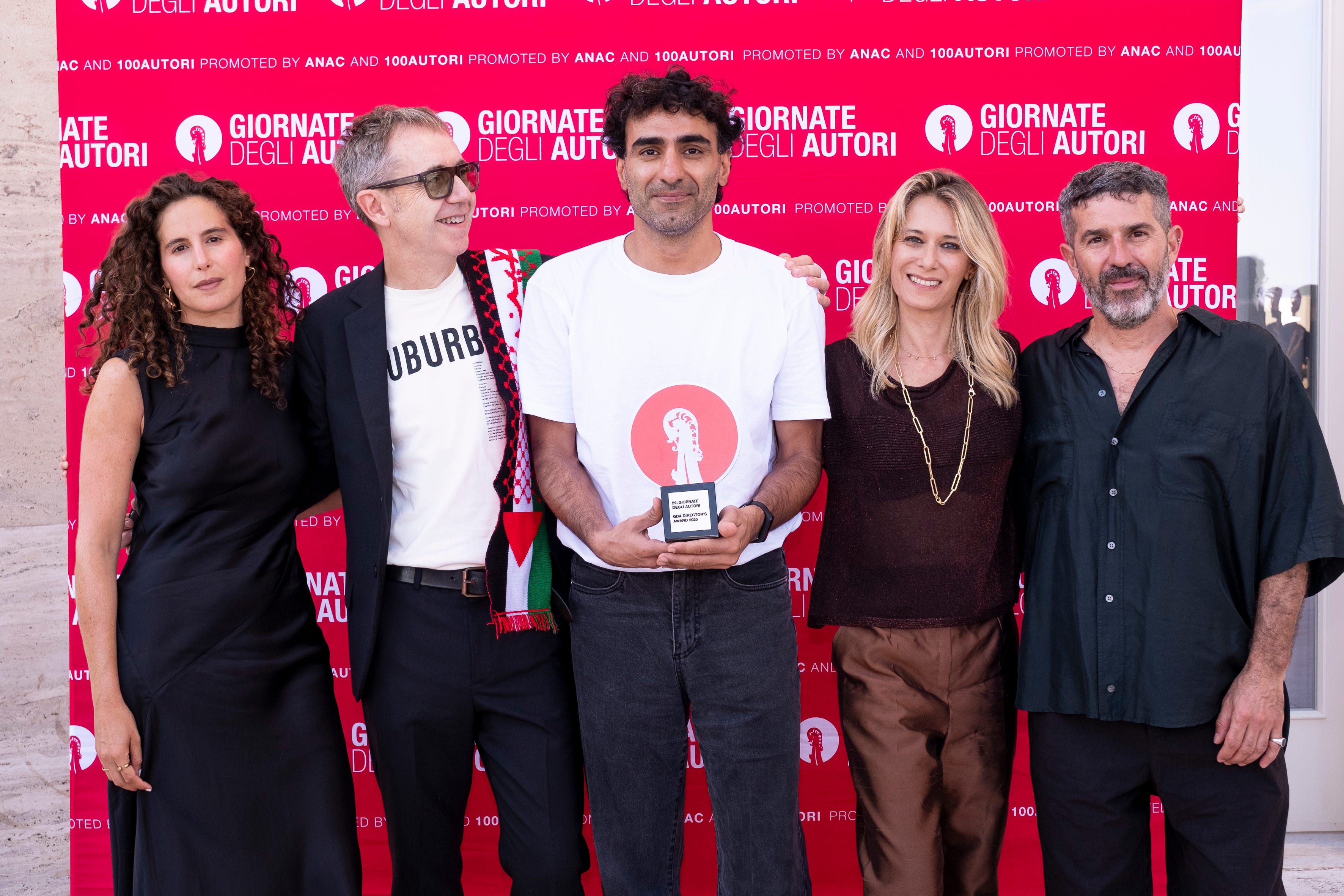
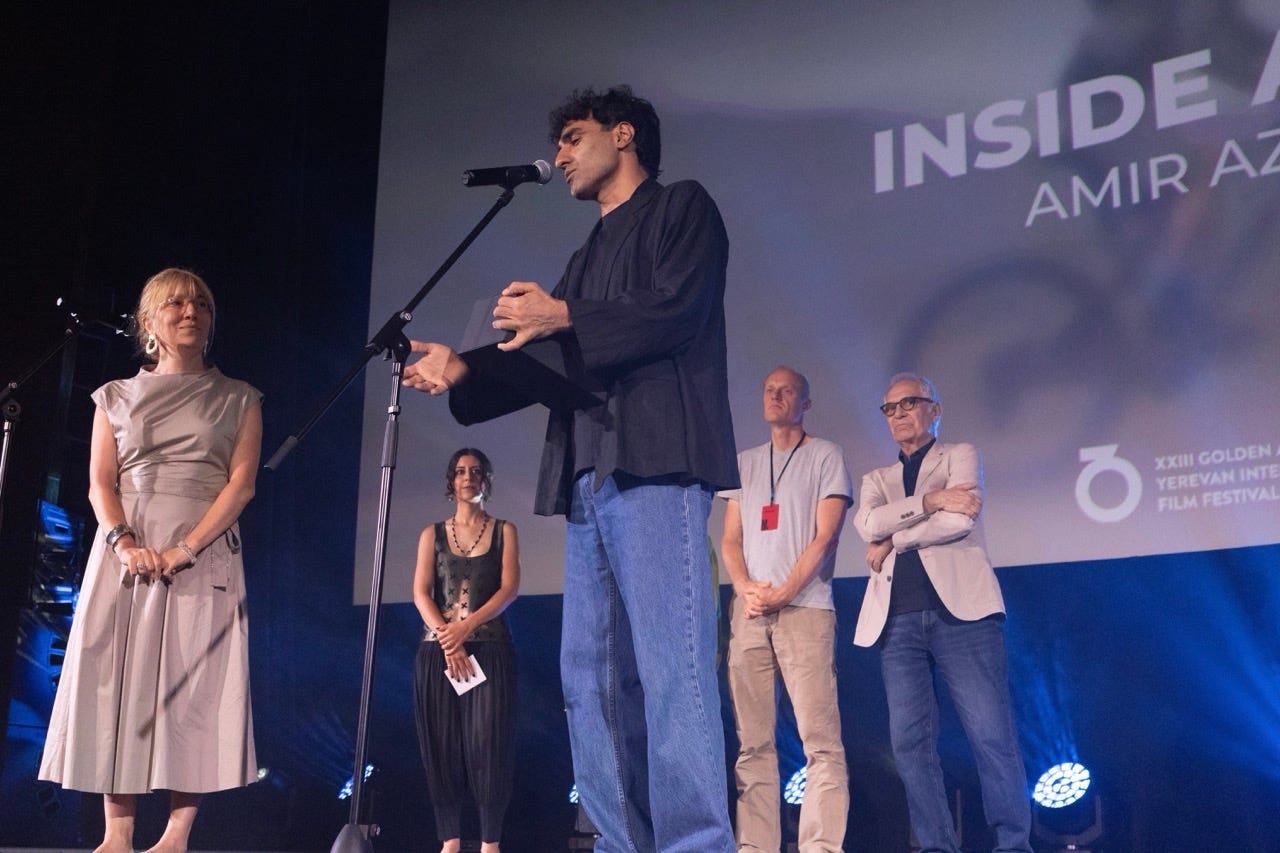
Inside Amir won the Golden Apricot in the Regional Competition. The film had its world premiere in 2025 at the 82nd Venice International Film Festival, where it screened in the independent Giornate degli Autori section and received the 2025 GdA Director’s Award.
In this conversation, Amir talks about where Inside Amir first came from, Tehran, migration, love, the bicycle, and making the film without an official permit. He also explains why he wanted to show a part of everyday urban life in Iran without censoring himself, and shares a few stories about the film for the first time.
Spoiler warning: This interview includes details about the story and the film’s ending.
Where did the first idea for Inside Amir come from? Had it been in your mind for a long time, or was there one moment that really started it?
Amir: The first idea came from something a lot of us in Tehran live with. Because of everything going on in the country, the idea of leaving enters your life quite early. After 2009, I started hearing more and more people talking about leaving.
It was already part of my own family too. My brother had wanted to move to the US since he was a teenager, and eventually he did. But the thing that really gave me the idea for the film was my sister Elnaz leaving.
Elnaz was born in 1991. She’s the youngest in our family, and she lives in the US now.
Once everything was arranged and she knew she was definitely going, I noticed that the closer she got to the flight, the more emotional she became. It was like she was suddenly seeing things she hadn’t paid much attention to before, because they had always been there.
A few days before she left, she said, “Amir, can we spend these last three or four days together? Can you take me to see my friends?”
I said, “Yeah, Elnaz. Let’s go.”
So I took her to see them. I could see she was holding back tears all the time. There was a goodbye happening inside her. A quiet, gentle kind of goodbye.
That stayed in my mind.
There’s something strange about leaving. When you’re about to lose something you’ve lived with and touched for years, suddenly you see its beauty much more clearly.
You think about people. The streets you walked together. The parks, the trips, the memories. You start thinking, what do I do with my brother? What do I do with my friends? What do I do with all these things that have been part of my life?
That idea stayed with me and slowly became Inside Amir.
Later, when I travelled with the film to different festivals, I realised that this feeling isn’t only ours. People in many places are thinking about leaving. Maybe they’ll find another life somewhere else. Maybe they’ll start again.
When you’re living somewhere, you see the good things and the bad things together. But when you’re close to leaving, somehow the good things come forward. You notice them more.
Your relationship with the city changes.
After making the film, I felt that even though Inside Amir comes directly from my own experience and from Tehran, the story could still connect with people in very different places.
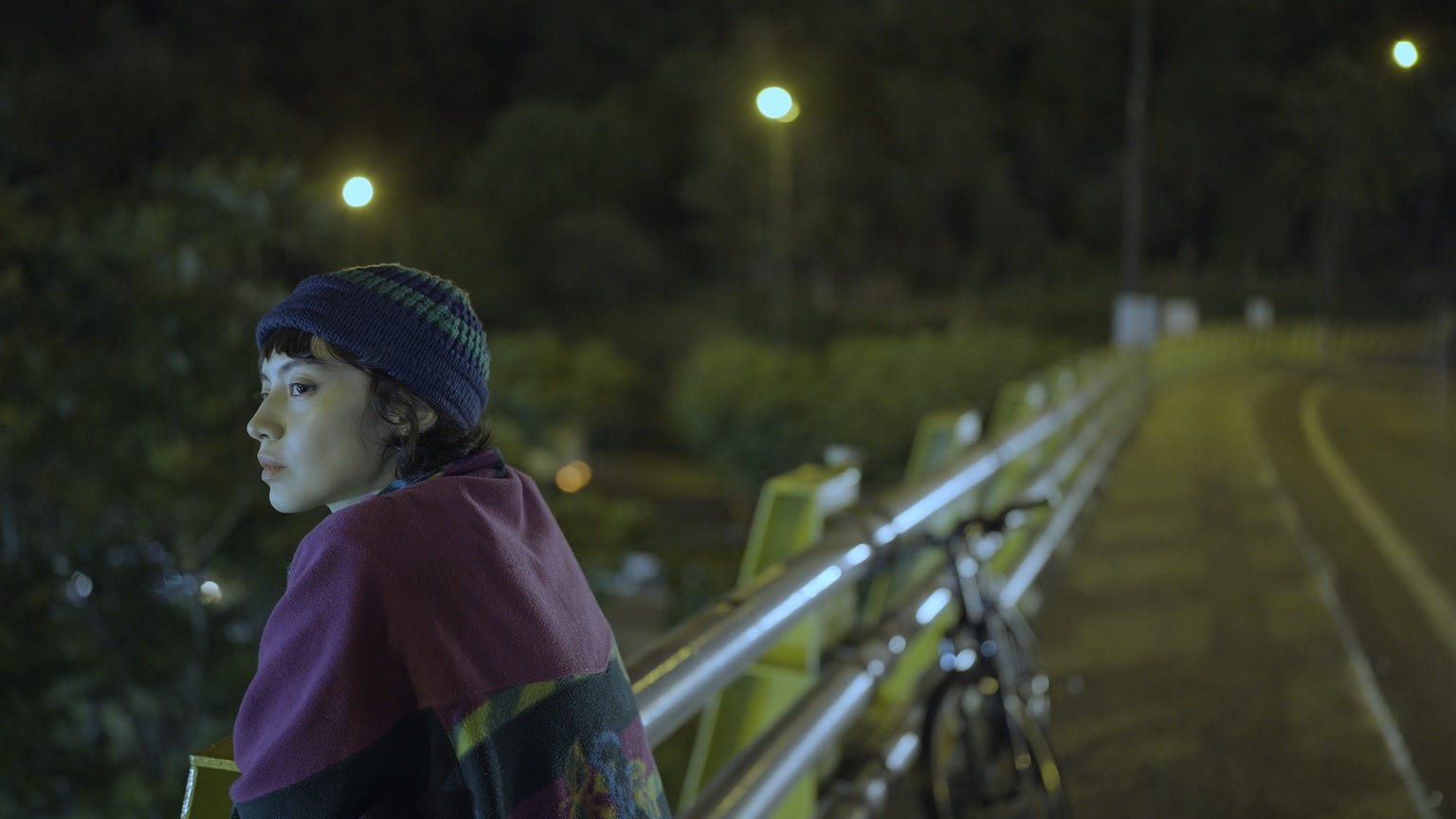
Instead of showing migration mainly through pressure, crisis and hardship, the film looks more at the attachments and the beauty people notice when they are about to leave. Did you know from the beginning that you wanted to approach it this way?
Amir: Yes. I kept thinking about why so many stories about Iran go towards the darker parts of life. And of course, we do live in a difficult place. There are political problems, economic pressure and many other things. You can’t deny any of that.
But I didn’t want to go there again.
I’ve never really said this before, but I deliberately wanted to get away from some of the clichés I’d seen a lot in Iranian cinema. I wanted to talk about migration, but I didn’t want to make something that felt like films we’d already seen.
I could have made it much more bitter. I could have pushed the pain further. I could have tried harder to make people emotional. But that wasn’t what I wanted.
I wanted to look at that moment just before someone leaves, when things that have been around them for years suddenly become visible again.
Later, from the reactions I got and some of the things people wrote about the film, I felt that maybe Inside Amir had managed to do that in its own way.
The main character is called Amir. How much of Amir Azizi is in him?
Amir: The actor’s real name is Amirhossein Hosseini, and most people call him Amir. The funny thing is that the film wasn’t even called Inside Amir at first.
I had a screenplay that I wanted to shoot by the sea, on the coastal road from Bushehr towards Bandar Abbas. The original title was Waves.
Then I decided to bring the story to Tehran. While I was rewriting it, I kept thinking that what I really cared about was the inside of this person. I saw Amirhossein, saw that he could ride a bicycle, and I thought, yes, this is him. Slowly, the title became Inside Amir.
And inside, Amir is very close to me.
You’ve travelled with me. You know what I’m like. I’m loud. I joke around, I laugh, I’m always moving, I have a lot of energy. Someone might think I’m the same inside. I’m not.
A lot of the time I go into myself. I think about things. Why did this happen? Why is my friend depressed? Why did someone have an accident and now doesn’t have the money to deal with it? Why did this happen to this person?
These questions take me inside myself.
Amir does that too. There are many moments when he goes quiet and goes into himself. So yes, his inner world is very close to mine.
What you see outside isn’t always what a person is like inside. In Persian we talk about someone’s face and someone’s inner character as two different things. I wanted Amir to have that sensitivity inside him. Someone who notices beauty.
Tara is connected to Amir’s past, but also to the future he may have somewhere else. What role does she play in his decision to leave?
Amir: When I was building the character, I kept asking myself: with all the attachment Amir has to Tehran, his friends and his memories, what could actually make him leave?
I didn’t want his story to be exactly like my sister Elnaz’s story. Elnaz wanted to leave and start another life, work, build something for herself and follow her goals.
For Amir, I needed something else.
And the only thing I could think of that might pull someone away from all those attachments was love.
The person he loves is somewhere else. He misses her. He’s attached to her. I couldn’t think of anything else strong enough to take Amir away from Tehran, with all the memories and all the things he has there.
So Tara, and Amir’s love for her, became one of the main reasons he might leave.
Amir and Tara’s relationship begins in a very simple, everyday way. Why did you want it to be like that?
Amir: This was one of the main lines in the screenplay.
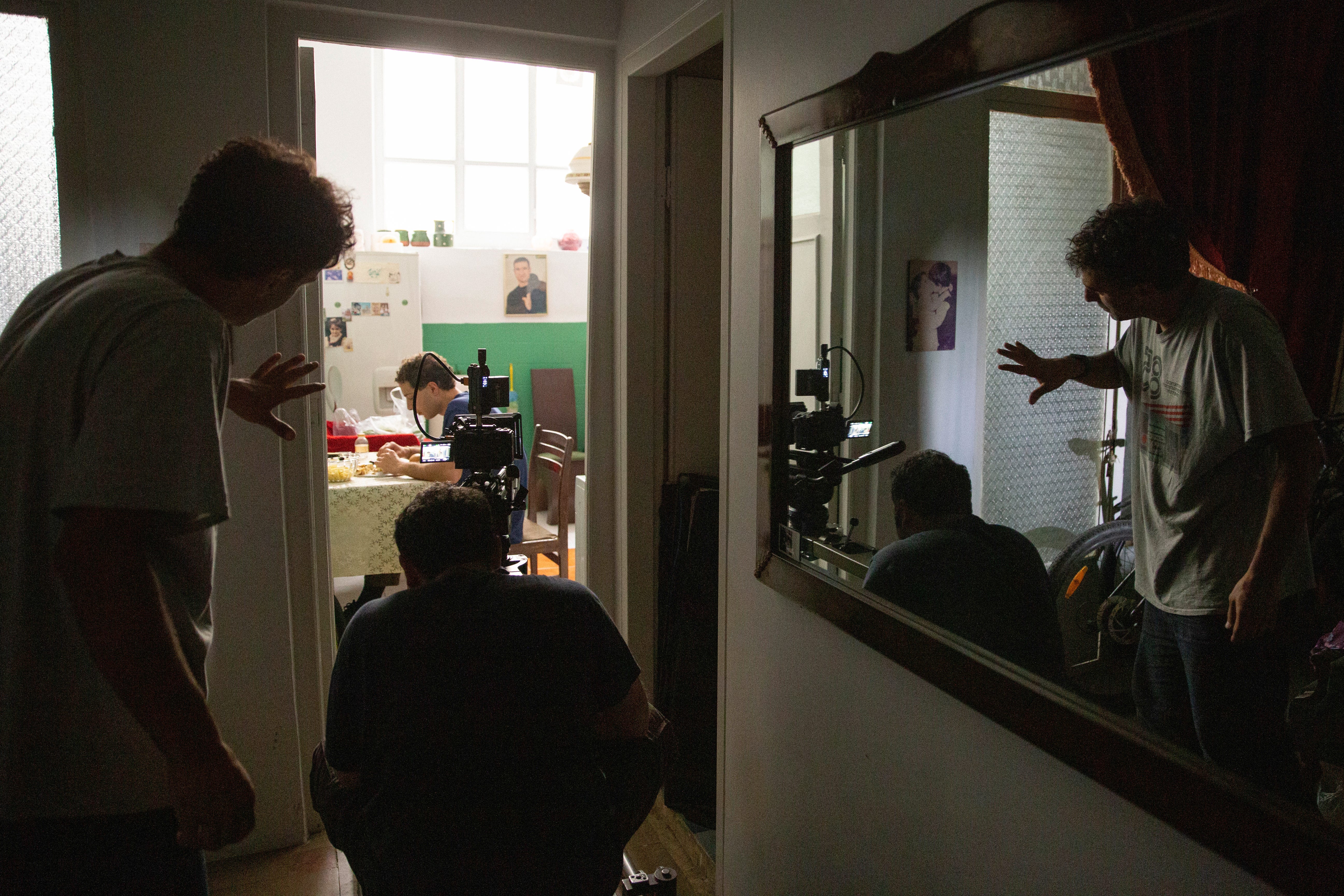
I always write a complete screenplay and work on it very carefully. Inside Amir was made very close to what was written. Even the dialogue changed very little.
For Amir and Tara, I wanted a very simple and honest kind of love.
Tara hasn’t known Amir for long. She saw him about a week earlier, riding his bicycle freely through the city, and she liked him. Then she’s the one who goes to him and suggests that they talk and see each other.
I didn’t want their relationship to feel calculated. Love isn’t always two plus two equals four.
At first, some people in the crew told me maybe the scene wouldn’t work. Maybe it would feel artificial. Maybe people wouldn’t believe it.
But after the screenings, it became one of the scenes people talked to me about the most.
I think it worked because it was simple. It wasn’t trying too hard.
As the film goes on, Amir seems to become even more attached to Tehran. By the end, you almost want him to stay. But do you actually know if he leaves?
Amir: No. I really don’t know.
After the screening in Yerevan, they asked me the same thing. Does Amir leave or not? I said, I don’t know.
I’m not saying that to make the film mysterious. I’m not trying to sell the ending. I genuinely don’t know.
I feel his love for Tara is honest and he really misses her. He wants to see her. Maybe he goes. Maybe six months later he comes back. Maybe something completely different happens.
For me, the important thing wasn’t the answer. It was the goodbye.
As you get closer to the end, you start seeing everything Amir may be leaving. The people, the streets, his friends, all these ordinary things that don’t seem so important when they’re just part of your everyday life.
But those are the things that stay with you.
It’s like those few days you and I had in Yerevan. Nothing huge happened. We walked, talked, laughed, sat around. But later those things become memories.
That’s Inside Amir for me too.
By the end, maybe you’re sitting there thinking: I hope he doesn’t go.
I showed more of the beauty in those everyday things. I know I moved away from some of the darkness we’re used to seeing. Maybe I’m just tired of all the darkness I’ve seen in films and experienced over the years.
But the film is still sad. Saying goodbye is sad. Looking at a city you love and thinking maybe this is the last time you’ll see some of these things, that’s painful enough.
It’s just a different kind of sadness.
The bicycle is one of the main elements in the film. Amir is always moving, but his life somehow feels stuck. Was that contrast there from the beginning?
Amir: The bicycle was very important to me.
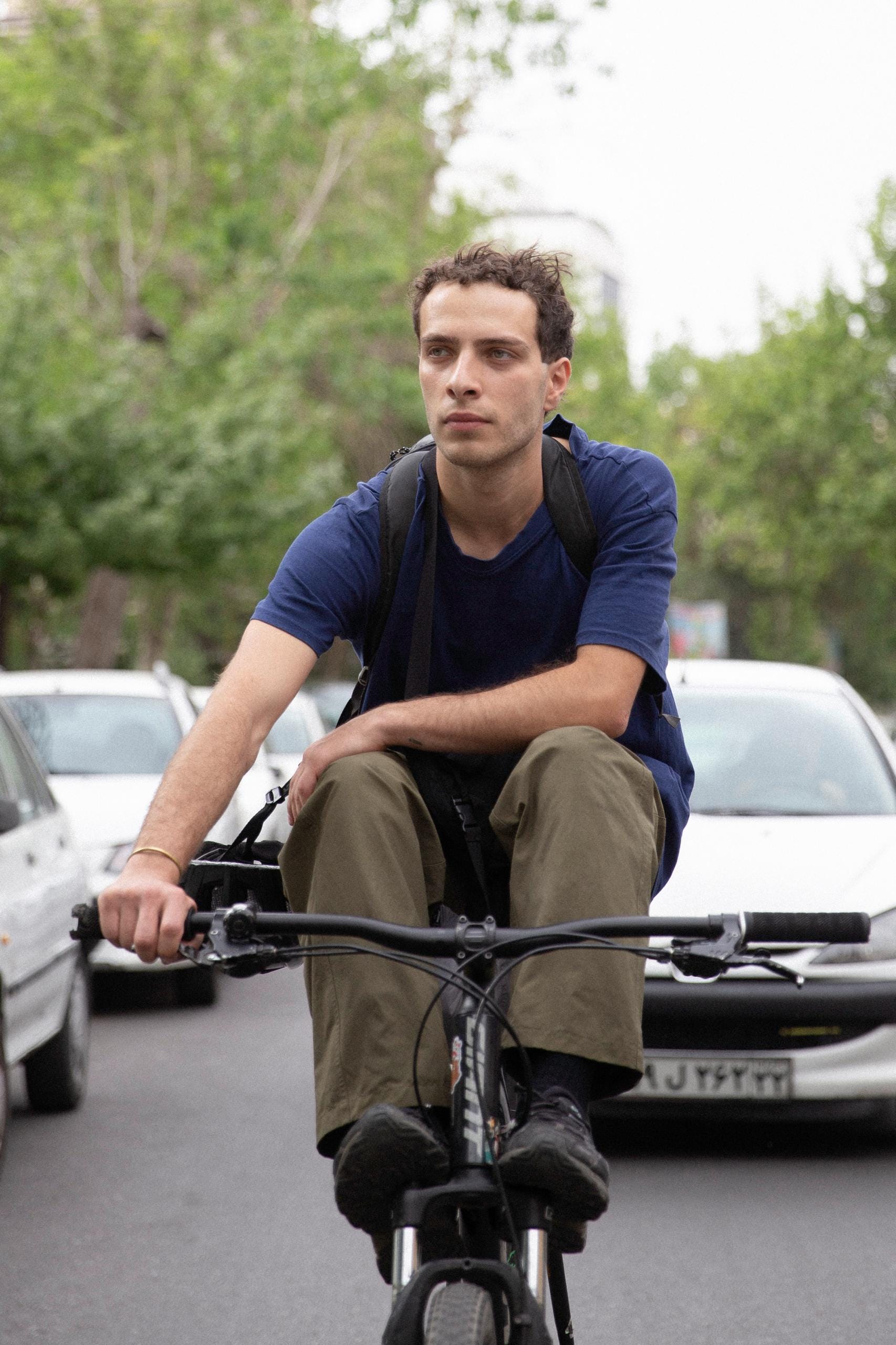
A bicycle already means movement in a way. Passing through, moving forward, freedom. For Amir it’s more than something he uses to get around. It’s almost another character.
Everything around him can feel fixed. Tired. Stuck. But the bicycle keeps saying: move, keep going, don’t stop.
When Amir rides, his mood changes. He breathes differently. It’s like he can see some kind of light ahead.
That’s also why he doesn’t sell the bicycle at the end.
He gets rid of many things, but he keeps the bicycle and leaves it with his closest friends, Nader and Nariman.
It’s like he’s leaving one of his deepest attachments behind in Tehran.
And maybe that makes us think he could come back.
Tehran isn’t just a background in the film. It feels like one of the characters. What Tehran were you trying to show?
Amir: Yes. Tehran, before the war and everything that happened recently, is one of the main characters in the film.
I should mention something here. The film was finished before the 12-day war, and during the first days of the war we had a really difficult time even uploading it for the Venice festival. After that, everything in Tehran and Iran changed into something much more frightening.
The Tehran we live in now is not exactly the Tehran you see in Inside Amir. For me, a lot of the beauty you see in the film belongs to the city before the war. Tehran’s spirit has been badly hurt since then. You can feel it in people, in the streets, in the city itself.
Sometimes I feel that something somehow pushed us, me and the Inside Amir team, to record that Tehran before it changed.
Tehran has been through a very strange history and many difficult periods, but it has always carried its own beauty too.
When I was writing the screenplay, I kept asking myself how I could show the city as honestly as possible.
Tehran has these streets, these alleys, these trees, and these people living in it.
I never wanted to say that all of Tehran is what you see in Inside Amir. Of course it has other sides, other problems, other realities. But this is Tehran too. It’s the Tehran I know and the Tehran I’ve experienced.
After some screenings, people would come up to me and ask, “Is Tehran really like this?”
I’d say, yes, of course it is.
Some people asked about the women walking in the streets without hijab. For me, that was simply part of what I was seeing in the city.
Tehran has changed a lot over the past few years. If this is what exists in my real life, why should I show it differently in the film?
So I kept telling myself: don’t lie in a single frame.
The Tehran you see in Inside Amir is Tehran from my point of view. It’s not the whole city. It’s the part I know, the part these characters live in. And when you see them moving through the streets and alleys, a lot of what you’re seeing is simply the city as it was. Those images were recorded almost like documentary observations of real life.
When people outside Iran were surprised by the Tehran they saw in the film, what did that tell you about the Iran they had seen before?
Amir: Something happened in Tokyo that I found very interesting.
A Japanese woman came to me wearing a traditional kimono. She didn’t speak English, so Shohreh Golparian was translating between us.
She said she follows Iranian cinema and loves it. Then she said, “I just wanted to tell you how beautiful you young Iranians are. How stylish you are. How beautiful everything is.”
I was really surprised.
She said she had never seen this side of life in Iran shown like this before.
Then she asked about Amir’s house. Whose house was it? I said, it’s my own house in Tehran.
I hadn’t thought, while making the film, that someone in Japan might be surprised by the house, by the people, by normal everyday life.
Something similar happened at Golden Apricot.
An Iranian woman who has lived in Yerevan for many years came to me after the screening and said, “Thank you. Thank you for showing us like this.”
That meant a lot to me.
I have respect for the other films made about Iran. But from these screenings I realised that a lot of people outside Iran simply hadn’t seen this Tehran before.
Tehran has beautiful alleys. Modern people live there. Different kinds of lives are happening at the same time. Things that are completely normal to us were new to some of these audiences.
I wasn’t trying to say Iran is only this. Or Tehran is only this.
I just wanted to show the thing I know, the way I see it.
The dialogue and details feel very controlled, but many of the situations also feel like they come from real life. How much was written in advance, and how much came from people around you?
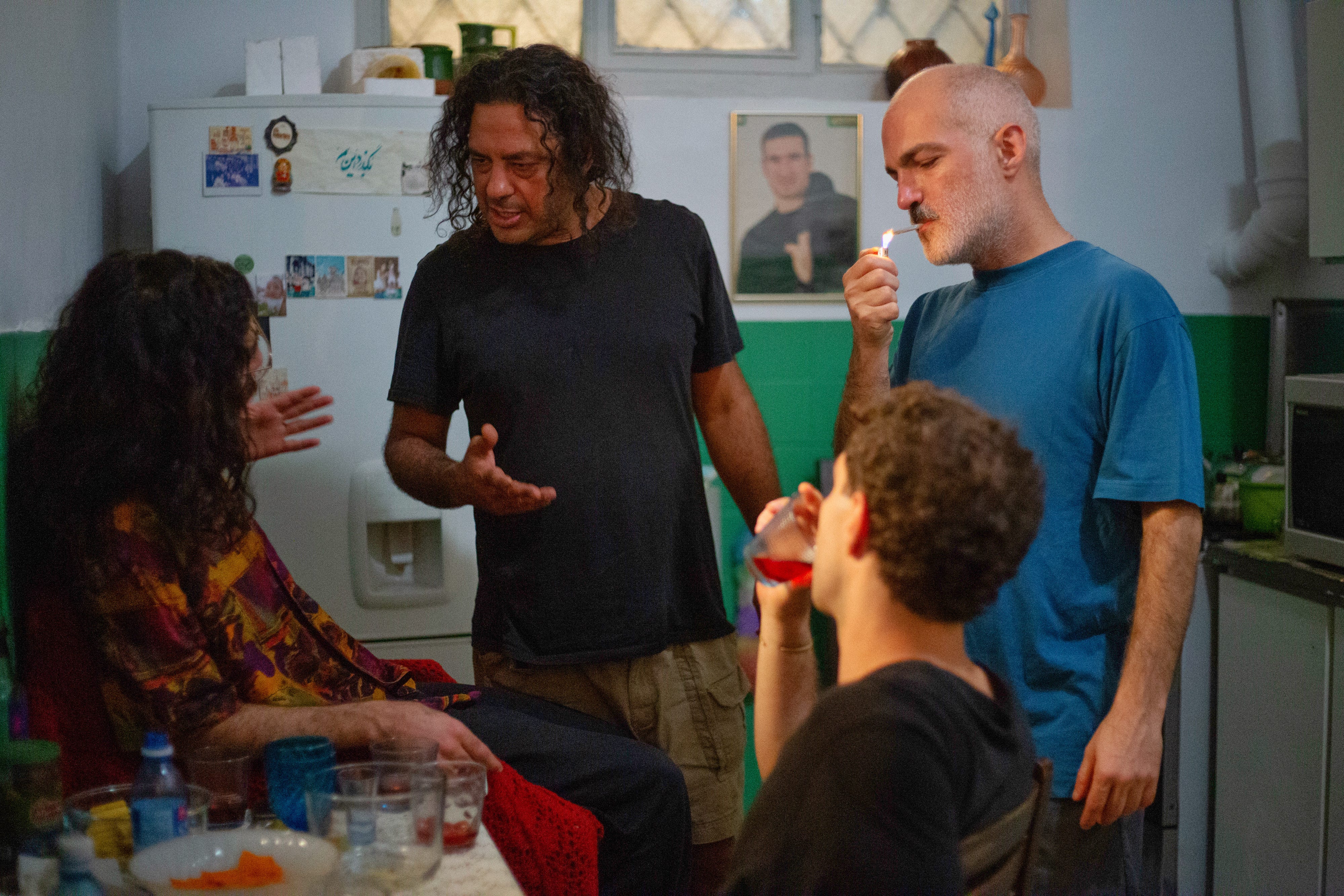
Amir: Inside Amir was made almost completely from the screenplay. The actors were saying the dialogue that was written.
But a lot of the characters and situations were inspired by people around me, my friends and my family. Then I took those things and turned them into the screenplay.
A lot of things in the film have roots in real conversations or things that happened around me. For example, Pirouz says at one point that he wants to go to the south and collect rubbish on the beaches. Things like that came from real conversations.
I worked on the screenplay for about ten or eleven months.
For me, a big part of making the film happens before shooting.
I worked for years as an assistant director and script supervisor, so I think about a lot of these details before I get to the set. Continuity, timing, how the scene moves. I work those things out early.
Then I mix that structure with what I’ve taken from family, friends and people around me.
I edited the film myself too. For me, all these stages are connected.
I think when you’re an independent filmmaker, you have to look around you. There are characters everywhere. Stories everywhere. We pass them every day and sometimes don’t even notice.
Especially now, in these difficult days in Tehran and Iran, these stories are right in front of us.
It would be a shame to just walk past them.
Inside Amir was made within independent Iranian cinema. What did that independence change for you as a filmmaker?
Amir: I think art shows itself better when it’s independent, not when someone is ordering you to make a certain kind of work. Cinema feels more beautiful to me in that independent space.
But staying independent is hard.
There’s so much pressure, confusion and dishonesty around us. Trying to keep going as an independent artist in that kind of situation is very difficult. But I feel you can make work you can stand behind more easily that way.
I think art needs to be free.
And in a place where you have political pressure and other restrictions, staying independent can be one of the hardest things an artist does.
I love cinema for cinema itself. Images, mise-en-scène, composition, sound, acting. I love all of it. Cinema switches something on inside me.
But I also want to make films as honestly as I can.
If several women live together in a house, I don’t want to show them in a way that isn’t real just because the official rules tell me I have to.
For me, independence means I get to make that decision.
Another filmmaker may make a different decision. That’s their choice. I don’t want to judge them. I just know how I want to work.
I don’t want someone telling me before I make a film which parts of life I’m allowed to show and which parts I’m supposed to hide.
How difficult was it to make the film independently with a small crew and limited resources? And after all that, what did the festival success mean to you?
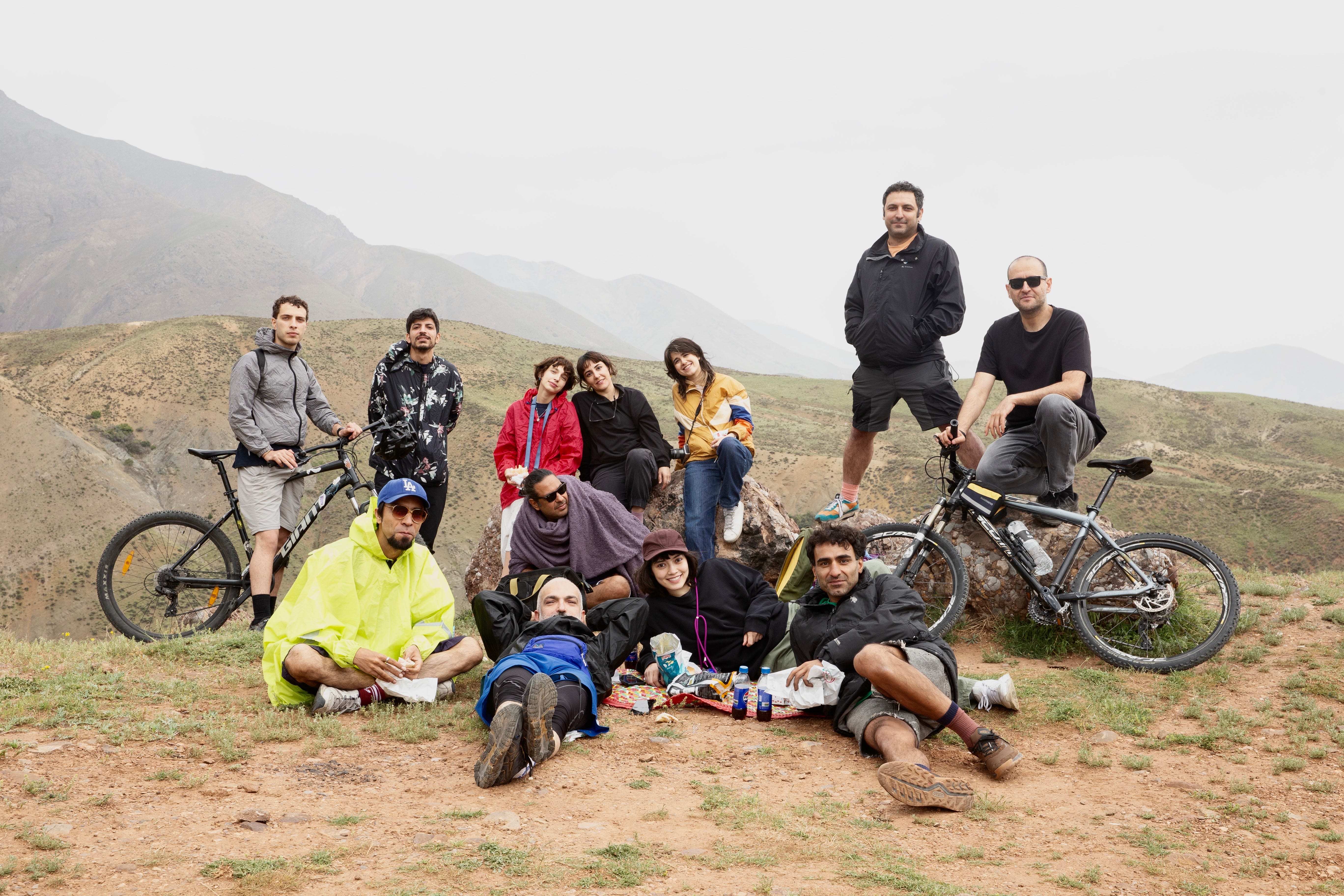
Amir: It was very hard.
The version I first sent to Venice was about two hours and seven minutes long, and it still needed more editing and cleaning up. During the production, I was also doing a big part of the work myself.
Sometimes it was something very basic, like taking care of food for the crew. Sometimes it meant going to the airport at five-thirty in the morning because we needed a shot.
I followed all of it closely because I believed in the film. There were days when I barely slept.
When you’ve spent that long under pressure, your mind doesn’t suddenly change just because the film gets into a festival or wins an award.
I still doubt my films. I still question the films themselves and the whole process of making them.
But when I’m writing, shooting or editing, it’s different. Then I know exactly what I’m looking for. I know what I’ve written, and I know how I want to make it.
Maybe I’m at my best when I’m making a film or writing a screenplay.
I would like to thank Amir Azizi for taking the time to speak with Souzian Dispatch in Yerevan, and for sharing the personal stories and experiences behind Inside Amir.
Inside Amir screened twice in the Regional Competition at the 23rd Golden Apricot Yerevan International Film Festival: on Friday, July 17 at 10:00 AM and Saturday, July 18 at 7:00 PM, both at the House of Cinema, H. Malyan Hall.
The film went on to receive the Golden Apricot in the Regional Competition.
More About the Film
Inside Amir follows a young man preparing to leave Tehran and join Tara, the woman he loves, abroad. As his departure gets closer, his relationship with the city, his friends and the small routines of everyday life begins to change.
The film had its world premiere at Giornate degli Autori during the 82nd Venice International Film Festival in 2025, where Amir Azizi received the GdA Director’s Award.
License
This piece, published by Souzian Dispatch and written by Abbas Souzian, is licensed under the Creative Commons Attribution-ShareAlike 4.0 International License (CC BY-SA 4.0), unless otherwise noted.
Images & Videos Credits and Rights
Certain images and videos included in this piece are not owned by Abbas Souzian or Souzian Dispatch and are not covered by this license. Rights to those materials remain with their respective copyright holders.